Table of Contents
- 1. Build Real Supply Chain Visibility With Live Tracking
- 2. Cut Freight Costs Through Smarter Transportation Planning
- 3. How to Automate Customs Clearance Documentation
- 4. Strengthen Supplier Relationships and Procurement
- 5. Apply Supply Chain Resilience Strategies Before Disruption Hits
- 6. Improve Warehouse and Inventory Turnover
- 7. Track Supply Chain Efficiency With the Right KPIs
- Frequently Asked Questions
Last Updated: September 29, 2026
1. Build Real Supply Chain Visibility With Live Tracking
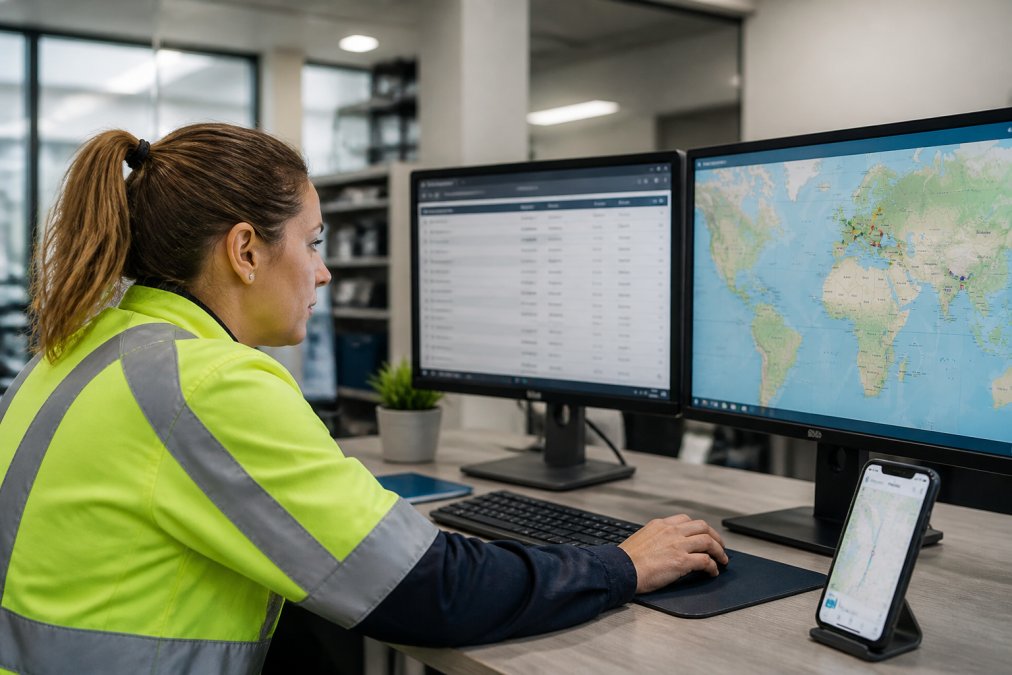
Supply chain efficiency starts with knowing where your cargo actually is. Without live tracking, you are guessing. And guessing costs money.
At Seatram, we see this constantly. A shipment sits at a port. Nobody knows. Three days pass. The customer calls. The answer is always “in transit.” That is not visibility. That is a black hole.
Real visibility means:
- Seeing your shipment’s exact location at any moment
- Getting alerts before delays become problems
- Sharing accurate updates with your own customers
- Spotting bottlenecks while you can still fix them
The Australian Border Force cargo reporting guidance sets clear expectations for cargo reporting. Meeting them is easier when you have live data.
2. Cut Freight Costs Through Smarter Transportation Planning
Freight costs are one of the biggest drains on supply chain budgets. But cutting costs does not mean choosing the cheapest quote every time.
A common mistake is optimising one shipment at a time. Smart planning looks at the whole picture:
- Consolidate shipments where possible
- Choose sea, air, or land based on urgency and volume
- Plan routes that avoid known congestion points
- Book ahead to avoid peak-season surcharges
Transportation management systems help here. They compare options across carriers and modes. The goal is simple: move goods reliably without paying for speed you do not need.
3. How to Automate Customs Clearance Documentation
Manual customs paperwork slows everything down. One missing field can hold a container for days.
Customs clearance documentation is the set of forms, declarations, and certificates required to move goods across borders legally. Getting it right the first time saves time and money.
Here is how to automate it:
- Use software that pre-fills declarations from your order data
- Store product classifications and tariff codes in one place
- Set up validation rules to catch errors before submission
- Connect your system to your customs broker’s platform
- Keep digital copies of all certificates ready to attach
The Australian Border Force customs documentation requirements outline what importers and exporters must provide. Automation helps you meet these without the back-and-forth.
4. Strengthen Supplier Relationships and Procurement
Your suppliers are part of your supply chain, not separate from it. Weak supplier relationships create weak links.
Procurement optimisation is not just about price. It is about reliability, communication, and shared goals. Vendors who understand your timelines and volumes can plan better. That means fewer surprises for you.
What good supplier management looks like:
- Regular check-ins, not just when problems arise
- Clear expectations for lead times and quality
- Shared forecasts so suppliers can prepare
- Backup suppliers identified before you need them
Strategic sourcing means choosing partners who fit your business long-term, not just the lowest bidder.
5. Apply Supply Chain Resilience Strategies Before Disruption Hits
Disruptions are not a matter of if. They are a matter of when. Port strikes, weather events, and global shortages all test your supply chain.
Supply chain resilience strategies are plans and systems that help your operations recover quickly from shocks. They include:
- Holding buffer stock for critical items
- Diversifying suppliers across regions
- Building flexible transport options
- Testing your response plans before you need them
The pandemic showed how fragile global supply chains can be. Businesses that recovered fastest had plans in place. They did not improvise. They executed.
6. Improve Warehouse and Inventory Turnover
Inventory sitting in a warehouse costs money. It ties up cash, takes up space, and risks becoming obsolete.
Inventory turnover measures how quickly you sell and replace stock. Higher turnover generally means better efficiency. But too high can mean stockouts.
To improve warehouse efficiency and turnover:
- Track which products move fast and which sit
- Use demand planning to match stock levels to real needs
- Set up cross-docking for items that ship straight through
- Review slow movers and adjust orders
A transportation management system can connect warehouse data with shipping schedules. That helps you time deliveries to match demand.
7. Track Supply Chain Efficiency With the Right KPIs
You cannot improve what you do not measure. But tracking too many metrics creates noise.
Focus on KPIs that connect to business outcomes:
- Lead time reduction: How long from order to delivery?
- Freight costs per unit: Are you paying more over time?
- Inventory turnover: How fast is stock moving?
- Order fulfilment accuracy: Are you shipping the right items on time?
- Supplier performance: Are vendors meeting agreed standards?
KPI tracking should be simple. Pick five metrics. Review them monthly. Act on what the data shows.
The Australian Logistics Council industry resources offer benchmarks and guidance for logistics performance.
Supply chain efficiency is not a one-time fix. It is ongoing work. The businesses that get it right treat logistics as a competitive advantage, not a cost centre.
Seatram helps businesses across Australia move cargo safely, on time, and on budget. We offer tailored end-to-end supply chain solutions, from wharf-to-wharf and door-to-door freight to customs brokerage and real-time tracking on one platform. Our team identifies what each client actually needs and builds a shipping strategy around it.
Get started with Seatram and take control of your supply chain. Request a quote today.
Frequently Asked Questions
What are some ways to improve supply chain efficiency?
Start with supply chain visibility: live tracking removes the guesswork from where goods actually are. Then look at freight planning, customs documentation, supplier relationships and warehouse flow. Measuring supply chain efficiency with a small set of KPIs, such as lead time reduction and inventory turnover, shows which changes are working. Most businesses get the fastest gains from automating paperwork and consolidating shipments, because both cut delays that quietly inflate cost-to-serve.
How can businesses improve supply chain visibility to reduce risks?
Real-time tracking is the foundation. When you can see a container’s position, port status and clearance stage as it happens, you spot problems before they become spoiled perishables or missed retail windows. Pair that with a single platform that covers sea, air and land freight so updates don’t sit in three different inboxes. Ask your provider what their tracking actually shows, not just whether it exists, because a status stuck on ‘in transit’ for weeks isn’t visibility.
What role does automation play in modernising freight forwarding?
Automation removes the manual rekeying that causes most customs delays. Electronic lodgement of clearance documentation, automated biosecurity declarations and digital document workflows mean fewer transcription errors and faster release times. It also frees your team from chasing paperwork to focus on vendor management and demand planning. The practical test is simple: if a document still gets printed, signed and scanned, there’s an automation opportunity sitting in your process.
What are the primary drivers of supply chain inefficiency in local logistics?
Common drivers include fragmented carrier arrangements, manual customs and biosecurity paperwork, poor demand forecasting, and warehouse layouts that force unnecessary double-handling. Freight costs also creep up when shipments are booked late or consolidated poorly. Bottleneck identification usually reveals that the delay isn’t at the port at all, it’s in the documentation or the last-mile leg. Fixing those two areas often improves operational productivity more than any single technology purchase.