
Table of Contents
- Why Automotive Freight Demands a Different Playbook
- Air Freight vs Sea Freight: Choosing the Right Mode
- Freight Forwarding Best Practices for Automotive Manufacturers
- Automotive Supply Chain Risk Management That Works
- Urgent Freight Cost Reduction Without Cutting Corners
- Customs, Trade Compliance and Cross-Border Documentation
- Measuring Delivery Performance and Budget Control
- Conclusion
- Frequently Asked Questions
Last Updated: October 9, 2026
Why Automotive Freight Demands a Different Playbook
Automotive freight is the movement of vehicles, parts and components across borders and between plants, and it punishes mistakes harder than almost any other cargo type.
That is why automotive logistics needs its own playbook. You are not shipping boxes to a warehouse. You are feeding a live assembly process.
The stakes are simple to state and hard to manage:
- Parts are often bulky, heavy or fragile
- Production schedules leave almost no buffer
- One delayed component halts the whole build
- Customs errors hold up the entire shipment
The goal is narrow: cargo reaches its destination safely, on time, and on budget for automotive manufacturing. Every decision below serves that single outcome.
The Real Cost of a Late Component
A late component costs far more than the freight itself. A delayed shipment can stop a production line, trigger penalty clauses and force expensive air freight to recover.
The visible cost is the shipping fee. The hidden cost is everything downstream:
- Idle labour on the line
- Missed delivery dates to dealers
- Emergency air freight to catch up
- Damaged customer relationships
So when you compare quotes, compare the cost of failure too. The cheapest freight is rarely the cheapest outcome.
Air Freight vs Sea Freight: Choosing the Right Mode
Air freight is faster and more expensive; sea freight is slower and cheaper. Every freight guide says that. The useful question for automotive manufacturers is narrower: which mode protects the production schedule at the lowest total cost?
That question cannot be answered by comparing freight rates alone. It is answered by comparing the freight rate against the cost of the line stopping. A part worth $40 can justify a $400 air freight bill if its absence idles a shift. A part worth $4,000 rarely justifies air freight if it can sit in a sea container for three extra weeks without affecting the build.
A practical decision framework sorts parts into four bands:
|
Band |
Part profile |
Default mode |
Trigger to upgrade |
|---|---|---|---|
|
A |
Line-stopping, low value, high frequency |
Sea, planned weeks ahead |
Stock cover drops below lead time |
|
B |
Line-stopping, high value, low frequency |
Sea with buffer stock |
Supplier confirms delay beyond buffer |
|
C |
Non-critical, bulky, low value |
Sea, full container |
Never, absorb the delay |
|
D |
Critical, urgent, unpredictable |
Air or multimodal |
Always, this is what air is for |
Most automotive freight problems come from treating Band A parts like Band C parts to save money, then paying air freight rates to recover. The savings on the sea leg are erased by the expedite on the air leg.
The Real Cost Comparison
When you compare modes, compare total landed cost, not freight rate. Total landed cost for an automotive part includes:
- Freight charge (air, sea, road or multimodal)
- Customs clearance and brokerage
- Insurance
- Inventory carrying cost during transit
- Cost of any line stoppage the mode choice causes
The last line is the one most quotes ignore. A sea shipment that arrives on schedule has a low total landed cost. The same shipment arriving two weeks late can cost more than the air freight you declined, once idle labour, missed dealer deliveries and recovery air freight are counted.
When Road and Multimodal Make More Sense
Road and multimodal options fill the gap between air and sea. Road freight handles interstate transport and final delivery. Multimodal transport combines modes to balance speed and cost.
Consider multimodal when:
- A shipment is too big for air but too urgent for sea
- You need to move oversized freight that will not fit standard containers
- You want one provider managing the handoffs between modes
The advantage is flexibility. The risk is complexity. Each handoff is a chance for delay, so a single forwarder coordinating the whole route matters.
Freight Forwarding Best Practices for Automotive Manufacturers
Good freight forwarding for automotive comes down to planning, communication and control. The forwarder should manage the whole journey, not just one leg.
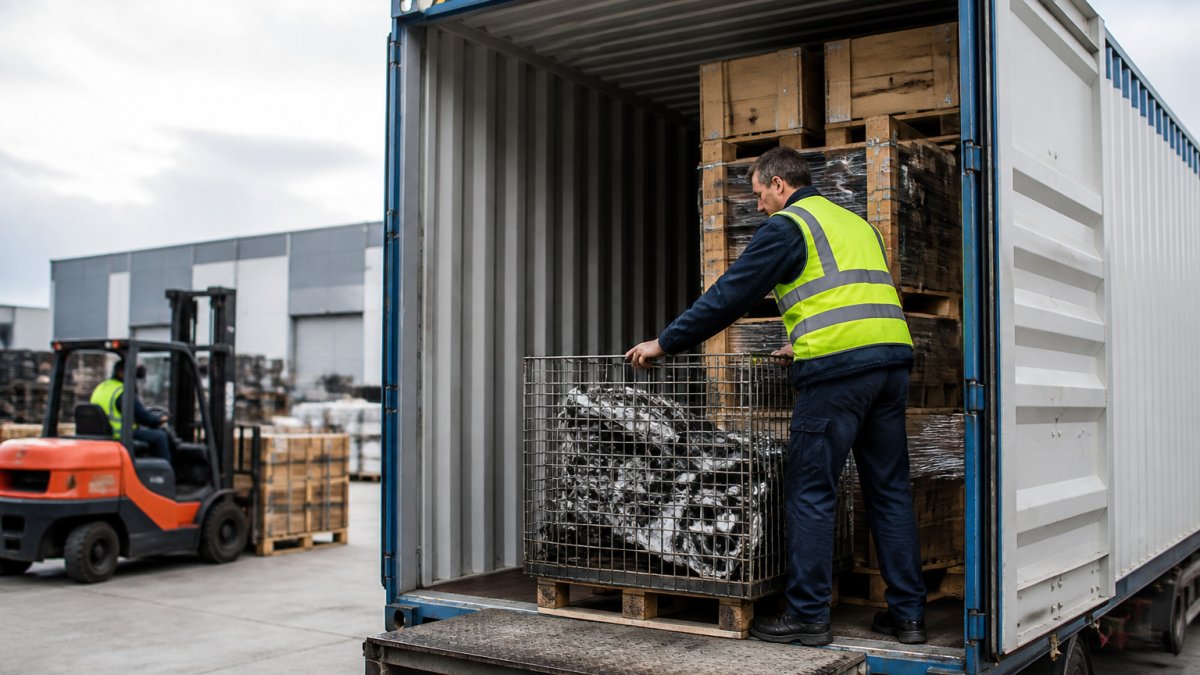
Here is a workflow that works for automotive manufacturers:
- Plan the route early. Confirm origin, destination and mode before booking.
- Book with buffer. Build slack into transit time for customs and handoffs.
- Prepare documentation upfront. Customs paperwork should be ready before pickup.
- Track every leg. Shipment visibility prevents nasty surprises.
- Confirm delivery. Check the cargo on arrival, not days later.
At Seatram, we manage both wharf-to-wharf and door-to-door solutions.
Packaging and Loading for Zero Damage
Automotive parts are heavy, awkward and easily damaged. Safe handling starts with the right packaging and loading.
- Use crates and bracing rated for the part’s weight
- Protect painted and machined surfaces with padding
- Secure loads so they cannot shift in transit
- Label fragile and oversized items clearly
Damage prevention is cheaper than replacement. A braced load costs less than a wrecked component and a stopped line.
Automotive Supply Chain Risk Management That Works
Automotive supply chain risk management is the practice of finding weak points before they stop production. It is less about reacting and more about preparing.
The main risks to watch:
- Late shipments from port congestion or customs delays
- Damage from poor handling or packaging
- Single-source dependency on one supplier or route
- Compliance errors that hold cargo at the border
Naming these risks is the easy part. The work is building a response for each one before it happens, and knowing exactly when to trigger that response.
Contingency Planning for Production-Line Stoppages
Every automotive manufacturer needs a plan for when a shipment does not arrive. Hope is not a plan.
A working contingency plan has four components: escalation triggers, backup routing, a pre-agreed expedite option, and a named decision-maker.
Escalation triggers are the points at which you stop waiting and start acting. A common pattern is a three-stage trigger:
- Watch, tracking shows the shipment is behind schedule but still within buffer. Action: notify the supplier and forwarder, confirm revised ETA.
- Alert, the revised ETA eats into the production buffer. Action: activate backup routing or partial expedite for the most critical parts.
- Act, the shipment will miss the line date. Action: switch to the pre-agreed air freight option and notify production planning.
The value of triggers is that they remove the delay caused by hoping. Most late shipments are known to be late days before anyone acts on it.
Backup routing means having a second path for each critical part. That might be a second port of entry, a second forwarder, or a second supplier. The backup does not need to be cheaper or faster in normal conditions, it needs to be available when the primary route fails.
A pre-agreed expedite option is an air freight arrangement negotiated before you need it. Rates agreed in a crisis are always worse than rates agreed in advance. A standing agreement with your forwarder for emergency air freight removes both the delay and the price shock.
A named decision-maker is the person authorised to trigger the expedite and accept the cost. Without a name, the decision waits for a meeting, and the line waits with it.
The businesses that recover fastest are the ones that planned the recovery before they needed it. Speed in a crisis comes from preparation, not panic.
Urgent Freight Cost Reduction Without Cutting Corners
Urgent freight cost reduction means cutting waste, not cutting safety. You can move cargo fast without paying for mistakes.
Where costs actually come from:
- Mode choice (air costs more than sea)
- Fuel and port charges
- Rework caused by bad documentation
- Damage and insurance claims
The biggest savings hide in the last two. Fixing paperwork and packaging upfront removes the rework and claims that quietly inflate freight costs.
Practical ways to control budget:
- Consolidate shipments where schedules allow
- Book early to avoid premium rates
- Get clear quotes that list what is included
- Track costs per shipment, not just per month
At Seatram, we build quotes that spell out what is included.
Customs, Trade Compliance and Cross-Border Documentation
Customs and trade compliance decide whether your cargo clears or sits. Get the paperwork right and freight moves; get it wrong and everything stops.
Cross-border documentation for automotive parts typically includes:
- Commercial invoice and packing list
- Bill of lading or air waybill
- Certificates of origin
- Import permits where required
Automotive parts often carry specific duty and compliance rules. Check the current requirements with the Australian Border Force before you ship, because rules and rates change.
Getting this wrong is the most common cause of border delays. A forwarder who handles customs brokerage removes most of that risk from your desk.
Measuring Delivery Performance and Budget Control
You cannot improve what you do not measure. Track a small set of numbers and review them monthly.
|
Metric |
What It Shows |
Target |
|---|---|---|
|
On-time delivery |
Reliability of transit time |
As close to full as possible |
|
Damage rate |
Safe handling quality |
Near zero |
|
Cost per shipment |
Budget control |
Stable or falling |
|
Customs clearance time |
Border efficiency |
Consistent and short |
These four numbers tell you where your automotive logistics is strong and where it leaks money. On-time delivery and damage rate protect production. Cost per shipment and clearance time protect the budget.
Review them together. A cheap shipment that arrives late is not cheap at all.
Conclusion
Keeping cargo on time, on budget and undamaged is the hardest part of automotive freight, and it rarely happens by accident. It comes from the right mode, clean paperwork and a forwarder who owns the whole journey.
Seatram handles sea, air and land freight with tailored, end-to-end supply chain solutions. We offer both wharf-to-wharf and door-to-door options, plus one platform to manage all your shipments with real-time tracking.
Get started with Seatram and keep your cargo moving safely, on time and on budget. Request a quote today.
Frequently Asked Questions
What are the three main ways to transport automotive cargo?
Automotive cargo typically moves by sea, air, or road freight, often combined as multimodal transport. Sea freight suits large volumes of components and finished vehicles, air freight handles time-critical or high-value parts, and road freight covers domestic and interstate legs. The right mix depends on your transit time requirements, budget, and how sensitive the cargo is to damage or delay. Many manufacturers use two or three modes across a single supply chain.
How can manufacturers balance freight cost with delivery speed?
Start by classifying each shipment by urgency. Reserve air freight for parts that would otherwise stop a production line, and move predictable, high-volume components by sea. Build a buffer stock for long-lead items so you are not forced into expensive expedited shipping. Review freight costs and delivery times monthly, and negotiate rates based on your actual volume rather than one-off quotes.
How can automotive manufacturers reduce urgent freight costs?
Urgent freight costs drop when you reduce the number of emergencies. Track the root causes of expedited shipments, whether that is supplier delays, inaccurate demand forecasts, or customs hold-ups. Improve packaging and documentation so shipments clear faster, and agree on contingency rates with your freight forwarder before you need them. Even a small drop in emergency shipments can meaningfully reduce your annual logistics spend.
What information should be included in an automotive freight plan?
A solid freight plan covers cargo dimensions and weight, mode selection, transit time targets, packaging and loading requirements, customs and biosecurity documentation, insurance, and a named contact for exceptions. It should also set out KPIs such as on-time delivery rate and cost per shipment, plus a contingency route if the primary one is disrupted. Review the plan quarterly against actual delivery performance.