
Table of Contents
- What Freight Forwarder Liability for Damaged Cargo Actually Means
- Cargo Insurance vs Carrier Liability: Which One Protects You?
- Freight Forwarder Liability Insurance Explained
- How to File a Cargo Damage Claim Step by Step
Last Updated: August 18, 2026
What Freight Forwarder Liability for Damaged Cargo Actually Means
Freight forwarder liability for damaged cargo is one of the most misunderstood topics in international shipping, and that confusion costs businesses real money. Freight forwarder liability refers to the legal responsibility a freight forwarder holds when cargo is lost, damaged, or delayed during transit. The critical distinction most beginners miss: a freight forwarder is typically an intermediary, not a carrier. They organise transport on your behalf rather than physically moving the cargo themselves.
Because freight forwarders act as agents, their liability is generally limited compared to the actual carrier. Under the Australian Federation of International Forwarders standard trading conditions, forwarders commonly cap their liability at a set amount per consignment unless you have arranged additional cover. The forwarder’s liability can also arise from their own errors: booking the wrong vessel, misdescription of goods on the bill of lading, or failing to arrange agreed insurance.
Cargo Insurance vs Carrier Liability: Which One Protects You?
Cargo insurance and carrier liability are not interchangeable, and the difference matters enormously when filing a damage claim.
Carrier liability is the legal obligation the shipping line, airline, or road carrier holds for cargo in their care. For sea freight, this is governed by the Hague-Visby Rules, incorporated into Australian law through the Carriage of Goods by Sea Act 1991. Carriers can limit their liability per package or per kilogram, whichever is higher.
Cargo insurance is a separate policy you arrange to cover the full commercial value of your goods. It pays out regardless of who caused the damage, so you are not left waiting for a carrier to accept fault.
|
Protection Type |
Who Provides It |
What It Covers |
Key Limitation |
|---|---|---|---|
|
Carrier liability |
Shipping line / airline |
Loss or damage in their care |
Strict per-package limits under Hague-Visby |
|
Freight forwarder E&O |
Forwarder’s insurer |
Forwarder’s own errors and omissions |
Does not cover physical cargo damage by carrier |
|
Cargo insurance |
Your insurer |
Full commercial value of goods |
Requires separate policy and premium |
Carrier liability alone rarely covers your full loss. Cargo insurance is the only way to protect the full value of your shipment.
Freight Forwarder Liability Insurance Explained
What separates a well-protected shipment from an expensive lesson is understanding what insurance your freight forwarder actually carries.
Freight forwarder liability insurance is a policy held by the forwarder to cover their own legal liability to clients. Errors and omissions (E&O) coverage protects against mistakes the forwarder makes, incorrect customs classification, failure to arrange agreed insurance, or errors on the bill of lading. What freight forwarder liability insurance does NOT cover is critical: it does not replace cargo insurance. If a carrier damages your goods, the forwarder’s liability policy is unlikely to respond unless the forwarder was negligent.
According to the Australian Competition and Consumer Commission on supply chain contracts, businesses should carefully review indemnity clauses in freight forwarding agreements before signing. The burden of proof in a cargo damage claim often falls on the shipper to demonstrate negligence.
Incoterms also affect who bears liability at each stage of transit. Under FOB terms, risk transfers to the buyer once cargo is loaded onto the vessel. Under DDP terms, the seller retains risk all the way to destination.
How to File a Cargo Damage Claim Step by Step
The claims process is where many shippers lose money, not because their claim is invalid, but because they miss critical steps or deadlines.

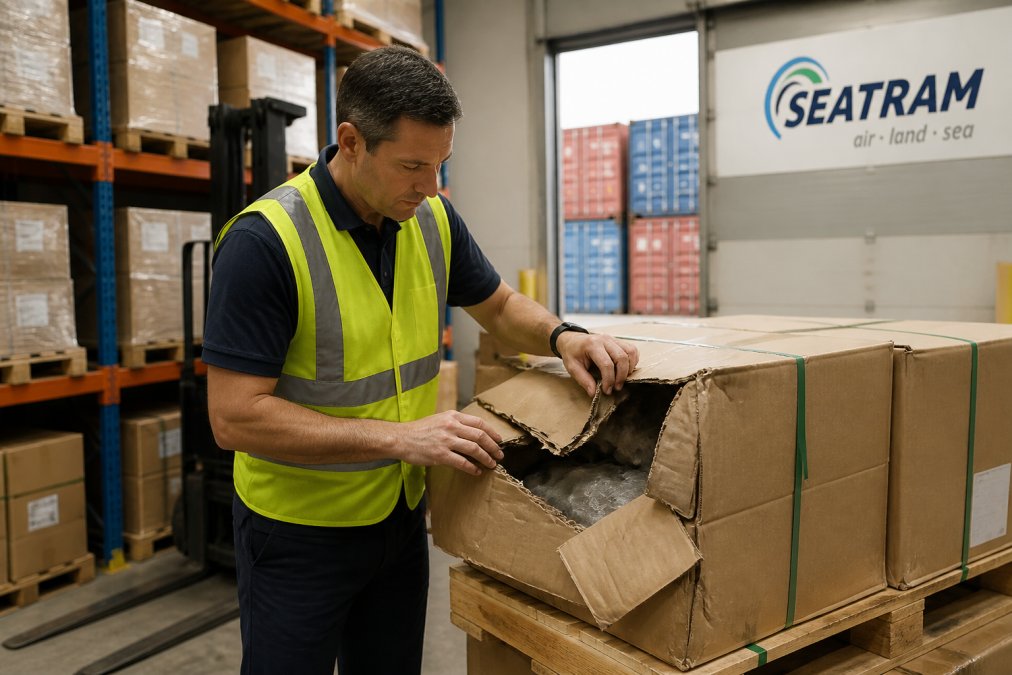
Step 1: Document the damage immediately. Before the delivery driver leaves, inspect the cargo. Photograph all damage from multiple angles. Note the damage on the delivery receipt. Signing a clean receipt without noting damage can void your claim entirely.
Step 2: Notify your freight forwarder in writing. Contact your forwarder as soon as possible. Most freight forwarding agreements require written notice of damage within three to seven days of delivery.
Step 3: Preserve the damaged goods. Do not dispose of damaged cargo before the claim is assessed. Insurers and carriers need to inspect the goods to validate the claim.
Step 4: Gather your documentation. A cargo damage claim requires:
- Commercial invoice showing the declared value of goods
- Packing list
- Bill of lading or airway bill
- Survey report or damage report from an independent assessor
- Photographs of the damage
- Written notification sent to the carrier and forwarder
Step 5: Lodge the formal claim. Submit your claim to the relevant party: the carrier if the damage occurred in their care, your cargo insurer if you hold a policy, or the freight forwarder if their error caused the loss. The Australian Maritime Safety Authority guidance on cargo claims provides useful reference on carrier obligations under Australian law.
Step 6: Follow up and negotiate. Carriers and insurers rarely settle at the first offer. Keep records of all correspondence.
Checklist for contract review before you ship:
- Have you read the forwarder’s standard trading conditions?
- Do you know the liability limit per package or consignment?
- Have you confirmed whether cargo insurance is included or must be arranged separately?
- Do the agreed Incoterms match your risk appetite?
- Is there a clear process for damage notification in the freight forwarding agreement?
If any of these are unclear, contact our staff for further assistance before your next shipment. Getting these details right before cargo moves is far simpler than resolving a disputed claim after the fact.
Frequently Asked Questions
Is a freight forwarder responsible for damaged cargo?
A freight forwarder's responsibility depends on the circumstances. Forwarders are generally liable for their own negligence, such as errors in documentation or misdescription of goods. However, they are not automatically liable for damage caused by the carrier. If the carrier caused the loss, the claim is typically directed at the carrier. Your freight forwarding agreement and any cargo insurance policy you hold will determine how financial loss is handled. Contact our staff if you need help understanding your specific situation.
What does freight forwarder liability insurance cover?
Freight forwarder liability insurance covers the forwarder's legal liability arising from errors and omissions, negligent acts, and breaches of duty in their professional capacity. This can include incorrect customs documentation, failure to follow shipping instructions, or care, custody and control incidents. It does not cover the full value of your cargo the way a dedicated cargo insurance policy does. Shippers are generally advised to arrange their own shipment value protection rather than relying solely on the forwarder's liability cover.
What is the difference between carrier liability and forwarder liability?
Carrier liability refers to the legal obligation of the shipping line, airline, or road carrier to compensate for cargo loss or damage during transit. This is governed by frameworks such as the Hague-Visby Rules under the Sea-Carriage of Goods Act 1991, and is often subject to strict package limitation caps. Forwarder liability, by contrast, relates to the freight forwarder's duty of care in arranging that carriage. A forwarder who makes a clerical error or fails to follow instructions can be held liable independently of the carrier.
How do I claim for damaged cargo during transit?
Start by noting the damage on the delivery receipt before signing. Photograph all damage immediately and retain the original packaging. Notify your freight forwarder and cargo insurer in writing as soon as possible, as most policies have strict time limits. Gather your bill of lading, commercial invoice, packing list, and any survey or inspection reports. Submit a formal written claim with supporting documents. Liability limits under the contract of carriage may apply, so cargo insurance is often essential for full recovery. Our staff can guide you through the process.