
Table of Contents
- What Freight Forwarding Companies Do
- The Freight Forwarding Process: End-to-End Workflow
- Freight Forwarder Costs: Understanding Landed-Cost Calculations
- Freight Tracking and Management: Real-Time Visibility
- Choosing the Right Freight Forwarder: A Practical Checklist
- Air, Sea, and Surface Freight: Which Mode Suits Your Cargo
- Customs Clearance and Biosecurity: Compliance Made Simple
- Frequently Asked Questions
Last Updated: October 15, 2026
What Freight Forwarding Companies Do
Freight forwarding companies are logistics intermediaries that manage the movement of goods across borders and between locations on behalf of importers and exporters. They don’t own ships or aircraft, instead, they consolidate shipments, arrange transport, handle documentation, and coordinate customs clearance to get your cargo from origin to destination safely and efficiently.
Think of a freight forwarder as the orchestrator of your supply chain. When you ship internationally, you’re juggling multiple carriers, regulatory bodies, insurance providers, and port operators. A freight forwarder navigates that complexity for you. They book space with airlines and shipping lines, prepare the paperwork that satisfies customs authorities, arrange insurance coverage, and track your shipment in real time. For businesses handling perishables, hazardous cargo, or oversized items, this expertise becomes critical, one mistake in documentation or temperature control can mean spoiled goods or regulatory fines.
At Seatram, we manage the entire logistics operation so you can focus on your business. Our team handles the coordination, compliance, and customer communication. The result: cargo that arrives on time, within budget, and in perfect condition.
The Freight Forwarding Process: End-to-End Workflow
The journey from your warehouse to your customer’s door involves multiple stages, each with specific requirements. Understanding this workflow helps you anticipate timelines, costs, and potential delays.
Your shipment begins with a quote request. You provide details: weight, dimensions, origin, destination, cargo type, and required delivery date. The forwarder calculates costs based on available transport modes, air, sea, or surface, and presents options with transit times and all-in pricing. Once you approve, the booking is confirmed with the carrier.
Next comes pickup and consolidation. For smaller shipments, your cargo may be consolidated with other consignments heading to the same region, reducing your per-unit cost. For full containers or pallets, direct booking applies. Your goods are collected, inspected, weighed, and prepared for transport.
Then the shipment moves through the primary transport leg, the longest part of the journey. Whether by air or sea, your cargo is now in motion. This is where real-time tracking becomes valuable. You can see your shipment’s status, estimated arrival, and any delays caused by weather, congestion, or other factors.
Upon arrival at the destination port or airport, customs clearance begins. This is where documentation accuracy matters most. Any discrepancy between your paperwork and the cargo itself can trigger inspections, holds, and additional fees.
Documentation and Compliance Requirements
Freight forwarding companies must prepare and verify multiple documents before your shipment can move. Each document serves a regulatory or operational purpose, and missing or incorrect information delays everything.
The commercial invoice is the foundation. It lists the goods, their value, quantity, and unit price. Customs authorities use this to assess duties and verify that declared value matches market rates. Undervaluing goods to avoid duties is illegal and carries serious penalties.
The bill of lading (for sea freight) or air waybill (for air freight) is the transport contract and proof of ownership. It specifies the shipper, consignee, cargo description, and terms of carriage. The original bill of lading is a negotiable document, whoever holds it has legal claim to the goods.
The packing list itemises every package and its contents. Customs officials use this to verify that what’s inside matches what you declared. For hazardous cargo, a dangerous goods declaration is mandatory, detailing the substance, hazard class, and emergency procedures.
For imports into Australia, the Customs Import Declaration (CID) must be lodged with the Australian Border Force. This triggers duty assessment and quarantine screening if applicable. Biosecurity requirements are particularly strict, food, plants, animal products, and certain textiles require import permits and may be subject to inspection.
Cargo Insurance and Packaging Standards
Cargo in transit faces multiple risks: weather damage, theft, handling accidents, and mechanical failure. Insurance protects your financial exposure. Most freight forwarders offer all-risk coverage, which protects against accidental loss or damage during transport and warehousing.
Packaging standards vary by cargo type. General goods require sturdy boxes or pallets with proper securing. Fragile items need cushioning materials and reinforced packaging. Perishable goods must be packed in insulated containers with temperature-control elements. Hazardous cargo requires UN-certified packaging and labelling that meets international standards.
For international shipments, packaging must withstand multiple handoffs, stacking, and environmental exposure. Undersized or poorly packed shipments often arrive damaged, triggering insurance claims and customer dissatisfaction. Professional freight forwarding companies inspect packaging before shipment and recommend upgrades when necessary.
Freight Forwarder Costs: Understanding Landed-Cost Calculations
Shipping costs are rarely simple. What looks like a competitive quote can obscure hidden fees that inflate your final bill. Understanding each cost component helps you compare quotes accurately and budget effectively.
Cost Components and Transparent Pricing
The freight charge is the primary cost, the fee for moving your cargo from origin to destination. This depends on weight, volume, distance, and transport mode. Air freight is priced per kilogram; sea freight is priced per container or cubic metre. Surface transport is typically priced per pallet or shipment.
Fuel surcharges are common and variable. Carriers adjust these monthly based on crude oil prices. Reputable freight forwarding companies disclose fuel surcharges upfront and explain how they’re calculated.
Port fees and terminal charges apply at both origin and destination. These cover loading, unloading, and storage at the port or airport. For sea freight, these can range significantly depending on the port and container type.
Customs clearance fees cover the forwarder’s time and expertise in preparing documentation and liaising with customs authorities.
Documentation fees cover preparation of invoices, bills of lading, certificates of origin, and other required paperwork. Some forwarders bundle this into their service; others charge separately.
Landed cost, the total cost of goods including freight, insurance, duties, and all fees, determines your true cost of goods sold. A forwarder who provides transparent, itemised quotes helps you calculate this accurately.
Freight Tracking and Management: Real-Time Visibility
Once your shipment is in transit, visibility becomes critical. You need to know where your cargo is, when it will arrive, and whether delays are developing. Real-time tracking transforms logistics from a black box into a managed process.
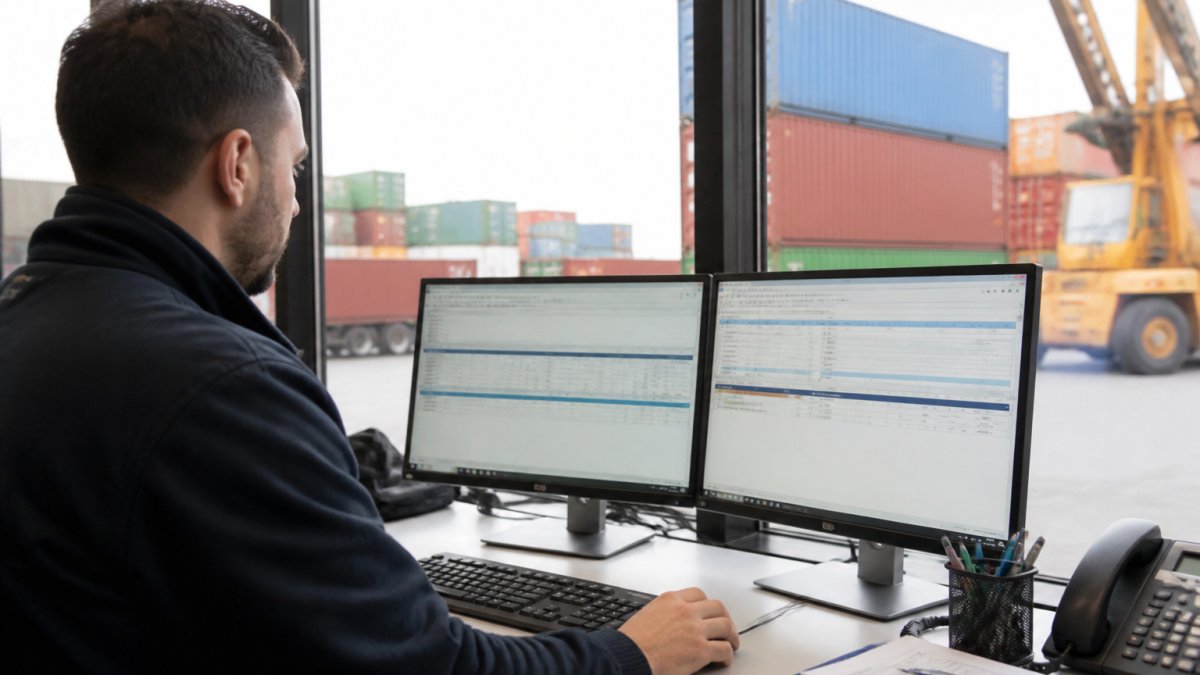
Modern freight forwarding companies integrate tracking systems that pull data from carriers, ports, and customs systems. You can see your shipment’s location, current status, and estimated time of arrival. For air freight, updates occur every few hours. For sea freight, updates are less frequent but still informative.
Proactive alerts notify you of delays, weather impacts, or customs holds. Rather than discovering a problem when your shipment misses its delivery window, you’re informed immediately and can take corrective action.
Integration with your systems matters too.
Choosing the Right Freight Forwarder: A Practical Checklist
Selecting a freight forwarding company is a significant decision. The wrong choice can mean delayed shipments, damaged cargo, unexpected fees, or poor customer service. The right choice becomes a strategic advantage, a partner who understands your supply chain and proactively solves problems.
Key Evaluation Criteria and Questions to Ask
Start by assessing their service scope. Do they handle your specific cargo types, perishables, hazardous materials, oversized items, or general goods? Do they operate the trade lanes you use?
Ask about their carrier relationships. A forwarder with direct relationships with major airlines and shipping lines can often secure better rates and priority space during peak seasons.
Transparency on pricing is non-negotiable. Request itemised quotes that break down freight charges, surcharges, fees, and any variables. Ask which costs are fixed and which may change.
Evaluate their technology infrastructure. Can they provide real-time tracking? Do they integrate with your systems? Is their tracking portal intuitive and accessible 24/7? Poor visibility creates anxiety and wastes your team’s time chasing status updates.
Ask about their customs expertise. For imports into Australia, do they understand Australian Border Force requirements and biosecurity screening? Can they handle duty drawback claims or preferential trade agreements? Customs delays are often preventable with proper knowledge.
Assess their responsiveness and communication. Contact them with questions and observe how quickly they respond.
Finally, consider their track record. How long have they been in business? Do they have experience with your industry? What’s their reputation for on-time delivery and damage-free shipments?
Air, Sea, and Surface Freight: Which Mode Suits Your Cargo
Each transport mode has distinct characteristics. Choosing the right one depends on cargo type, urgency, volume, and budget.
Air freight is the fastest option. It’s ideal for time-sensitive shipments, perishables with short shelf lives, or high-value goods where speed justifies the premium cost. Air freight is priced per kilogram, making it expensive for heavy, low-value cargo.
Sea freight is the most cost-effective for large volumes. A full container can move internationally for a fraction of the per-unit cost of air freight. Transit times are longer, but the savings are substantial for non-urgent shipments.
Surface freight, road and rail, dominates regional transport. Within Australia or to nearby regions, surface transport is economical and reliable. For cross-continent shipments, rail is efficient; for last-mile delivery, road is standard. Surface freight is slower than air but faster than sea.
Perishable goods often require air freight to preserve quality, though expedited sea freight with temperature control is viable for some products. Hazardous cargo may be restricted by air (many substances are banned) but moves routinely by sea.
Your freight forwarder should recommend the mode that balances speed, cost, and risk for your specific shipment. A good forwarder doesn’t push the most profitable option, they recommend the best option for your needs.
Customs Clearance and Biosecurity: Compliance Made Simple
Customs clearance is where international shipments often stall. Regulatory requirements are strict, and mistakes trigger inspections, holds, and penalties. A knowledgeable freight forwarder simplifies this process.
For imports into Australia, the Australian Border Force administers customs clearance. Your shipment requires a Customs Import Declaration (CID) lodged by a licensed customs broker. The declaration includes cargo description, value, origin, and intended use.
Biosecurity screening is mandatory for certain goods. Food, plants, animal products, seeds, and timber require import permits and may be inspected. Failure to declare restricted items or providing false information carries serious penalties.
Quarantine holds can delay shipments by days or weeks if biosecurity concerns arise. A forwarder familiar with biosecurity requirements helps you prepare compliant shipments and documentation that passes screening without holds.
Duty drawback and trade preference schemes can reduce your import costs. If you re-export goods or use them in manufacturing for export, you may claim duty drawback. If you import from certain countries under free trade agreements, preferential tariffs apply.
Navigating international shipping requires expertise across transport modes, customs regulations, documentation standards, and supply chain coordination. The right freight forwarding company becomes an extension of your operations, managing complexity, reducing risk, and keeping your shipments moving.
Frequently Asked Questions
What do freight forwarding companies do?
Freight forwarding companies arrange and manage the movement of cargo across international borders and domestic routes. They coordinate air freight, sea freight, and surface transport; handle customs clearance and documentation; arrange warehousing and last-mile delivery; and provide real-time tracking. They act as intermediaries between shippers and carriers, negotiating rates and optimising shipping routes to ensure cargo arrives safely, on time, and within budget.
How do I choose a freight forwarder?
Evaluate freight forwarders on their experience with your cargo type (perishables, hazardous goods, oversized items), their shipping network and transit times, transparency on freight rates and landed costs, real-time tracking capabilities, customs brokerage expertise, and responsiveness to your shipment volume. Request references from similar businesses, confirm their service scope (wharf-to-wharf or door-to-door), and clarify what costs are included versus what incurs additional fees.
What is included in freight forwarder costs?
Freight forwarder costs typically include the base freight rate (per kilogram or cubic metre), fuel surcharges, port or terminal fees, customs clearance fees, documentation charges, and insurance. Some providers bundle these into a single landed-cost quote; others itemise them separately. Pricing depends on cargo weight, volume, destination, transit time, and cargo type. Always request an itemised breakdown before committing to understand exactly what is covered and what incurs additional charges.
How can I track my shipment in real time?
Most freight forwarding companies provide online tracking platforms where you enter your shipment reference number to view current location, estimated delivery date, and status updates. Quality providers offer proactive notifications (email or SMS) when shipments move between transit stages. Real-time tracking should show specific milestones: departure from origin, customs clearance, arrival at destination port or warehouse, and final delivery. Confirm that your chosen forwarder’s tracking system provides granular updates rather than generic ‘in transit’ statuses.