Table of Contents
- What Freight Management System Features Actually Matter
- Real-Time Shipment Visibility Tools: What to Expect
- Freight Tracking Software Pricing Models Compared
- How to Choose Freight Tracking Software for Business
Last Updated: August 20, 2026
Choosing the wrong freight tracking software for business is an expensive mistake. Shipments go dark, customers chase updates manually, and your operations team spends hours on the phone with carriers instead of managing exceptions. At Seatram, we work with businesses across sea, air, and land freight every day, and the pattern is consistent: companies that invest in the right logistics software spend less time firefighting and more time growing.
This guide cuts through the noise. Below, we cover the features that actually move the needle, what real-time visibility tools look like in practice, how pricing models compare, and the decision framework you need to choose the right platform for your operation.
Quick Picks:
- Best for end-to-end visibility: Platforms with native carrier integrations and live GPS tracking
- Best for growing wholesalers: Cloud-based systems with ERP connectivity and automated invoicing
- Best for compliance-heavy cargo: Solutions with built-in shipment documentation and audit trails
What Freight Management System Features Actually Matter
The biggest mistake businesses make when evaluating a freight management system is chasing the feature list. According to Supply Chain Management Review’s analysis of logistics software adoption, the most-used features are carrier integration, automated invoicing, and proof-of-delivery capture. Everything else gets switched off within 90 days.
Prioritise these:
- Carrier integration: Your platform should connect directly to carriers via API, pulling shipment status updates automatically rather than relying on manual data entry.
- Automated invoicing and freight audit: Freight cost discrepancies between quoted and invoiced rates are common. A system with automated freight audit catches these before payment.
- Proof of delivery capture: Digital POD with timestamp and signature reduces disputes and accelerates accounts receivable cycles.
- Shipment documentation management: For businesses handling customs clearance, biosecurity compliance, or hazardous cargo, centralised document storage is essential. The Australian Border Force import documentation requirements specify what records must be retained and for how long.
- Route planning and dispatch optimisation: Particularly relevant for last-mile delivery, where route efficiency directly affects cost per delivery.
- Reporting and freight cost analysis: Data-driven insights into lane performance, carrier reliability, and cost trends separate reactive logistics from genuinely optimised supply chains.
|
Feature |
Why It Matters |
Without It |
|---|---|---|
|
Carrier API integration |
Accurate, live shipment status |
Manual tracking, data lag |
|
Freight audit |
Catches billing errors pre-payment |
Overpayment, disputes |
|
Digital POD |
Faster invoicing, fewer disputes |
Delayed cash flow |
|
Document management |
Compliance and customs readiness |
Clearance delays |
|
Freight cost reporting |
Identifies savings opportunities |
Blind spend management |
Real-Time Shipment Visibility Tools: What to Expect
Real-time shipment visibility means knowing where your cargo is at any given moment, across every mode of transport, without needing to call anyone.
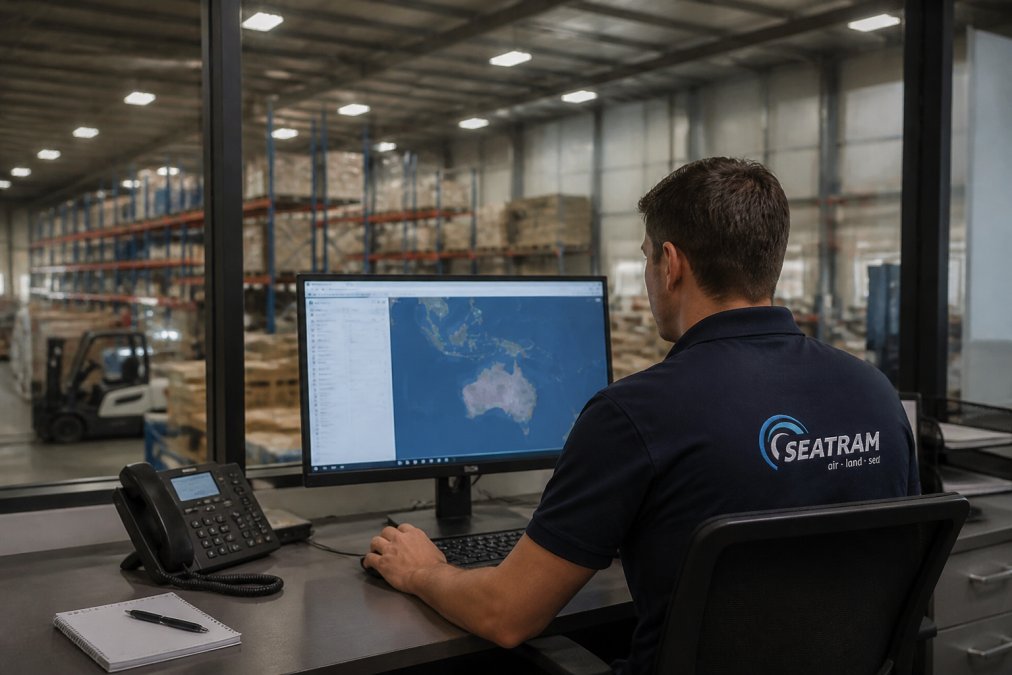
GPS tracking works well for road freight, where telematics devices transmit location continuously. For sea freight, visibility depends on vessel AIS data and port milestones, which typically update every few hours. Air freight sits somewhere in between, with airline system integrations providing departure, arrival, and connection updates.
A credible visibility tool should deliver:
- Live map interface showing cargo location across all active shipments
- Automated exception alerts when a shipment deviates from its scheduled route or timeline
- Milestone notifications pushed to your team and, optionally, your customers
- Estimated time of arrival recalculation based on current conditions
- Multi-modal tracking across sea, air, and road within a single dashboard
Businesses that give customers self-service tracking access reduce inbound “where is my order?” queries significantly. According to Gartner’s supply chain technology research, visibility tools that extend to end customers measurably improve satisfaction scores and reduce support costs.
Freight Tracking Software Pricing Models Compared
Freight tracking software pricing varies considerably depending on shipment volume, user count, and integration depth.
Common pricing structures:
- Per-shipment pricing: You pay a fee for each consignment tracked. This suits lower, irregular volumes but becomes expensive at scale.
- Subscription tiers: A flat monthly fee based on shipment volume bands or user count. Most cloud-based platforms use this model. Predictable for budgeting, but you pay for capacity whether you use it or not.
- Enterprise licensing: Annual contracts with custom pricing, typically for high-volume businesses or those requiring deep ERP integration and dedicated support.
- Freemium entry points: Some platforms offer limited free tiers to attract smaller businesses, with paid upgrades unlocking automation, integrations, and reporting.
For pricing specific to your shipment profile and operational requirements, contact providers directly for a tailored quote. Seatram’s team can also advise on what to look for in a vendor contract based on the freight types and volumes you manage.
|
Pricing Model |
Best For |
Key Watch-Out |
|---|---|---|
|
Per-shipment |
Low or irregular volume |
Expensive at scale |
|
Subscription tier |
Consistent monthly volume |
Paying for unused capacity |
|
Enterprise licence |
High volume, complex integrations |
Long contract lock-in |
|
Freemium |
Early-stage evaluation |
Feature limits hit quickly |
How to Choose Freight Tracking Software for Business
Selecting freight tracking software for business is a procurement decision with long operational consequences. Start with a post-implementation ROI framework before you sign anything. Calculate your current cost of manual tracking: staff hours spent chasing updates, billing disputes from missed freight audits, customer service time handling shipment queries. A platform that eliminates those costs pays for itself; one that does not is overhead.

Decision checklist:
- Does the platform integrate with your existing ERP or accounting system via documented API?
- Does it support the freight modes you actually use: sea, air, road, or a combination?
- Can it handle your cargo types, including perishables, hazardous goods, or oversized items if relevant?
- Does it provide shipment documentation storage and retrieval for compliance purposes?
- What is the vendor’s approach to scalability as your shipment volumes grow?
- Is there a sustainability or carbon footprint reporting module, increasingly required for corporate ESG reporting?
- What does the API documentation look like for your developers? Is it current, versioned, and supported?
- What training and onboarding support is included, and what is the realistic go-live timeline?
Ask vendors for references from businesses at your target volume. As noted in Logistics Bureau’s guide to logistics technology selection, the implementation phase is where most software projects fail. Vendor support quality during go-live is as important as the feature set.
Businesses importing or exporting goods must ensure their chosen platform supports the documentation requirements under the Customs Act 1901 and related Australian Border Force instruments. A freight management system that cannot store or produce compliant records creates regulatory risk regardless of how well it tracks shipments.
Frequently Asked Questions
What are the key features to look for in freight tracking software?
The most important features are real-time GPS tracking with frequent status updates, carrier integration across sea, air, and land, automated proof of delivery, and shipment documentation management. For businesses handling imports or exports, customs documentation support and biosecurity compliance tools are essential. API connectivity to your existing ERP or accounting system prevents double-handling of data. Freight cost analysis and reporting round out a capable platform by helping you identify where spend can be reduced.
How does real-time freight tracking improve supply chain efficiency?
Real-time tracking removes the guesswork from supply chain visibility. Instead of chasing status updates by phone or email, your team sees shipment location and estimated arrival on demand. This lets you schedule warehouse staff, notify customers proactively, and catch delays before they cascade. For perishable or time-sensitive cargo, early warning of a delay can mean the difference between salvaging a shipment and absorbing a loss. Freight tracking software for business that updates continuously is far more useful than systems that batch-update once per day.
What is the difference between a TMS and basic freight tracking software?
A Transport Management System (TMS) covers the full logistics workflow: freight booking, carrier selection, route planning, dispatch optimisation, invoicing, and reporting. Basic freight tracking software focuses narrowly on shipment status visibility. For small businesses running low shipment volumes, a tracking-only tool may be sufficient. Businesses managing multiple carriers, 3PL relationships, or complex international supply chains typically need a TMS or a freight forwarding partner whose platform provides the same end-to-end functionality.
Is cloud-based freight software better for small businesses?
Cloud-based platforms suit most small and mid-sized businesses because there is no infrastructure to maintain, updates happen automatically, and you pay only for what you use. Accessing shipment data from any device matters when staff are split across office and warehouse. The trade-off is that you depend on the provider's uptime and data security practices, so check their service level agreements before committing. For businesses doing fewer than 50 shipments per month, a cloud-based freight tracking software for business is almost always the more practical and cost-effective option.
How can freight tracking software help with compliance and reporting?
Good freight tracking software stores shipment documentation, customs declarations, and proof of delivery in one auditable record. This supports compliance with the Australian Border Force's import and export requirements and makes it straightforward to respond to a biosecurity or customs query. Automated freight audit features flag billing discrepancies before you pay them. Carbon footprint reporting is increasingly available in newer platforms, helping businesses meet sustainability disclosure expectations under Australian reporting frameworks.