
Quick Summary
Choose cold chain logistics services by first defining your product’s required temperature range and shipment profile. Then confirm temperature control at every handoff, documented monitoring and alert procedures, itemised pricing, and measurable SLAs with a clear excursion response.
- Get the required temperature range confirmed in writing before requesting any quote.
- Ask where sensors are placed and whether placement is documented in a written procedure.
- Confirm calibration intervals, certificates, and whether the monitoring system has been validated.
- Request itemised quotes covering freight, storage, packaging, monitoring, fuel surcharges and exception handling.
- Require SLAs with measurable excursion rates, response times and raw data export for independent verification.
Table of Contents
- What Cold Chain Logistics Covers and Which Products Need It
- Step 1: Define Your Shipment Profile and Temperature Requirements
- Step 2: Assess Storage, Transport and Packaging Capabilities
- Step 3: Check Temperature Monitoring and Data Integrity
- Step 4: Compare Pricing, Service-Level Agreements and KPIs
- Step 5: Plan for Excursions and Confirm Contingency Responses
- Use the Cold Chain Logistics Checklist Before You Sign
- Frequently Asked Questions
What Cold Chain Logistics Covers and Which Products Need It
Last Updated: November 14, 2026
Cold chain logistics is the controlled movement of temperature-sensitive goods from origin to destination without breaking a defined temperature range. When a shipment leaves that range, the product can lose quality, fail compliance checks, or become unsafe to sell. The decisions in this guide are the ones your provider should be able to answer clearly.
Cold chain logistics is the chain of storage, handling and transport that keeps temperature-sensitive products within a set range. Most businesses shipping food, pharmaceuticals, biologics or certain chemicals need it. Australian Government guidance on food storage and transport temperatures
Temperature ranges and product-specific requirements
Every product has its own acceptable range, and that range should drive every other decision. Frozen goods, chilled goods and temperature-stable goods each need different equipment, packaging and monitoring. Ask for the required range in writing before requesting a quote, because a provider that cannot confirm it is not ready to handle the cargo.
Step 1: Define Your Shipment Profile and Temperature Requirements
Start by writing down what you ship, how often, and what happens if it arrives out of range. A profile covers product type, volume per shipment, shipment frequency, origin, destination, transit time and the tolerance for excursions.
Record these details for each product line:
- Required temperature range and allowed deviation
- Typical pallet or carton count per shipment
- Transit time, including customs and handover delays
- Consequence of a temperature breach, such as write-off, recall or customer claim
This profile becomes the brief you send to providers. Without it, quotes will not be comparable.
Step 2: Assess Storage, Transport and Packaging Capabilities
Check whether a provider can hold your product at the required temperature at every handoff, not only during the main leg. Ask about temperature-controlled warehousing, refrigerated transport modes and how each leg is managed. A provider with strong sea freight may still have gaps at the port or on last-mile delivery.
Active versus passive cooling and packaging options
Active cooling uses powered refrigeration, such as reefer containers or refrigerated trucks. Passive cooling relies on insulated packaging and phase-change or gel packs. Active systems suit long or variable routes. Passive systems can work well for short, predictable journeys, but they carry less margin for delay. Ask which method the provider recommends for your profile and why.
Step 3: Check Temperature Monitoring and Data Integrity
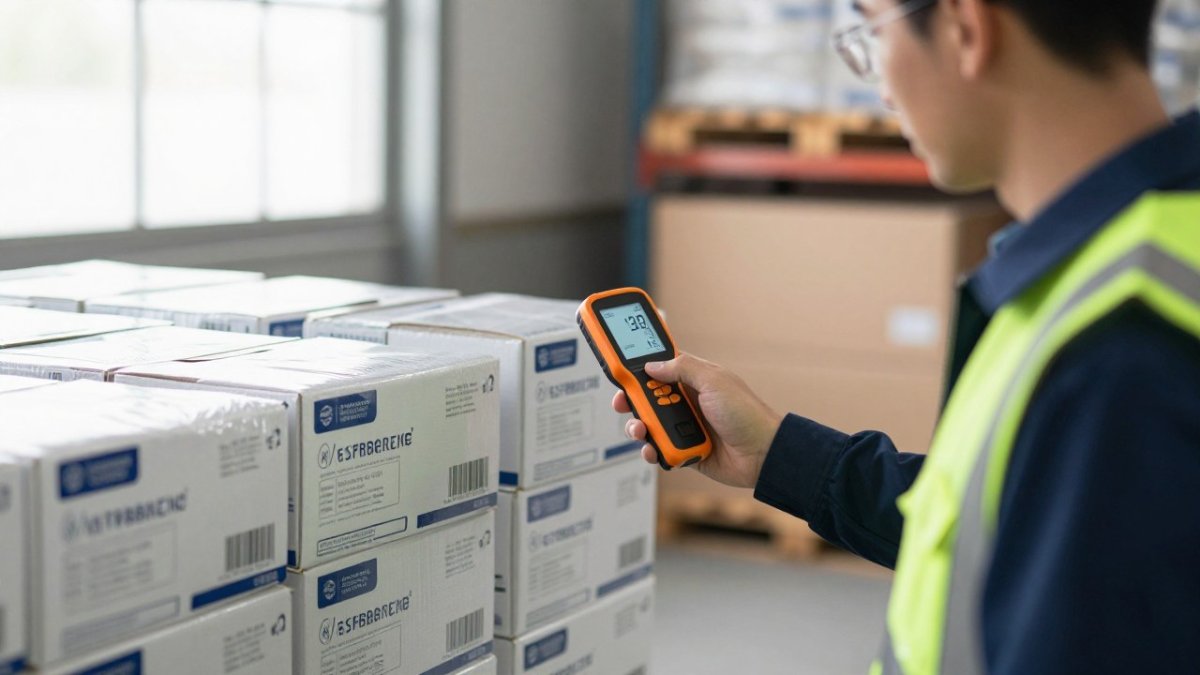
Monitoring is only useful if the data it produces would survive scrutiny by a customer, an auditor or a regulator. To see how providers keep every shipment visible in transit, review that page alongside the questions below. That means asking not just whether the provider uses sensors, but how the system is designed, validated and documented. A provider that can answer the questions below in writing is materially lower risk than one that cannot.
Sensor placement and coverage
Temperature inside a pallet, a reefer container or a refrigerated truck is not uniform. Ask where sensors are placed: in the return-air stream, near the door, in the warmest and coolest expected positions, or inside the product load itself. For pharmaceutical and biological shipments, product-level or simulated-product placement is often expected, because air temperature can differ from product temperature. Confirm how many sensors are used per shipment or per container, and whether placement is specified in a written procedure or left to the loader.
Calibration and monitoring-system validation
A reading is only as good as the instrument that produced it. Ask how sensors and loggers are calibrated, against what reference, at what interval, and whether calibration certificates are available. Ask whether the monitoring system as a whole has been validated, that is, tested to show it reliably detects and records excursions at the thresholds that matter to your product.
Alert thresholds and escalation
Define the thresholds in advance: the target range, the allowed short deviation, and the point at which an alert becomes an escalation. Ask how often readings are taken, how quickly an alert is generated, who receives it, and what the documented response is. Confirm the escalation path out of hours and across time zones, and ask for a sample alert and a sample corrective-action record.
Audit trails, data access and record retention
Ask whether the system produces an immutable audit trail showing who accessed or changed data and when. Confirm that raw data, not only summaries, can be exported in a usable format, that you retain access after the contract ends, and how long records are kept. Retention periods should at least match your own regulatory and contractual obligations; for some products that means years, not weeks.
Therapeutic Goods Administration guidance on storage and transport of medicines
Questions to put in writing
- Where are sensors placed, and is placement documented?
- How and how often are sensors calibrated, and can I see certificates?
- Has the monitoring system been validated, and against what thresholds?
- What are the alert thresholds, who is alerted, and how fast?
- Can I export raw data, and for how long is it retained?
- Is there an audit trail of data access and changes?
- Who owns the data, and can I keep access after the contract ends?
Step 4: Compare Pricing, Service-Level Agreements and KPIs
Cold chain quotes are rarely comparable line for line, because providers bundle different services and bury different surcharges. The way to compare fairly is to ask every provider to price the same shipment profile from Step 1 and to itemise the quote into the components below.
Cost components to have itemised:
- Linehaul or freight charge for each leg (sea, air, road, rail)
- Temperature-controlled storage and handling, charged per pallet per day or per week
- Packaging and insulation, including phase-change or gel packs and any conditioning of those packs before use
- Active equipment, such as reefer containers, refrigerated trucks or temperature-controlled air cargo containers
- Monitoring hardware and data services, including loggers, sensors, SIM or satellite connectivity and data platform access
- Fuel surcharges and any other variable levies
- Customs brokerage, biosecurity inspection and port or terminal charges for international lanes
- Insurance, including cover for temperature excursion and spoilage
- Exception handling: re-icing, re-packing, diversion, disposal and the labour to manage a breach
- Returns, redeliveries and failed-delivery fees
Total cost of ownership is not the lowest headline rate. A cheaper linehaul with weak packaging can produce more excursions, and each excursion carries write-off, replacement freight, customer credit and administrative cost.
Australian Competition and Consumer Commission guidance on unfair contract terms
Service-level agreements and measurable KPIs
An SLA that promises “temperature compliance” without a number is not measurable. Define each measure, the target, the measurement method, the reporting frequency and the remedy if the target is missed. Useful contract measures include:
- Temperature-excursion rate: the percentage of shipments with any reading outside the agreed range, and separately the percentage with a breach exceeding a stated duration or magnitude. Define whether a single out-of-range reading counts or only sustained breaches.
- On-time delivery: percentage of shipments delivered within the agreed window, measured from the same timestamp source for every provider.
- Excursion response time: minutes or hours from alert to acknowledged corrective action, with a named contact and an escalation path.
- Shipment visibility: the percentage of the journey with live temperature and location data, and the data refresh interval.
- Claims resolution: days from claim lodgement to written outcome, and the documentation the provider must supply.
- Data delivery: how soon after delivery the temperature report and audit-ready export are available.
Watch out: an SLA measured only on the provider’s own dashboard can hide gaps at handoffs. Agree in advance which party’s data is authoritative when two monitoring systems disagree, and require raw data export so you can verify the KPI independently.
A practical provider-selection scorecard
Turn the criteria in this guide into a weighted scorecard so every provider is assessed the same way. A workable pattern is to score each criterion from 1 to 5, weight it by importance to your business, and multiply. Example criteria and indicative weights:
- Temperature range coverage and handoff control (high weight)
- Monitoring, calibration and data export (high weight)
- Excursion response and contingency plan (high weight)
- SLA and KPI definitions with remedies (medium weight)
- Itemised pricing and total cost transparency (medium weight)
- Certifications and quality management (medium weight)
- Lane coverage and transit time (medium weight)
- References and audit results (low to medium weight)
Questions to put to every provider: Can you show a sample temperature report and a sample excursion report? Who is alerted, how quickly, and what do they do? What is your excursion rate over the last 12 months for shipments like mine? Which certifications do you hold, and can I see the certificate and scope? What is excluded from the quote? What happens to liability if a breach occurs at a handoff you do not control?
Step 5: Plan for Excursions and Confirm Contingency Responses
No provider can promise zero excursions, so the real test is how they respond when one happens. Ask what the contingency plan is for equipment failure, delayed flights, port congestion and customs holds. Confirm who makes the decision to discard, divert or accept a shipment, and how quickly you will be told.
Plan your own side too. Decide in advance how you will assess a breached shipment, document it and communicate with your customers. For an end-to-end view of how cold chain operations are managed step by step, see that guide.
Use the Cold Chain Logistics Checklist Before You Sign
Before signing, confirm each of these points in writing:
- Required temperature range is confirmed for every product
- Each handoff point is covered by temperature control
- Monitoring, alert contacts and data export are documented
- Quote lists all surcharges and fees
- SLA includes measurable on-time and compliance KPIs
- Excursion response and liability are defined
For a fuller view of the options, read our guide on how to ship temperature-sensitive products safely, and compare costs in our cold chain logistics cost per shipment overview. If you are weighing integrated warehousing, see integrated 3PL warehouse solutions before you commit. Request a quote from Seatram and send us your shipment profile, so we can tell you what we would recommend for your products.
Frequently Asked Questions
How do I choose a cold chain logistics provider?
Start with your shipment profile: the product, required temperature range, volumes and lanes. Then shortlist providers that can show documented temperature control across storage, transport and handover points. Ask for their monitoring method, validation records and service-level agreement before comparing prices. Pricing depends on quantity, dates and delivery terms, so request a written quote from Seatram or any other provider and check exactly what it includes before deciding.
What questions should I ask a cold chain logistics provider?
Ask how temperatures are monitored in transit and whether data loggers or sensors are calibrated. Ask what happens during a temperature excursion, who is notified and how quickly, and what the documented response is. Confirm which costs are included in the quote, such as fuel surcharges and port fees, and which are charged separately. Request references from businesses with similar shipment volumes and cargo types.
How do cold chain providers monitor temperature during transport?
Most providers use data loggers or sensors inside the load that record temperature at set intervals, with some offering real-time alerts through shipment tracking. Good providers can show you the recorded data after delivery and explain how alarms are triggered. Ask whether monitoring is continuous from pickup to delivery, including any transfers between transport modes, and how the data is stored and validated.
What happens if a cold chain shipment goes outside its required temperature range?
A temperature excursion should trigger a defined response: alerting the consignee, assessing how long the product was out of range, and deciding whether it can be released, must be tested or should be discarded. Confirm in advance who makes that decision, what evidence the provider supplies, and who carries liability. Written contingency planning with the provider reduces delays and disputes when an excursion occurs.
