
Table of Contents
- What You’ll Need Before You Start
- Step 1: Check BICON Import Conditions for Your Commodity
- Step 2: Identify and Remove Biosecurity Risk Material
- Step 3: Meet Packaging Material Compliance Standards
- Step 4: Prepare Documentation and Declarations
- Step 5: Understand DAFF Biosecurity Inspection Fees
- Step 6: Apply BMSB Seasonal Requirements for Your Shipment
- Common Reasons for Inspection Failure and How to Fix Them
- Frequently Asked Questions
Last Updated: October 1, 2026
What You’ll Need Before You Start
Getting a shipment through border control starts long before the container reaches port. Biosecurity inspection is the process border officers use to check that imported goods are free from pests, soil, seeds and other risks to agriculture and the environment.
Before you begin, gather these basics:
- Your commercial invoice and packing list
- The relevant BICON import conditions for your commodity
- Any import permit or treatment certificate
- Supplier contact details for quick fixes
- A photo record of how the goods were packed
Miss one of these and the whole process slows down.
Step 1: Check BICON Import Conditions for Your Commodity
BICON is the Biosecurity Import Conditions system run by the Department of Agriculture, Fisheries and Forestry. It is the single source of truth for what your goods need before they can enter the country. Every commodity has its own conditions, and they change.
Search BICON by commodity name, tariff code or scientific name. Read the full conditions, not just the summary. Look for:
- Whether an import permit is required
- Required treatments, such as fumigation or heat treatment
- Labelling and packaging rules
- Inspection rates for your product type
A common mistake is checking BICON once at the start of a contract and never again. Conditions can shift mid-season, especially for plant products. Confirm them again before every shipment.
Screenshot your BICON result and save the date. If conditions change between booking and arrival, that timestamp proves what you were working from.
Step 2: Identify and Remove Biosecurity Risk Material
Biosecurity risk material is anything that could carry pests, diseases or seeds into the country. It includes soil, plant debris, live insects, snails and non-commodity seed. Officers look for it on pallets, in container floors and inside packaging.
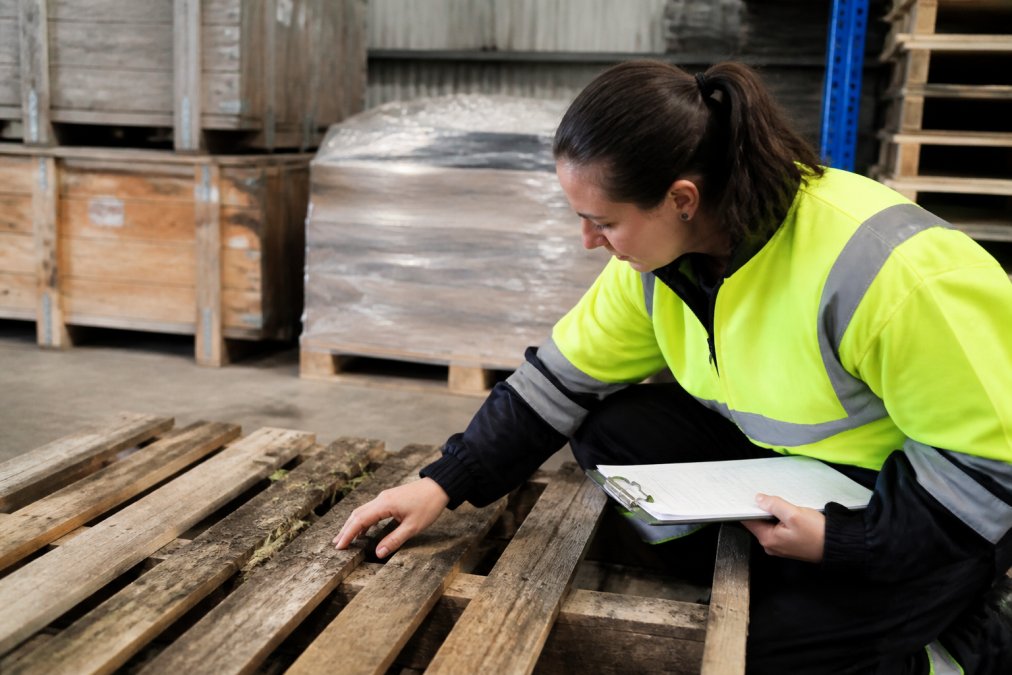
Walk your consignment before it ships and check for:
- Soil on tyres, pallets or machinery
- Plant matter stuck in pallet crevices
- Live insects or egg masses
- Seed spilled from previous cargo
Clean anything suspect before packing. Once goods are sealed, contamination is far harder to fix.
Step 3: Meet Packaging Material Compliance Standards
Wood packaging is one of the most common reasons a consignment is pulled aside, and it is also one of the easiest risks to eliminate before freight leaves the supplier.
A compliant ISPM 15 stamp contains four elements:
- The IPPC symbol (the wheat ear logo)
- The two-letter country code of where the treatment was applied (for example, AU for Australia)
- The producer or treatment provider registration number
- The treatment code: HT for heat treatment, MB for methyl bromide, or DH for dielectric heating
Other packaging rules worth building into your supplier checklist:
- No straw, hay, chaff or loose plant material as filler or cushioning. These are high-risk and routinely cause holds.
- Processed wood products such as plywood, particleboard, oriented strand board and veneer are exempt from ISPM 15 because they are manufactured under heat and pressure, but they still need to be clean and free of bark or soil.
- Reused pallets are a frequent problem. A pallet that was compliant on its last journey may have picked up soil, seed or insect activity in a yard. Inspect every reused pallet, not just the new ones.
- Cardboard and paper packaging should be stored off the floor and away from open warehouse doors where rodents and insects can reach it.
- Plastic pallets and slip sheets avoid the ISPM 15 question entirely and are worth considering for high-frequency lanes.
Ask your supplier for a photo of the ISPM 15 stamp on each pallet type before the container is sealed. Catching a faded or missing stamp at the warehouse is far cheaper than catching it at the wharf.
Packaging that fails these standards is a leading cause of port seizure and re-export. The fix is procedural, not expensive: source compliant materials, verify the stamp, and inspect on arrival at your warehouse before the goods are packed.
Step 4: Prepare Documentation and Declarations
A mismatch between your declaration and the physical goods is one of the fastest ways to earn a full inspection. It also adds storage costs while the consignment sits at the port.
Keep digital copies ready. If an officer requests a treatment certificate, you want it in minutes, not days.
Step 5: Understand DAFF Biosecurity Inspection Fees
DAFF biosecurity inspection fees cover the cost of officers checking your goods. Charges vary by the type of inspection, the time taken and whether it happens at the port or an approved premises. There is no single flat rate, so treat any quoted figure as an estimate until the work is booked.
Fees can include:
- An inspection service charge
- After-hours or weekend surcharges
- Storage and transport if goods are moved
- Re-inspection charges if the first check fails
Step 6: Apply BMSB Seasonal Requirements for Your Shipment
Brown Marmorated Stink Bug, or BMSB, is a seasonal risk. During the BMSB season, goods shipped from certain countries must be treated before arrival. The season typically runs from September to April, and the rules change by risk country.
BMSB seasonal requirements can include:
- Mandatory offshore treatment
- Approved treatment providers only
- Specific certification for the treatment method used
| Step | What to Do | When |
|---|---|---|
| 1 | Check BICON conditions | Before booking freight |
| 2 | Remove risk material | Before packing |
| 3 | Confirm ISPM 15 packaging | Before sealing |
| 4 | Prepare documents | Before departure |
| 5 | Budget inspection fees | Before arrival |
| 6 | Apply BMSB rules | Before shipping in season |
Common Reasons for Inspection Failure and How to Fix Them
Most failures come down to a short list of avoidable problems, and the fix is usually cheaper than the delay.
The common failure triggers
- Soil contamination on machinery, pallets, tyres or container floors. Clean and photograph before packing.
- Missing or expired import permits. Confirm BICON requirements and apply early, permit processing can take longer than freight transit.
- Wrong or incomplete treatment certificate. Use an approved provider and check that the certificate names the correct treatment, commodity and consignment.
- Non-compliant wood packaging. Verify the ISPM 15 stamp before sealing.
- Inaccurate declaration. Match paperwork to the physical goods exactly, including dunnage and packaging.
- Live insects or egg masses found on inspection. These almost always trigger a full unpack and treatment.
- Non-commodity seed or plant debris in the container. Often traced back to a previous cargo or an unclean container.
What happens after a failed inspection
- Re-cleaning. For soil, debris or minor contamination, the goods may be cleaned at an approved premises under biosecurity supervision. This is the cheapest path but requires the goods to be moved and re-presented.
- Re-treatment. For live pests or failed treatments, the consignment may need to be fumigated or heat treated again. This must be done by an approved provider, and the original treatment certificate is superseded.
- Destruction of affected material. If only part of the consignment is contaminated, for example, non-compliant pallets or infested packaging, that portion can be destroyed or disposed of under supervision, allowing the rest to proceed.
- Re-export. If remediation is not feasible or not cost-effective, the goods can be exported. This is the most expensive outcome once storage, transport and re-shipping are added up.
The cost drivers nobody mentions upfront
- Storage at the wharf or a licensed depot, charged per day or per week.
- Transport between the wharf, the approved premises and back.
- Supervision fees for biosecurity officers attending re-cleaning or destruction.
- Re-inspection fees when the goods are presented again.
- Demurrage and detention if the container is not returned within the free period.
Do not attempt to clean, treat or move goods under a biosecurity direction without approval. Acting outside the direction can escalate the matter and add penalties on top of the original issue.
How to reduce the odds of a failure
- Build a pre-shipment checklist that mirrors the BICON conditions for your commodity.
- Photograph the container interior, pallets and packaging before sealing.
- Keep digital copies of permits and treatment certificates accessible within minutes.
- Brief your supplier on ISPM 15 and contamination rules, not just the commercial terms.
- Confirm BICON conditions again immediately before each shipment, not once per contract.
Frequently Asked Questions
What is the typical fee for a biosecurity inspection?
DAFF biosecurity inspection fees vary depending on the type of goods, the inspection method, and whether it occurs during standard hours or after-hours. Fees cover officer time, facility costs, and any treatment required. For current fee schedules, check the DAFF website or ask your freight forwarder. Budget for potential re-inspection charges if your consignment fails the first check.
What happens if my goods fail a biosecurity inspection?
If your goods fail inspection, the biosecurity officer will issue a direction. Options include treatment (fumigation, heat treatment), export, or disposal. You will be responsible for all costs. The remediation process involves working with an approved treatment provider, then re-presenting the consignment for inspection. Delays can be significant, so preparing correctly from the start saves time and money.
How do I check if my goods require an import permit?
Use the BICON database to search your commodity. BICON import conditions will state whether a permit is required, along with any treatment or inspection mandates. If a permit is needed, apply well before shipping. Without it, your goods may be held at the border, incurring storage fees and possible export. Your customs broker can also confirm permit requirements.
What are BMSB seasonal requirements and when do they apply?
BMSB seasonal requirements target the Brown Marmorated Stink Bug, a pest that threatens crops. From September to April each year, certain goods from high-risk countries must meet additional measures, such as mandatory fumigation or heat treatment. Check the DAFF website for the current BMSB season details and target risk countries. Non-compliance can result in port seizure and fines.
Biosecurity rules are strict, and one missed detail can stall a shipment for days. Seatram takes the guesswork out of the process with tailored end-to-end supply chain solutions, customs brokerage and biosecurity support, and real-time tracking across sea, air and land freight. Get started with Seatram and move your goods through border control with fewer surprises.