
Table of Contents
- Why Documentation Completeness Matters for Customs Clearance
- Import Commercial Invoice Requirements
- Import Packing List Requirements
- Transport Documents: Bills of Lading and Air Waybills
- Australian Import Permits and Licences
- Customs Clearance Process for Imports: Step-by-Step Workflow
- Common Documentation Errors and How to Correct Them
- Frequently Asked Questions
Last Updated: October 21, 2026
Why Documentation Completeness Matters for Customs Clearance
Getting your import customs clearance documentation right the first time saves weeks of delays and thousands of dollars in penalties. When customs finds missing or incorrect paperwork, they hold your shipment until it’s resolved, your goods sit in a warehouse while your customer waits.
The real problem isn’t complexity, it’s that most importers treat paperwork as an afterthought. A single missing field on a commercial invoice can trigger a full audit, and a packing list that doesn’t match your bill of lading stops your shipment cold.
The fastest movers aren’t the ones with the simplest goods, they’re the ones with complete, accurate documentation submitted before the shipment arrives. That’s the difference between a two-day clearance and a two-week delay.
This guide covers every document you need, what goes in each one, the workflow that gets your cargo released, and the common errors that trigger holds.
Import Commercial Invoice Requirements
A commercial invoice is your primary proof of what you’re importing, where it came from, and what it cost. Customs uses it to calculate duties and verify the transaction is legitimate, it’s a legal declaration of the goods’ value and origin, not just a receipt.
Your commercial invoice must include:
- Seller and buyer details (full legal names and addresses)
- Invoice number and date of issue
- Detailed description of goods (what they are, not just “merchandise”)
- Quantity and unit of measurement
- Unit price and total invoice value in the currency of the transaction
- Country of origin for each item
- Incoterms (FOB, CIF, DDP, specifies who pays freight and insurance)
- Terms of payment
- Shipping marks and container numbers
- Signature or authorisation from the exporter
The description of goods matters more than most importers realise. Don’t write “electrical components”, write “copper wire connectors, 10mm diameter, tin-plated, quantity 5,000 units.” Vague descriptions trigger delays.
The declared value must match what you actually paid or agreed to pay. Customs compares your invoice against similar goods, so a suspiciously low value invites a valuation inquiry.
Pro forma invoices (preliminary quotes before shipment) are not acceptable as customs clearance documentation. You need the actual commercial invoice issued after the sale is confirmed. If your supplier hasn’t provided one, request it before your shipment ships.
Import Packing List Requirements
The packing list describes how your goods are physically arranged inside the shipment, what’s in each box, carton, or pallet. Customs uses it to verify contents match your commercial invoice and to spot undeclared goods.
Your packing list must show:
- Shipper and consignee information
- Invoice number and shipment reference
- Item-by-item breakdown (what’s in each package)
- Gross weight and net weight of each package
- Total shipment weight and dimensions
- Package type (carton, pallet, crate, drum)
- Marks and numbers on each package
- Number of packages and total package count
The packing list is where you get specific. If your commercial invoice says “500 units of product X,” your packing list breaks down how they’re packed: “Box 1: 50 units, Box 2: 50 units,” and so on. This granularity lets inspectors verify the shipment without opening every package.
Weight accuracy matters. Customs compares the declared weight on your packing list against the actual weight recorded at the port. A significant discrepancy flags the shipment for physical inspection.
Your packing list should mirror your bill of lading exactly. If your bill of lading says “10 pallets” but your packing list says “12 pallets,” customs will hold the shipment until you clarify which is correct.
Transport Documents: Bills of Lading and Air Waybills
The bill of lading (sea freight) or air waybill (air freight) is your proof of shipment. It confirms the carrier accepted your goods and is responsible for delivery, and serves as your receipt for freight charges and proof of ownership.
A bill of lading must include:
- Shipper name and address
- Consignee name and address (the importer)
- Notify party (who receives notification when cargo arrives)
- Port of loading and port of discharge
- Vessel name and voyage number
- Container numbers and seal numbers
- Marks and numbers on packages
- Description of goods (matching your commercial invoice)
- Gross weight and dimensions
- Freight charges and payment terms
- Date of issue and carrier signature
The bill of lading is a negotiable document. As importer, you need the original or a certified copy to claim your cargo. Some carriers issue telex releases or electronic bills of lading, so check with your freight forwarder.
For air freight, the air waybill serves the same purpose. It’s not negotiable like a bill of lading, but it’s your proof of shipment and your receipt for delivery.
The description of goods on your transport document must match your commercial invoice. If your invoice says “machinery parts” but your bill of lading says “electronic components,” customs flags the discrepancy.
Keep the original bill of lading safe. You can’t release your cargo without it. Many importers make copies but then lose track of the original, then they’re stuck waiting for the carrier to issue a replacement, which takes days.
Australian Import Permits and Licences
Certain goods require permits or licences before entering Australia. These are legally required, importing without them can result in seizure, fines, and criminal charges.
Goods that typically require permits or licences include:
- Food and food products (require food import permits from Food Standards Australia New Zealand)
- Plant and plant products (require phytosanitary certificates from the exporting country’s agriculture authority)
- Animal products (require import permits from the Department of Agriculture, Fisheries and Forestry)
- Hazardous goods (require dangerous goods documentation and compliance with Australian Dangerous Goods Code)
- Restricted chemicals (require permits from the National Industrial Chemicals Notification and Assessment Scheme)
- Electrical goods (must comply with Australian electrical safety standards)
- Medicines and therapeutic goods (require TGA approval)
- Weapons and ammunition (strictly controlled; most require explicit permits)
The responsibility for obtaining permits falls on the importer, not the exporter. Apply before your shipment arrives, customs won’t release cargo without proof you hold the required permit.
Processing times vary: food import permits can take 5-10 business days, and phytosanitary certificates depend on the exporting country. Plan ahead rather than waiting until your shipment lands.
Importing food without a food import permit is a common mistake. Many small businesses think they can import small quantities without permits. You can’t. Every food import requires documentation. Customs will seize unpermitted food and destroy it.
Customs Clearance Process for Imports: Step-by-Step Workflow
The customs clearance process for imports follows a specific sequence. Understanding it helps you prepare documents in the right order and avoid delays.
Step 1: Prepare and verify all documentation before shipment
Gather your commercial invoice, packing list, and bill of lading.
Step 2: Notify customs of your incoming shipment
Your freight forwarder or customs broker submits an advance notification to the Australian Border Force (ABF) with your shipment details before cargo arrives.
Step 3: Shipment arrives at port or airport
Your cargo is unloaded and moved to a customs storage facility. The carrier provides the bill of lading or air waybill to customs. Customs matches this document against your advance notification.
Step 4: Customs conducts initial document review
A customs officer reviews your commercial invoice, packing list, and transport documents for completeness and consistency. Missing or mismatched documents trigger a hold notice.
Step 5: Customs risk assessment
The ABF uses automated risk assessment to decide whether your shipment needs physical inspection. Low-risk shipments may clear without opening; high-risk ones (unusual goods, first-time importer, value discrepancies) are flagged.
Step 6: Physical inspection (if required)
If customs inspects, they open your packages and check contents against your packing list and commercial invoice, verifying quantities and testing for undeclared or prohibited items.
Step 7: Customs entry and duty calculation
Your customs broker or freight forwarder lodges a customs entry with the ABF, your formal import declaration.
Step 8: Duty and tax payment
You pay any duties, taxes, and port fees due. Payment clears the final hold on your shipment.
Step 9: Customs release
Once duties are paid and all inspections are complete, the ABF issues a release authority. Your cargo can now leave the customs facility.
Step 10: Delivery to final destination
Your freight forwarder arranges delivery from the port or airport to your warehouse or customer location.
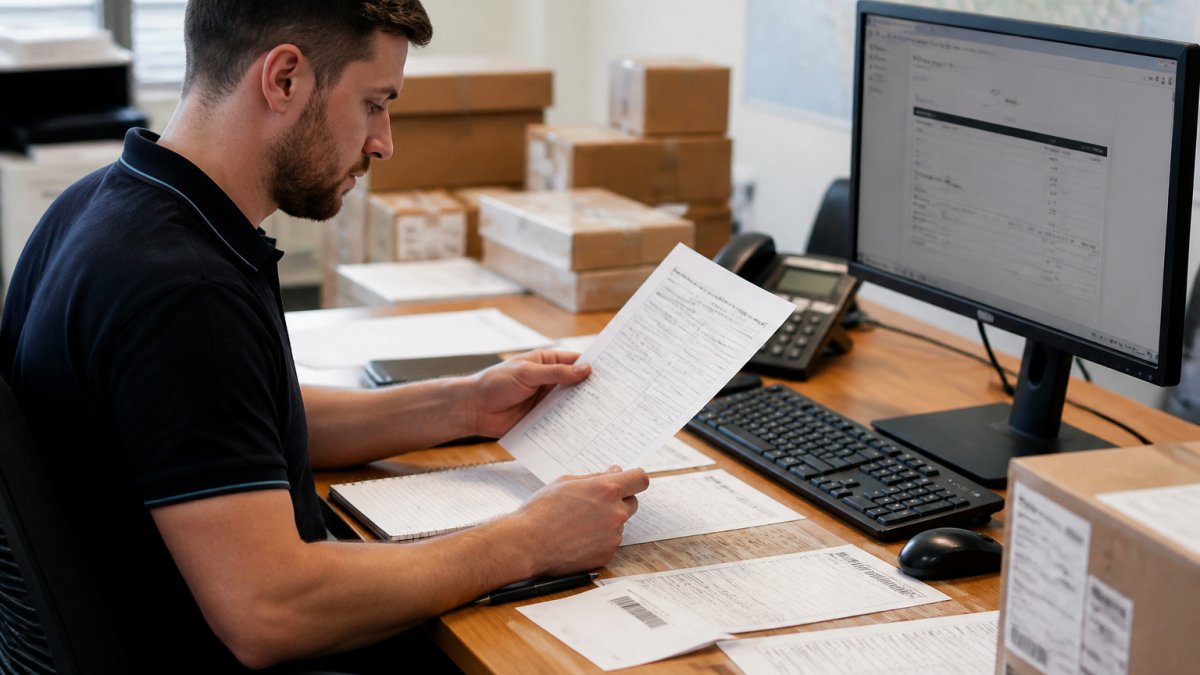
The entire process typically takes 2-5 business days for straightforward shipments. Complex goods or incomplete documentation can add 1-2 weeks. Having all your documents correct from the start cuts days off this timeline.
Common Documentation Errors and How to Correct Them
The errors we see most often are preventable. Knowing what goes wrong helps you catch mistakes before customs does.
Error 1: Description mismatch between documents
How to fix it: Use identical wording across all three documents. Write a detailed, specific description once, then copy it exactly into every document.
Error 2: Missing or incomplete permit documentation
You’re importing food but don’t include your food import permit with your customs entry. Customs holds your shipment until you provide it.
How to fix it: Obtain all required permits before your shipment ships. Submit permit numbers and copies with your customs entry.
Error 3: Weight discrepancies
Your packing list shows 500 kg but the port scale shows 520 kg. Customs investigates whether you’re hiding goods.
How to fix it: Weigh your shipment before it leaves your facility. Record the exact gross weight and net weight.
Error 4: Incorrect Harmonised System (HS) classification
You classify your goods under the wrong HS code, and the duty rate for that code is much lower than the correct one.
How to fix it: Use the correct HS code for your goods.
Error 5: Undeclared value or suspiciously low value
You declare a value that’s 30% lower than similar goods. Customs initiates a valuation inquiry and holds your shipment.
How to fix it: Declare the actual transaction value, what you paid or agreed to pay.
The single most common cause of customs delays is incomplete or mismatched documentation. Spend 30 minutes verifying that your commercial invoice, packing list, and bill of lading all describe the same goods in the same way. That one step prevents 80% of holds.
Error 6: Missing notify party or consignee details
Your bill of lading doesn’t clearly show who the importer is or who should be notified when cargo arrives.
How to fix it: Include full legal name, complete address, and contact details for the consignee (importer) on every document.
Error 7: Failing to declare prohibited or restricted goods
You import goods that are prohibited or restricted without declaring them or obtaining required permits. Customs discovers them during inspection.
How to fix it: Research what’s prohibited or restricted before you order. Check the ABF website for the current list of prohibited and restricted goods.
Getting your import customs clearance documentation right is the foundation of smooth cargo movement. Complete, accurate, and consistent paperwork moves through customs in days.
At Seatram, we manage the full customs clearance process for our clients, from document preparation through final delivery.
Frequently Asked Questions
Which documents are required to import goods into Australia?
Core documents include a commercial invoice, packing list, bill of lading (sea freight) or air waybill (air freight), certificate of origin, and any product-specific permits or licences. The exact list depends on your goods’ classification, value, and origin. Perishables require biosecurity documentation; hazardous cargo needs safety data sheets and dangerous goods declarations. Your customs broker can confirm all requirements for your shipment.
What information should an import commercial invoice include?
Your commercial invoice must show the exporter and importer details, invoice number and date, detailed goods description with HS codes, quantity, unit price, total value in AUD or original currency, country of origin, and shipment terms (FOB, CIF, etc.). The invoice must match your packing list and transport documents exactly. Discrepancies delay customs entry and may trigger duty recalculation or physical inspections.
Do I need an import permit or licence for my goods?
Many goods require permits or licences before import. Food and agricultural products need biosecurity approval from the Department of Agriculture, Fisheries and Forestry. Electronics, chemicals, and certain machinery may need compliance certificates. Luxury goods and controlled items have additional restrictions. Check the product’s HS code and your supplier’s country of origin against the Australian Department of Home Affairs and relevant regulatory bodies to determine your specific requirements.
What happens if import customs documents are missing or incorrect?
Missing or incorrect documents trigger customs holds, physical inspections, and delays, sometimes lasting weeks. You may face penalty duties or goods seizure if discrepancies suggest undervaluation or misclassification. Corrections require resubmission and re-examination. Prevent this by verifying all document details before shipment departure, cross-checking invoices against packing lists and transport documents, and engaging a customs broker early to flag issues.