
Table of Contents
- Biosecurity Requirements for Imported Machinery
- Sea Freight vs Air Freight for Imports
- Machinery Import Duty and GST Calculation
- Customs Clearance and Documentation for Heavy Machinery
Last Updated: August 21, 2026
Importing Heavy Machinery to Australia: A Guide
Importing heavy machinery to Australia requires navigating biosecurity requirements, customs regulations, and logistics complexity. Understanding the regulatory framework upfront saves weeks of delays and unexpected costs. The Department of Agriculture, Fisheries and Forestry maintains strict biosecurity protocols, while Australian Border Force oversees customs clearance. This guide walks you through each critical step.
Biosecurity Requirements for Imported Machinery
Machinery arriving from overseas must meet zero-tolerance standards for soil contamination, seeds, and plant material. The Department of Agriculture requires a pre-shipment inspection certificate proving your equipment is clean before it leaves the origin country.
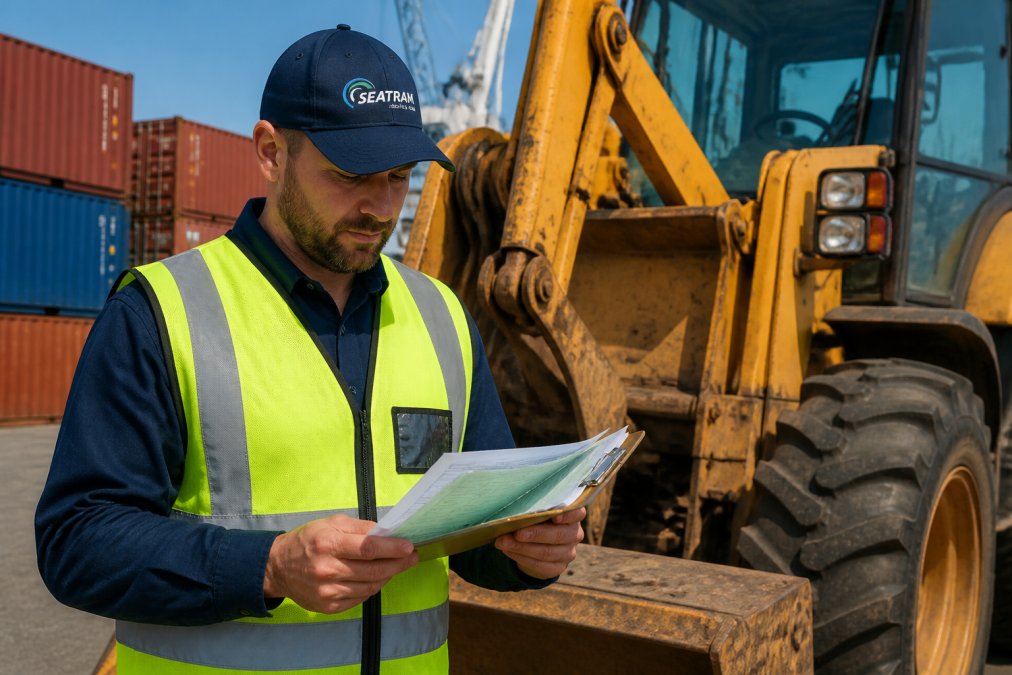
Most machinery fails its first inspection because exporters underestimate contamination risk. Earthmoving equipment accumulates soil in crevices, undercarriages, and hydraulic systems. A single grain of seed or patch of soil triggers rejection. You’ll need professional decontamination at origin, certified cleaning that documents every step, not just a pressure wash.
Get a cleaning certificate from an approved provider before shipment. Without it, Australian Border Force will quarantine your machinery for inspection, adding 5-10 business days minimum (abf.gov.au). The cost of certified cleaning (typically a few hundred dollars) is negligible compared to detention fees and schedule delays.
Sea Freight vs Air Freight for Imports
Importing heavy machinery almost always means sea freight. Air freight is impractical, a single piece of earthmoving equipment can weigh 20-40 tonnes. Sea freight offers two main options: Roll-on Roll-off (RORO) for self-propelled equipment, or containerised shipping for smaller machinery.
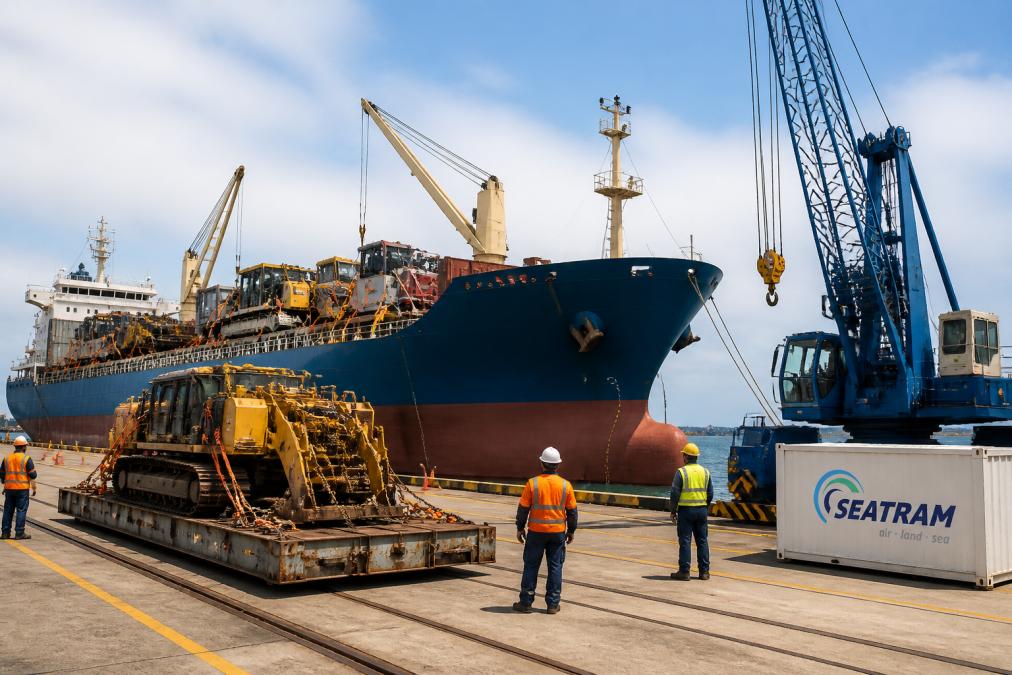
RORO works best for equipment that can drive or be towed onto a vessel: tractors, graders, loaders, dozers. Containerised shipping suits machinery that can’t self-load: stationary plant, components, or oversized items. RORO typically costs 20-30% less than containerised for eligible equipment.
Shipping time from major origin ports to Australian ports runs 3-4 weeks. Plan for an additional 2-3 weeks for customs clearance and inland transport. The bill of lading proves ownership and triggers the import permit process.
Machinery Import Duty and GST Calculation
Tariff classification determines your duty rate based on the Harmonised Tariff Code, which varies by equipment type. The Australian Border Force applies duty as a percentage of the customs value (price paid plus shipping and insurance to the Australian border).
GST applies at 10% on the duty-inclusive value (ato.gov.au). A $50,000 piece of equipment might attract 5% duty ($2,500) plus 10% GST on the total ($5,250), adding roughly $7,750 to your landed cost. Tariff classification errors are common and can trigger reassessment and penalty interest.
Work with a customs broker or freight forwarder experienced in machinery classification. For used machinery, depreciation may apply, potentially lowering your duty base with proper documentation. New machinery imports carry full duty; used equipment sometimes qualifies for lower rates depending on origin and condition.
Customs Clearance and Documentation for Heavy Machinery
Customs clearance requires a commercial invoice, packing declaration, and import permit via BICON (Border Import Compliance Operations system). Your freight forwarder typically handles BICON lodgement, but you must provide accurate commodity descriptions and values upfront.
The commercial invoice must detail machinery type, serial numbers, condition (new or used), and price. Be specific: “Caterpillar 320 excavator, model year 2022, serial XYZ123, used condition.” The packing declaration lists all contents and their weights.
BICON processing usually completes within 48 hours for straightforward machinery (abf.gov.au). Once cleared, your machinery can be released to inland transport. Heavy machinery needs appropriate vehicles, standard truck-and-trailer won’t move a 30-tonne excavator safely. Oversized loads may need permits from state transport authorities. Budget an additional week for inland delivery and 2-3 days for final site setup.
Importing heavy machinery to Australia is manageable when you understand the sequence: pre-shipment cleaning, biosecurity compliance, sea freight arrangement, tariff classification, and customs clearance. Each step connects to the next. Seatram specialises in exactly this journey, coordinating freight forwarding, customs brokerage, and inland logistics so your machinery reaches its destination safely, on time, and on budget. Request a quote and let our team handle the complexity while you focus on putting your equipment to work.
Frequently Asked Questions
What are the main biosecurity requirements for importing heavy machinery?
Heavy machinery must be free from soil contamination, seeds, and plant material. The Department of Agriculture, Fisheries and Forestry enforces zero tolerance for biosecurity breaches. Pre-shipment cleaning and inspection are mandatory. You'll need a cleaning certificate from an approved facility confirming the machinery meets standards. All documentation must be submitted via BICON (the biosecurity import clearance online system) before arrival. Failure to comply can result in quarantine, treatment costs, or seizure.
How do I calculate duty and GST on imported heavy machinery?
Duty rates depend on the machinery's tariff classification under the Harmonised Tariff System. GST (10%) applies to the customs value plus any applicable duties. The customs value includes the purchase price, freight, insurance, and handling costs. You'll need a commercial invoice, bill of lading, and packing declaration for valuation. A freight forwarder can assist with tariff classification and ensure accurate duty and GST calculations to avoid delays or penalties at customs clearance.
Is sea freight or air freight better for importing heavy machinery?
Sea freight (RORO or containerised shipping) is typically more cost-effective for heavy machinery and large volumes, though transit times are longer (4–6 weeks). Air freight is faster but significantly more expensive and usually impractical for heavy equipment. RORO (roll-on/roll-off) works well for self-propelled machinery; containerised shipping suits non-mobile equipment. Your freight forwarder can recommend the best method based on machinery weight, dimensions, urgency, and budget.