
Table of Contents
- Why Resilience Now Outweighs Lean Efficiency
- AI in Supply Chain Management and Predictive Analytics
- Geographic Isolation, Lead Times and Freight Continuity
- Sustainable Freight Practices and ESG Reporting Mandates
- Regulatory Compliance, Modern Slavery and Cybersecurity
- Automation, Labour Shortages and Warehouse Robotics
- What These Trends Mean for Your Freight Strategy
- Frequently Asked Questions
Last Updated: September 29, 2026
Why Resilience Now Outweighs Lean Efficiency
The defining shift in logistics trends Australia businesses are navigating in 2026 is the move from lean efficiency to resilience. For two decades, the goal was minimal inventory and just-in-time delivery. That model breaks when a single port, supplier or shipping lane fails. Importers are now asking a different question: not “how cheap can this move be?” but “how fast can we recover if it doesn’t?”
Supply chain resilience is the capacity of a logistics network to absorb disruption and keep goods moving without collapse. It costs more to build than lean efficiency, but the cost of a stockout is usually higher.
Diversifying Suppliers and Regional Access
A common approach is to split sourcing across two or three regions rather than relying on one. This reduces exposure to a single geographic vulnerability, whether that is a port dispute, a weather event or a political trade barrier.
The trade-off is complexity. More suppliers mean more documentation, more lead times to manage and more regulatory compliance to track.
- Dual-source critical components across at least two regions
- Keep a qualified backup supplier approved, not just identified
- Review regional access annually as trade agreements shift
Building Buffer Stock Without Killing Cash Flow
Buffer stock is expensive to hold, so the trick is targeting it. Most businesses over-buffer the wrong items.
Focus on parts with long lead times, no substitute and high production impact. Those justify holding stock. Cheap, easily replaced items do not. Many importers hold buffer only on the items that would genuinely halt operations, and let the rest run lean.
AI in Supply Chain Management and Predictive Analytics
AI in supply chain management is the use of machine learning and predictive analytics to forecast demand, flag delays and route freight before problems escalate. It has moved from pilot projects to standard practice for mid-sized importers.
The value is not in the dashboard. It is in the early warning. A system that flags a congested port before your container is booked saves more than one that reports the delay after it happens.
Real-Time Visibility and Data-Driven Decision Making
Real-time visibility means knowing where a shipment is right now, not where a status page says it was three weeks ago. This is a highly requested capability, and for good reason.
Data-driven decision making turns that visibility into action: rerouting, reordering or renegotiating before a delay becomes a stockout.
|
Trend |
What It Solves |
Typical Action |
|---|---|---|
|
Predictive analytics |
Demand and delay forecasting |
Pre-book alternative lanes |
|
Real-time visibility |
Unknown shipment status |
Reroute mid-transit |
|
Automated documentation |
Customs delays |
Pre-clear paperwork |
|
IoT integration |
Cold-chain monitoring |
Intervene before spoilage |
Geographic Isolation, Lead Times and Freight Continuity
Distance is the structural problem in this market. Long-haul routes to major trading partners add weeks to lead times that competitors closer to manufacturing hubs simply do not face.
Freight continuity depends on planning around that distance rather than pretending it away.
Sustainable Freight Practices and ESG Reporting Mandates
Sustainable freight practices are no longer a marketing line for exporters with large corporate customers. They are becoming a reporting obligation, and the obligation is being pushed down the supply chain to freight providers.
What Actually Gets Measured
Emissions from freight are typically expressed as carbon dioxide equivalent (CO2-e) per tonne-kilometre. The practical inputs are:
- Distance travelled, by mode (sea, air, road, rail)
- Weight and volume of the consignment
- Mode-specific emission factors, which differ enormously between air and sea
Practical Steps for a Smaller Importer
- Ask your freight provider for emissions data per shipment, not an annual estimate
- Consolidate less-than-container-load cargo where timelines allow, to cut emissions per unit
- Choose sea over air wherever the delivery window permits
- Keep a documented record of the methodology used, so the data can be passed upstream without rework
For a smaller importer, the honest position is that you cannot yet report perfectly. What matters is showing a credible path, using a defensible method, and asking your freight partner for the data you need before your customer asks you for it.
The Circular Economy Angle
A related pressure is reverse logistics, moving goods back through the network for repair, refurbishment, resale or recycling. Product stewardship expectations and waste-reduction priorities are pushing more businesses to account for what happens at end of life, not just at point of sale. For freight, that means planning return lanes and consolidation points rather than treating returns as an afterthought.
Regulatory Compliance, Modern Slavery and Cybersecurity
Compliance has quietly become one of the biggest operational burdens on importers and exporters, and it now spans three distinct fronts: border and customs obligations, human rights in the supply chain, and the security of the data that ties the network together.
Modern Slavery Reporting
Modern slavery reporting obligations require entities above certain revenue thresholds to publish an annual statement describing the risks of modern slavery in their operations and supply chains, and the actions taken to address them. The exact thresholds, reporting periods and content requirements have been amended over time, so confirm the current rules with the relevant regulator and the Australian Border Force guidance before you rely on any figure.
- Map suppliers beyond tier one, especially where labour is contracted
- Keep evidence of the questions you asked, not just the answers you received
- Review annually, because supplier relationships change faster than reporting cycles
Cybersecurity in the Logistics Network
Cybersecurity is the trend most competitors still ignore, and it is the one with the sharpest operational consequences. As tracking portals, IoT sensors and AI forecasting tools multiply, so does the attack surface. A logistics network carries commercial data that is valuable on its own: supplier lists, pricing, shipment schedules, customer addresses and delivery windows.
- Limit system access to staff who genuinely need it, and revoke it promptly when roles change
- Require multi-factor authentication on every tracking and booking portal
- Vet third-party providers on their security posture, not just their rates
- Confirm any change to delivery instructions by phone, using a number you already hold, never by email alone
Border and Biosecurity Compliance
Customs and biosecurity obligations remain the most frequent cause of avoidable delay. Incorrect tariff classification, missing permits and incomplete biosecurity declarations all hold cargo at the border, and storage costs accrue while the problem is resolved. Pre-clearing documentation before the vessel arrives is the single most effective way to reduce that exposure. Where classification is genuinely uncertain, obtaining a formal ruling in advance is cheaper than a disputed entry.
Automation, Labour Shortages and Warehouse Robotics
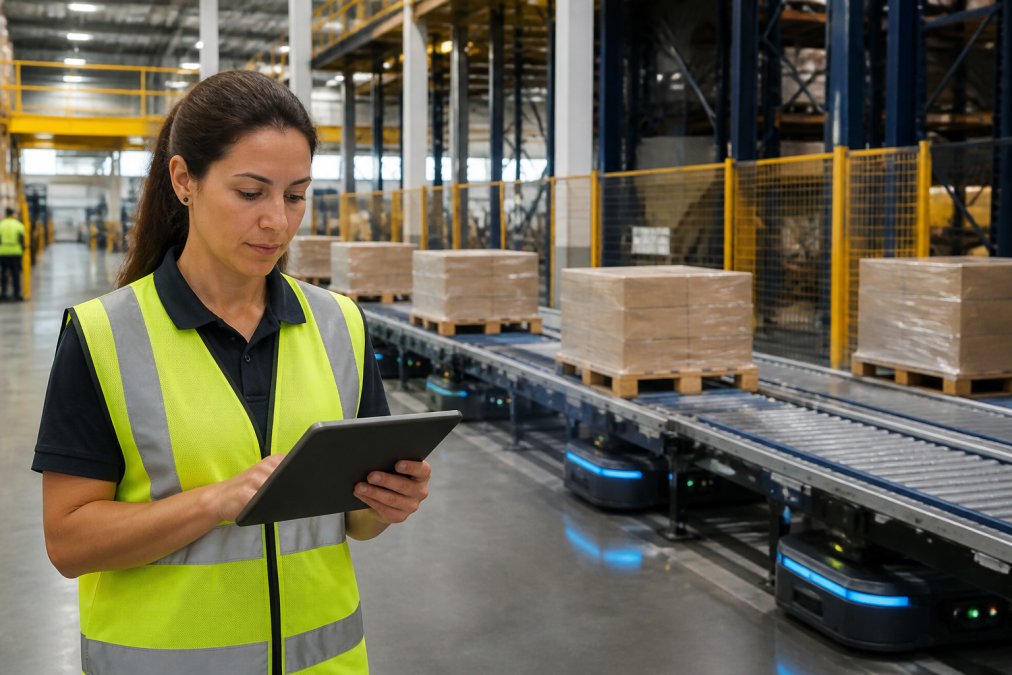
Labour shortages are pushing automation from a nice-to-have to a necessity. Warehouse robotics and automated sorting reduce dependence on scarce staff, but they change the shape of the workforce rather than removing it.
What These Trends Mean for Your Freight Strategy
The throughline across every trend above is the same: plan for disruption, not for the perfect run.
Frequently Asked Questions
How is automation changing logistics in 2026?
Automation is moving beyond conveyor belts into predictive inventory management, automated customs documentation and robotic picking in warehouses. For freight forwarders, the biggest shift is using machine learning to flag port congestion and reroute cargo before delays compound. Businesses that adopt these tools see fewer manual errors and faster clearance times. The practical starting point is asking your provider what data you can access in real time, not just what software they run internally.
What are the biggest supply chain challenges for businesses this year?
Margin pressure from fuel volatility, labour shortages in warehousing and compliance obligations under the Modern Slavery Act top the list. Geographic vulnerability also matters: long-haul routes into regional areas face infrastructure bottlenecks and weather disruptions that add days to lead times. Businesses managing perishables or hazardous cargo feel these pressures most acutely. Building supply chain resilience strategies, such as dual sourcing and buffer stock, helps absorb shocks without permanent cost increases.
How does the Modern Slavery Act influence supply chain transparency?
The Modern Slavery Act requires larger entities to report annually on risks of modern slavery in their operations and supply chains. This cascades down to smaller suppliers who must provide visibility into their own labour practices. For importers, it means knowing where goods originate and who handles them at each stage. Freight forwarders can support this by providing documented chain-of-custody data and helping clients map their end-to-end transparency obligations.
What role does AI play in Australian freight forwarding?
AI in supply chain management is used for demand forecasting, dynamic routing and predictive maintenance of equipment. In freight forwarding, machine learning models analyse historical shipping data to predict delays at specific ports or during peak seasons. This lets forwarders offer more accurate lead times and suggest alternative routes before disruption hits. The value is not the technology itself but the decisions it enables: earlier interventions, fewer spoiled shipments and better import-export insights.
The challenge for 2026 is not picking a single trend to follow. It is building a freight strategy that holds up when several of them hit at once. Seatram works with importers and exporters of all sizes, from perishables and hazardous cargo to oversized freight, and tailors the approach to your actual requirements rather than a template. Request a quote and we will map your lanes, flag the risks and show you what transparent pricing looks like.