
Last Updated: November 8, 2026
Quick Summary
Project cargo shipping companies in Australia handle oversized, heavy, or complex freight that standard forwarders cannot move. The best way to compare them is on engineering support, permit experience, heavy-lift capacity, tracking, and documentation handling rather than on price alone. Ask each provider to explain its lift planning and permits for your specific cargo before requesting a quote.
- Ask whether a provider can explain its engineering, permitting and lift planning before quoting.
- Over-dimensional loads often need route surveys, escort vehicles and road authority approvals.
- Confirm early whether your cargo is classified as dangerous goods, since this adds documentation.
- Compare providers on five criteria: engineering, permits, heavy-lift capacity, tracking and documentation.
- Check what each quote includes, such as freight, lift handling, permits, escorts and port charges.
Table of Contents
- What Project Cargo Shipping Covers in Australia
- Oversized Cargo Transport: Where Dimensions Change the Plan
- Mining Equipment Transport and Remote Site Logistics
- Dangerous Goods Shipping Requirements You Must Plan For
- Comparing Project Cargo Shipping Companies on Capability
- What to Include in a Project Cargo Shipping Quote
- Requesting Your Project Cargo Quote from Seatram
- Frequently Asked Questions
Project cargo shipping companies in Australia handle the freight that standard forwarders cannot: heavy-lift machinery, out-of-gauge loads, and time-critical industrial equipment. Choosing the right provider starts with understanding what the category covers, because the same label is used for firms with very different capabilities. A business shifting a few oversized pieces needs something different from a mining operator moving a full plant component. This guide sets out how to compare providers on the criteria that matter.
What Project Cargo Shipping Covers in Australia
Project cargo refers to shipments that are too large, too heavy, too fragile, or too complex for routine container freight. It typically involves planning, engineering input, route surveys and coordinated handling across sea, road and rail. Providers in the segment differ mainly in how deeply they handle that planning rather than simply moving the freight.
The Australian market is sizeable. Mordor Intelligence estimates the Australian project logistics market at USD 7.88 billion in 2026, with growth forecast at a 5.52% CAGR through 2031 (Mordor Intelligence Australia Project Logistics Market analysis). That growth attracts new entrants, which makes careful comparison more important, not less.
A simple test helps: ask whether a provider can explain its engineering, permitting and lift planning for your specific cargo before quoting. Firms that can answer in detail are usually the specialists.
Oversized Cargo Transport: Where Dimensions Change the Plan
Once cargo exceeds standard dimensions, the route, permits and handling method all change. Over-dimensional loads often need route surveys, escort vehicles and approvals from road authorities, and the cost and timeline shift accordingly. Dimensions should drive the plan from the start, not be addressed after the booking is made.
For a detailed look at permits and dimensional thresholds, read our over-dimensional cargo transport guide. Our 2026 over-dimensional transport guide also covers practical planning steps.
Mining Equipment Transport and Remote Site Logistics
Mining equipment is one of the most demanding categories. Components are heavy, the sites are remote, and delays cost real money. Remote-site delivery adds road conditions, weather windows and limited port access to the planning.
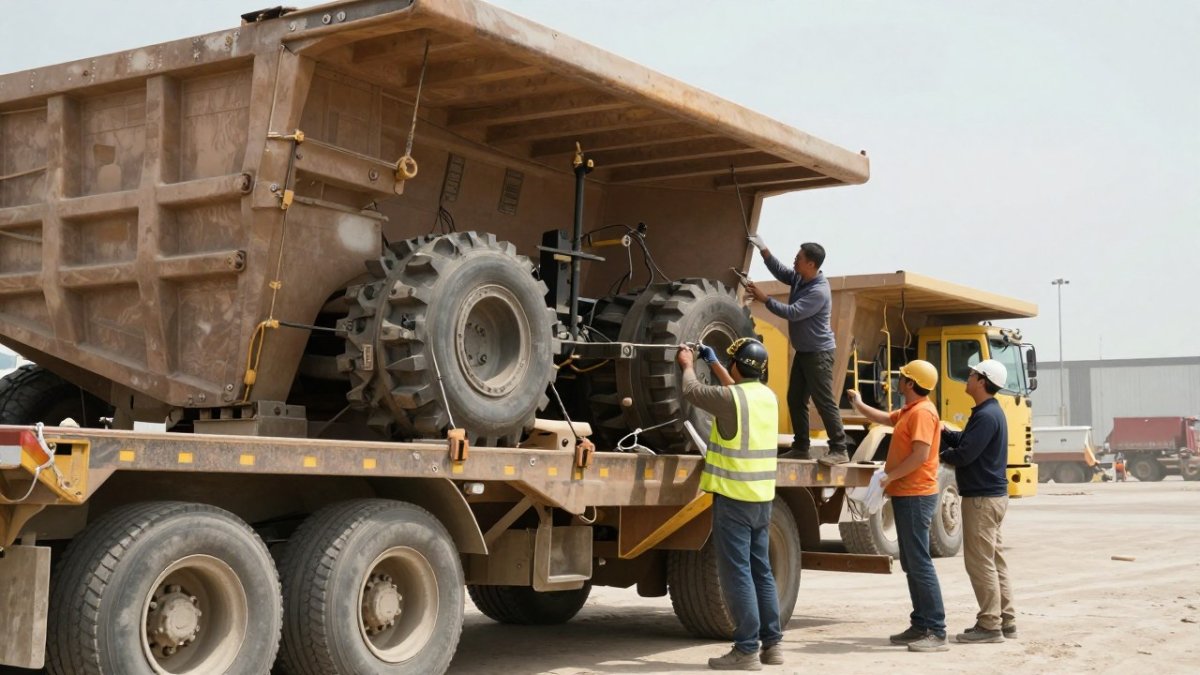
Providers serving this sector should show experience with heavy-lift equipment and staged delivery to site. Ask how they handle the final leg, not just the port-to-port portion.
Dangerous Goods Shipping Requirements You Must Plan For
Some project cargo is classified as dangerous goods, which brings additional documentation, packaging and carrier restrictions. Confirm early whether your cargo falls into a regulated class. Providers should be able to explain their process for classification, declarations and approvals.
Watch out: a shipment declared without proper classification can be held or refused at the port, which pushes out your schedule and can add significant cost.
Comparing Project Cargo Shipping Companies on Capability
When you compare providers, a useful approach is to score each on a short set of criteria rather than on price alone:
| Criterion | What to look for |
|---|---|
| Engineering support | Lift planning and route surveys in-house or through partners |
| Permits | Experience with road and port approvals for your cargo size |
| Heavy-lift capacity | Equipment and vessel options suited to your weights |
| Tracking | Real-time visibility of the shipment across each leg |
| Documentation | Clear handling of customs and dangerous goods paperwork |
Seatram positions itself as a specialist provider of end-to-end freight forwarding, with tailored solutions across sea, air and land. Wharf-to-wharf and door-to-door options are available, which can be relevant if your project spans multiple legs.
Questions to Ask About Cold Chain and Customs Handling
Some project cargo, such as temperature-sensitive equipment or biologicals, needs cold-chain control, and every shipment needs customs clearance. Ask providers how they monitor temperature, what happens if a shipment is delayed, and who carries liability for paperwork errors. Our guide on classifying goods for Australian customs explains the steps that most often cause delays.
A reputable provider should answer these questions plainly. Vague answers are a warning sign.
What to Include in a Project Cargo Shipping Quote
Quotes can look similar on the surface but differ in what they cover. Before comparing totals, check what is included: freight, lift and handling, permits, escorts, port charges, and customs brokerage. Our explainer on what freight forwarder quotes include sets out the common line items, and our guide to customs brokerage costs helps you budget for clearance.
Pricing depends on cargo dimensions, weight, route and dates, so a standard figure cannot be published. Request a quote with your full cargo specification to get an accurate comparison.
Requesting Your Project Cargo Quote from Seatram
To get a comparable quote, send your cargo dimensions and weights, origin and destination, required dates, any dangerous goods classification, and any special handling needs. The more complete the brief, the more accurate the response. Request a quote from Seatram to start the comparison with a provider built around tailored, end-to-end logistics.
Frequently Asked Questions
What is project cargo shipping?
Project cargo shipping moves large, heavy or out-of-gauge items that do not fit standard container or freight handling. Typical examples include machinery, plant equipment, pressure vessels and mining components. These shipments usually need detailed lift and stow planning, route surveys, and coordination across ports, carriers and road transport. Pricing depends on quantity, dates, dimensions, weight and delivery requirements, so request a quote from a provider such as Seatram for current figures tailored to your cargo.
How do I choose a project cargo shipping company?
Start by checking whether the provider handles your cargo type, dimensions and weight, including heavy-lift and out-of-gauge loads. Ask how they plan lifts, secure cargo and manage permits for oversized road movements in Australia. Confirm their approach to customs, biosecurity and dangerous goods documentation, and ask for references from businesses with similar shipments. Compare written quotes line by line so you understand what is included and what is excluded.
What information is needed for a project cargo shipping quote?
A useful quote needs the exact dimensions, gross weight and centre of gravity of each item, plus packaging details and any hazardous classification. Include origin and destination, required delivery window, and whether you need wharf-to-wharf or door-to-door service. Mention any lifting points, fragile components or temperature requirements. The more complete the information, the fewer surprise charges later, such as additional port or road-transport costs.
What permits and transport planning may be needed for oversized cargo?
Oversized road movements in Australia can require transport permits from state or territory road authorities, with conditions on routes, travel times and escorts. Heavy loads may also need engineering assessments of bridges and roads along the route. A transport plan covering these approvals should be part of the planning discussion with any provider. Lead times vary by jurisdiction and load size, so raise permit requirements early when requesting a quote from Seatram or another provider.
