
Table of Contents
- How Real Time Tracking for Freight Actually Works
- Freight Visibility Software: Core Features That Matter
- Challenges in Freight Tracking: What Breaks and Why
- Supply Chain Transparency Benefits for Australian Businesses
- Security and Data Privacy in Freight Tracking Systems
- Cost-Benefit Analysis for SMEs: Is Real Time Tracking Worth It?
- Conclusion: Choosing the Right Tracking Partner
- Frequently Asked Questions
Last Updated: September 15, 2026
How Real Time Tracking for Freight Actually Works
Real time tracking for freight is the continuous monitoring of a shipment’s location and status as it moves through the supply chain, using GPS pings, carrier milestone events and logistics databases to update a tracking portal within minutes of each scan.
Most businesses do not need to understand the plumbing. They need to know why a shipment can sit at “in transit” for three weeks. The answer usually sits in the data pipeline, not the carrier.
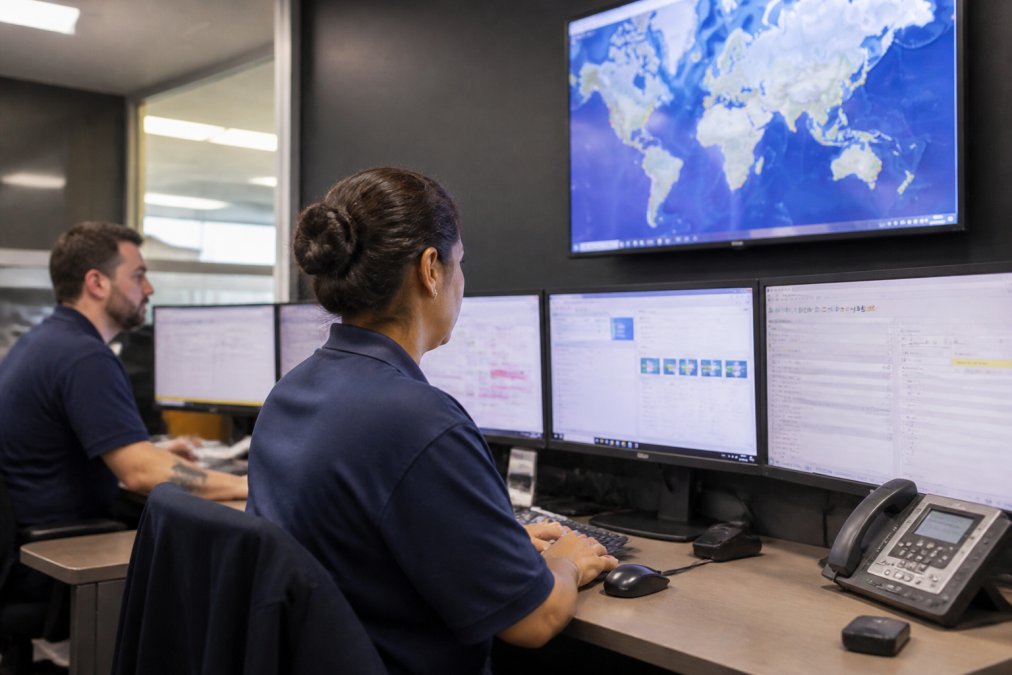
The Data Pipeline: From GPS Pings to Portal Updates
A tracking update travels through four stages: a device or driver records a position or scan, that event is transmitted to the carrier’s system, the carrier pushes it to a logistics database, and your portal pulls it in. Any broken handoff in that chain produces the dreaded silent status. The Australian Cyber Security Centre guidance on securing operational systems is worth reading if you handle sensitive cargo data, because each handoff is an exposure point.
Freight Visibility Software: Core Features That Matter
Freight visibility software is a platform that consolidates carrier data into a single view of every shipment, with milestone tracking, automated notifications and exception alerts. The features that genuinely change your week are fewer than vendors admit.
What matters most in practice:
- Milestone tracking tied to real events, not estimated positions
- Automated notifications when a shipment misses a scheduled milestone
- Exception management that flags delays before you chase them
- A shipment tracking portal your own customers can use without calling you
- Integration with your transportation management system (TMS) or ERP
Everything else is presentation. A clean dashboard with stale data is worse than a plain one that updates.
API Integration Challenges and How to Solve Them
Most integration failures come down to inconsistent data formats between carriers, not bad software. One carrier sends timestamps in local time, another in UTC; one uses its own PRO number, another a booking reference. A common mistake is assuming every carrier exposes the same fields. A practical fix is to normalise data at the point of ingestion: map each carrier’s schema to a single internal model, then let your portal read from that model only. It costs setup time and saves months of manual reconciliation.
Challenges in Freight Tracking: What Breaks and Why
The challenges in freight tracking rarely come from satellites. They come from human and infrastructure gaps. A driver who does not scan a pallet at a depot creates a blind spot no GPS can fill. A port congestion event delays a vessel and every downstream estimate shifts with it.
The failures we see most often:
- Manual data entry at transfer points, which introduces errors and lag
- Carriers with no API, forcing email or spreadsheet updates
- Estimated arrival times presented as facts rather than forecasts
- No exception process, so problems surface only when a customer calls
None of these require new technology to fix. They require someone to own the handoffs.
Supply Chain Transparency Benefits for Australian Businesses
Supply chain transparency benefits show up in three places: fewer customer service calls, better inventory planning and stronger carrier accountability. When you can see a shipment is running late before the customer does, you can rebook, reroute or simply tell them first. That single move protects the relationship.
Transparency also changes how you buy freight. With historical transit times by lane and carrier, you can negotiate on evidence rather than reputation. If you import automotive parts or perishables, that data tells you which carrier actually holds schedule on a given route.
Security and Data Privacy in Freight Tracking Systems
Freight tracking systems hold commercially sensitive data: who you ship to, what you ship, and when. That makes them a target. Under the Privacy Act 1988 and the Australian Privacy Principles, businesses handling personal information have obligations around collection, storage and disclosure, and shipment data often includes personal details of consignees.
Practical controls that matter:
- Role-based access, so a warehouse user cannot see pricing
- Encrypted transmission between carrier systems and your portal
- Audit logs showing who viewed or exported shipment data
- Clear retention rules, so old tracking data does not sit indefinitely
Ask your provider where data is hosted and who can access it. Vague answers are a red flag.
Cost-Benefit Analysis for SMEs: Is Real Time Tracking Worth It?
For most small and mid-sized importers, real time tracking pays for itself through avoided delays, not through software features. The cost side is straightforward: platform fees, integration setup and staff time. The benefit side is harder to quantify but real: fewer expedited shipments, less safety stock, and fewer credits issued for late deliveries.
A simple way to assess it:
|
Cost Factor |
Typical Consideration |
Where SMEs Overspend |
|---|---|---|
|
Platform fees |
Scaled by shipment volume |
Paying for enterprise tiers too early |
|
Integration setup |
One-off configuration per carrier |
Rebuilding integrations unnecessarily |
|
Staff time |
Monitoring and exception handling |
Manual checks that automation covers |
|
Expedited freight |
Avoidable when delays are caught early |
Reacting instead of planning |
Pricing depends on volume, lanes and service level, so request a quote rather than relying on published tiers. If you move 15 to 20 international shipments a month, you are not too small for proper tracking, you are exactly the size that benefits most from catching a delay early.
A Worked Example for a Small Importer
Consider a business importing 20 containers a year from Asia into an east coast port. Each container carries roughly $80,000 of stock, and the business currently holds about three weeks of safety stock to absorb schedule variability. Two or three times a year, a delay is discovered only when the customer calls.
Now apply visibility. If real time tracking lets the business catch even two of those delays early enough to rebook a domestic leg or notify the customer before dispatch, the avoided cost is not the software fee, it is the expedited road freight, the partial air top-up, and the staff hours spent firefighting. For most SMEs at this scale, the annual platform cost sits in the low thousands of dollars, while a single avoided air freight top-up on a pallet can exceed that on its own. The arithmetic is rarely about whether tracking is affordable; it is about whether the business can see the delay early enough to act.
The Benefit Side, Quantified Honestly
SMEs struggle to justify tracking because they try to measure it as a cost saving. It is better framed as three measurable effects:
- Reduced expedited freight, count the number of air or express upgrades you booked in the last 12 months because a sea or road shipment was running late. That is your baseline.
- Reduced safety stock, if you can trust a two-week transit window instead of a three-week one, you release working capital tied up in buffer inventory. Even a modest reduction in stockholding has a carrying cost.
- Reduced credits and rework, late delivery credits, re-delivery fees and customer service time all have a dollar value. Most SMEs never total them, which is why the benefit looks invisible.
Australian Context: What Changes the Calculation
A few local factors shift the maths for businesses here. The Australian Border Force guidance on import clearance and the Department of Agriculture, Fisheries and Forestry biosecurity requirements both introduce hold points that are outside the carrier’s control. Real time tracking does not remove those holds, but it surfaces them earlier, which matters when you are deciding whether to expedite the next leg or warn a customer.
When Tracking Is Not Worth It
Conclusion: Choosing the Right Tracking Partner
The hard part is not buying tracking software.
Frequently Asked Questions
What is real-time tracking in logistics?
Real-time tracking in logistics uses GPS, telematics, and carrier data feeds to show a shipment’s location and status as it moves. Unlike batch updates that refresh daily, real-time systems push data every few minutes. This means you see current transit times, traffic conditions, and milestone events as they happen, not hours later. For freight, this covers FTL, LTL, and last-mile delivery, giving you a live view of the shipment lifecycle from pickup to proof of delivery.
How can I track a freight shipment?
You can track a freight shipment through a carrier portal, a transportation management system (TMS), or a freight visibility software platform. Most providers issue a PRO number or container ID you enter to see status updates. For end-to-end visibility across multiple carriers, a TMS aggregates tracking events into one dashboard. If you use a freight forwarder, ask whether they offer a shipment tracking portal with automated notifications and exception management alerts.
What are the primary benefits of real-time freight visibility?
Real-time freight visibility improves delivery reliability, cuts detention fees, and reduces the time your team spends chasing status updates. When you can see traffic conditions and transit times live, you can reroute or notify customers before a delay becomes a problem. Supply chain transparency benefits also include better carrier communication, faster exception management, and the data needed for predictive analytics on future shipments. For SMEs, this often means fewer angry customer calls and more predictable cash flow.
How does real-time tracking improve supply chain resilience?
Real-time tracking improves resilience by giving you early warning when something goes wrong. If a shipment is stuck at a port or delayed by weather, you see it immediately, not three days later. That window lets you activate backup plans: reroute via a different carrier, adjust inventory, or warn customers. Over time, the data collected feeds predictive analytics, so you can identify recurring bottlenecks and build buffers into your freight management strategy before disruptions hit.