
Table of Contents
- Why Detention and Demurrage Charges Are Draining Your Budget
- Demurrage vs Detention Charges: Know What You Are Paying For
- Step 1: Audit Your Current Free Time and Billing Accuracy
- Step 2: Use Supply Chain Visibility Tools for Real-Time Tracking
- Step 3: How to Reduce Container Detention Fees with Proactive Planning
- Dispute Resolution: How to Challenge Unfair Port Charges
- Incoterms and Liability: Who Pays When Ships Are Late?
- Conclusion
- Frequently Asked Questions
Last Updated: September 5, 2026
Why Detention and Demurrage Charges Are Draining Your Budget
Port delays are costing importers far more than the storage fees on their invoices. When a container sits past its free time, the financial ripple extends through inventory holding costs, missed customer deadlines, and disrupted production schedules. For businesses moving freight through congested terminals, these charges have become a recurring line item that erodes margins shipment after shipment.
The core problem is visibility. Most shippers only discover a charge has been incurred when the invoice arrives, often weeks after the event. By then, the container has already been returned, the carrier has moved on, and the only remaining action is payment. This reactive cycle repeats because few teams have a clear picture of where their containers are, how long they have been sitting, and what free time remains.
At Seatram, we see this pattern constantly across Australian supply chains. The businesses that stop losing money on detention charges are not necessarily shipping more efficiently; they are monitoring their container movements with the same rigour they apply to production schedules. This guide explains how to reduce container detention fees by auditing your billing, implementing real-time tracking, and building a proactive planning rhythm that keeps cargo moving.
Demurrage vs Detention Charges: Know What You Are Paying For
Demurrage and detention charges are two distinct fees that often appear on the same invoice, and confusing them leads to poor cost management.
Demurrage is the fee a terminal operator charges when a full container remains inside the port or terminal beyond its allotted free time. It covers the space the container occupies while waiting for pickup. Detention applies after the container has been picked up and relates to how long the shipping line’s equipment stays off-terminal, typically while you are unloading at your warehouse or depot.
Knowing which charge applies matters because the responsible party and the remedy differ. Demurrage disputes usually involve the terminal operator and often stem from port congestion or delayed vessel arrivals. Detention disputes sit with the shipping line and frequently arise from scheduling gaps between container pickup and the return of the empty unit.
The practical difference comes down to container location: inside the terminal versus outside it. Track both separately, because the free time allowances, daily rates, and dispute channels are handled by different parties. A common mistake is treating every charge as a single “port fee” and paying it without question. That approach guarantees you absorb costs that a simple audit would have caught.
Step 1: Audit Your Current Free Time and Billing Accuracy
Before you can reduce charges, you need to know what you are actually being billed for. Request a full statement from your freight forwarder or shipping line covering the last six to twelve months, then examine every demurrage and detention line item.
Start by verifying three things for each charge: the free time allowance applied, the date the clock started, and the date the container was returned or picked up. Free time varies by carrier, terminal, and container type, so check your contract terms rather than assuming a standard window. Billing errors are surprisingly common, with incorrect dates and double-charged days appearing more often than most shippers expect.
Compare the invoice dates against your own delivery and return records. If you use a transport management system or receive gate-in and gate-out confirmations, match those timestamps against the billed period. Any discrepancy should trigger a formal query before payment.
This audit also reveals your recurring problem areas. If charges consistently originate from one terminal or one lane, you have identified a structural issue that proactive routing or scheduling changes can solve. For a full audit checklist and help tracing your billing history, consider consulting a freight audit service.
Build a Cost-Benefit Case for Prevention
Once you have a clean picture of your historical charges, the next step is quantifying whether investing in prevention tools is worth the capital. Most importers skip this analysis and default to either paying the fees or buying software blindly. A simple calculation settles the question.
Step 1: Calculate your annual detention and demurrage spend.
Sum every charge from your audit. For example, if you paid $1,200 in detention on a single container that sat for four extra days, and you had 15 similar incidents last year, your annual exposure is approximately $18,000.
Step 2: Estimate the cost of a prevention tool.
Supply chain visibility platforms typically charge per container per day or a flat monthly subscription. A mid-range platform might cost $150-$300 per month for a small importer moving 20-50 containers monthly, or roughly $1,800-$3,600 per year. A dedicated freight forwarder with built-in tracking often bundles this into their service fee, which can be lower than a standalone licence.
Step 3: Compare the two numbers.
If your annual charge exposure exceeds the tool’s cost by a factor of two or more, the investment pays for itself with a single avoided incident. But the calculation does not stop at the invoice amount. Factor in the hidden costs competitors rarely mention:
- Inventory holding costs: Capital tied up in a container sitting at the terminal is capital not earning returns. At a 5% annual cost of capital, a $100,000 shipment delayed by one week costs roughly $96 in financing alone.
- Missed sales or production stoppages: If a delayed container halts your production line or causes a stockout, the lost contribution margin can dwarf the detention fee. A $500 detention charge is trivial compared to a $5,000 lost order.
- Customer relationship damage: Repeated delays push customers toward competitors. Quantifying this is difficult, but a single lost account often exceeds a year’s worth of detention fees.
Step 4: Set a threshold for action.
Most practitioners find that if your annual detention and demurrage spend exceeds $10,000, the business case for a visibility tool or a proactive freight partner is compelling. Below that threshold, a manual audit process and tighter internal scheduling may suffice. The point is to make the decision on numbers, not on fear of missing out.
This cost-benefit lens transforms the conversation from “how do we stop paying fees” to “what is the most efficient way to allocate resources to prevent them.” It also gives you a defensible budget figure when requesting approval for new software or a premium freight service.
Step 2: Use Supply Chain Visibility Tools for Real-Time Tracking
Manual tracking through emails and phone calls cannot keep pace with the speed of modern port operations. Supply chain visibility tools provide real-time tracking of container status, giving you alerts the moment a container is discharged, gated in, or approaching its free time limit.
These platforms aggregate data from shipping lines, terminal operators, and drayage providers into a single dashboard. Instead of chasing updates across multiple systems, you see the full journey of every container: vessel arrival, discharge, customs hold, pickup, and empty return. The best tools also calculate free time expiry automatically, flagging containers that need urgent action.
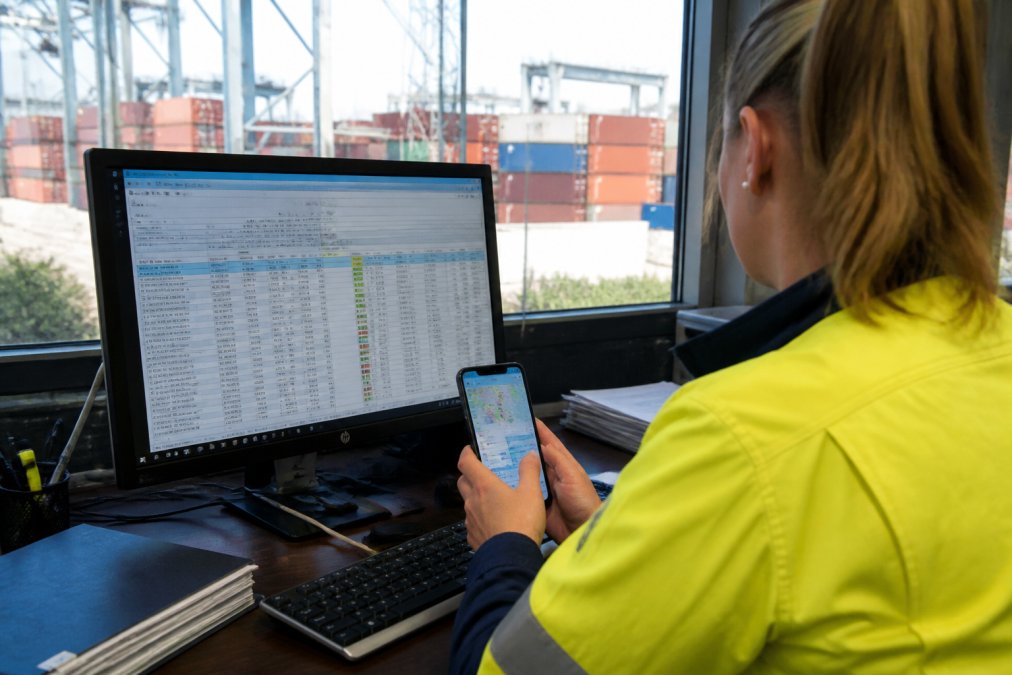
Choose tools that integrate with your existing transport management system and offer automated alerts via email or SMS. The alert should arrive with enough lead time to act, not on the final day of free time. A practical threshold is a warning at 48 hours remaining and a second alert at 24 hours, giving you time to arrange pickup or return even when drayage capacity is tight.
For many importers, the fastest route to this capability is through a freight forwarder that already operates a tracking platform. Rather than purchasing and learning a separate system, you gain visibility through the partner managing your shipments. Real-time tracking shifts your team from reactive firefighting to proactive scheduling, which directly reduces the dwell time that generates detention charges.
Step 3: How to Reduce Container Detention Fees with Proactive Planning
Proactive planning is the single most effective way to reduce container detention fees. The goal is simple: never let a container sit idle when you could be moving it.
Start by scheduling drayage pickup the moment you receive the vessel arrival notice, not after the container is discharged. Book trucking capacity in advance, even if you are unsure of the exact pickup date. In congested periods, drayage providers book out days ahead, and waiting until discharge leaves you scrambling for the last available slot.
Coordinate your warehouse receiving schedule with the container delivery. A container that arrives at your dock but cannot be unloaded because staff are busy is still ticking against your detention clock. Reserve unloading slots and ensure enough labour is available to strip the container within 24 to 48 hours of arrival.
For empty container returns, book the return slot before you pick up the full container. Many detention charges accumulate not because unloading is slow, but because the empty return appointment is days away. Booking both legs of the journey upfront keeps the equipment cycle tight.
Dispute Resolution: How to Challenge Unfair Port Charges
Not every demurrage or detention charge is legitimate, and carriers issue charges in error more often than they admit. A structured dispute process recovers money that belongs in your pocket.
Begin by gathering documentation for the specific container: the bill of lading, arrival notice, gate-in and gate-out records, and any correspondence about delays. If port congestion prevented pickup, obtain terminal advisories or news reports confirming the disruption. If the vessel arrived late, the shipping line’s own schedule updates support your case.
Submit your dispute in writing to the shipping line or terminal operator, referencing the specific charge and the reason it is invalid. Common grounds include: the free time clock started before the vessel actually arrived, the terminal was closed or congested preventing pickup, or the charge was calculated using incorrect dates. Many carriers have a formal dispute process, and escalating to a supervisor or account manager often resolves issues that frontline staff cannot.
If the carrier rejects your dispute, you still have options. Industry bodies and regulatory channels exist for unresolved billing disputes, and persistent, well-documented cases frequently succeed on appeal. The key is persistence: carriers expect most shippers to pay without question, and a clear, factual dispute letter changes that assumption.
Incoterms and Liability: Who Pays When Ships Are Late?
Incoterms determine which party bears the cost of delays, and misunderstanding them leads to paying charges that are contractually someone else’s responsibility.
Under common Incoterms like FOB (Free on Board) or EXW (Ex Works), risk and cost transfer to the buyer once the goods are loaded. This means demurrage and detention charges incurred after that point are typically the buyer’s obligation. However, if the delay stems from the seller failing to load on time or providing incorrect documentation, the seller may be liable for the resulting charges.
The critical distinction is between delay caused by the shipping line and delay caused by the cargo owner. If a vessel arrives late due to port congestion, the free time clock should not start until the container is actually available for pickup. If the shipping line’s schedule change causes your container to miss a connection, the resulting charges are contestable.
Review your Incoterms and purchase contracts before a disruption occurs. Know exactly when risk transfers, which party controls the drayage booking, and who is responsible for returning the empty container. This clarity prevents costly disputes between buyer and seller when delays inevitably happen. For guidance on structuring contracts that protect your margin, consult the International Chamber of Commerce Incoterms 2020 rules and discuss liability allocation with your freight partner before you ship, not after.
Conclusion
Detention charges and port delays will keep occurring, but losing money on them is a choice. By auditing your billing, deploying real-time tracking, planning container movements proactively, and understanding your contractual position, you can stop absorbing costs that are avoidable or recoverable.
The most efficient path is partnering with a freight forwarder that manages these details as part of your end-to-end supply chain. Seatram provides tailored freight forwarding and logistical services, including capability for both wharf-to-wharf and door-to-door solutions, so your cargo reaches its destination safely, on time, and on budget. With one platform to manage all shipments and responsive, efficient shipping processes, your team can focus on operations while we keep containers moving and charges under control.
Get started with Seatram and request a quote to see how proactive freight management protects your bottom line.
Frequently Asked Questions
What is the difference between demurrage and detention charges?
Demurrage is a fee charged by the shipping line when your container stays inside the terminal past its allotted free time. Detention is charged when you hold the container outside the terminal, such as at your warehouse for unpacking, beyond the agreed period. Tracking where the container sits is the key distinction. Knowing which fee applies helps you target the specific bottleneck causing the cost.
How can demurrage and detention be avoided?
The most effective way is proactive planning. Start by confirming the exact free time and cut-off dates with your freight forwarder before the vessel arrives. Book your customs clearance and biosecurity inspections early, and have a transport provider scheduled for the day of pickup. Using supply chain visibility tools to monitor vessel schedules helps you react quickly to changes, preventing containers from sitting idle and incurring fees.
Who is liable for demurrage and detention charges?
Liability depends on your Incoterms and the contract you signed with the shipping line or freight forwarder. Often, the cargo owner or importer of record carries the risk if they miss the free time window. However, if the delay resulted from a carrier error or a cancelled booking, you have grounds to dispute. Review your contract terms carefully to know who is responsible for what.
Can I dispute unfair demurrage and detention charges?
Yes. Start by requesting an itemised invoice that breaks down the charges against the vessel’s actual arrival time. Check the dates against your shipping documentation to spot billing errors. Write to your carrier or freight forwarder with a clear timeline of events, especially if port congestion or a carrier mistake caused the delay. Many providers will waive fees if you present clear evidence promptly.