
Table of Contents
- What is Road Freight?
- How Road Freight Works: From Booking to Delivery
- Road Freight Costs: What Affects Your Quote
- Road Freight Documentation and Compliance
- Real-Time Road Freight Tracking and Visibility
- Road Freight vs Rail Freight: When to Use Each
- Choosing the Right Road Freight Provider
- Conclusion
- Frequently Asked Questions
Last Updated: October 12, 2026
What is Road Freight?
Road freight is the transport of goods by truck across roads and highways. It’s the backbone of supply chains across the country, moving everything from parcels to pallets to oversized industrial equipment. Unlike rail or sea freight, road freight offers flexibility: drivers can pick up from almost anywhere and deliver to almost anywhere, following routes that work for your shipment rather than fixed schedules.
At Seatram, we understand that road freight isn’t just about putting cargo on a truck. It’s about matching your shipment to the right vehicle, the right carrier, and the right timing so your goods arrive safely and on budget.
The road freight industry moves the majority of domestic freight in Australia. Whether you’re shipping perishables that need temperature control, hazardous materials under strict regulation, or standard commercial goods, road freight adapts to your requirements. The flexibility comes with a cost: road freight typically costs more per tonne than rail for long distances, but saves time and handling complexity that other modes can’t match.
Road freight excels when your priority is speed and flexibility, not minimum cost per tonne. If your shipment needs to reach a customer’s door within 48 hours, or if your pickup location has no rail access, road freight is often your only realistic option.
How Road Freight Works: From Booking to Delivery
Road freight moves through a clear sequence: you book a shipment, the carrier picks up your goods, they’re transported to the destination, and they’re delivered. But the details matter, and understanding the process helps you avoid delays and unexpected costs.
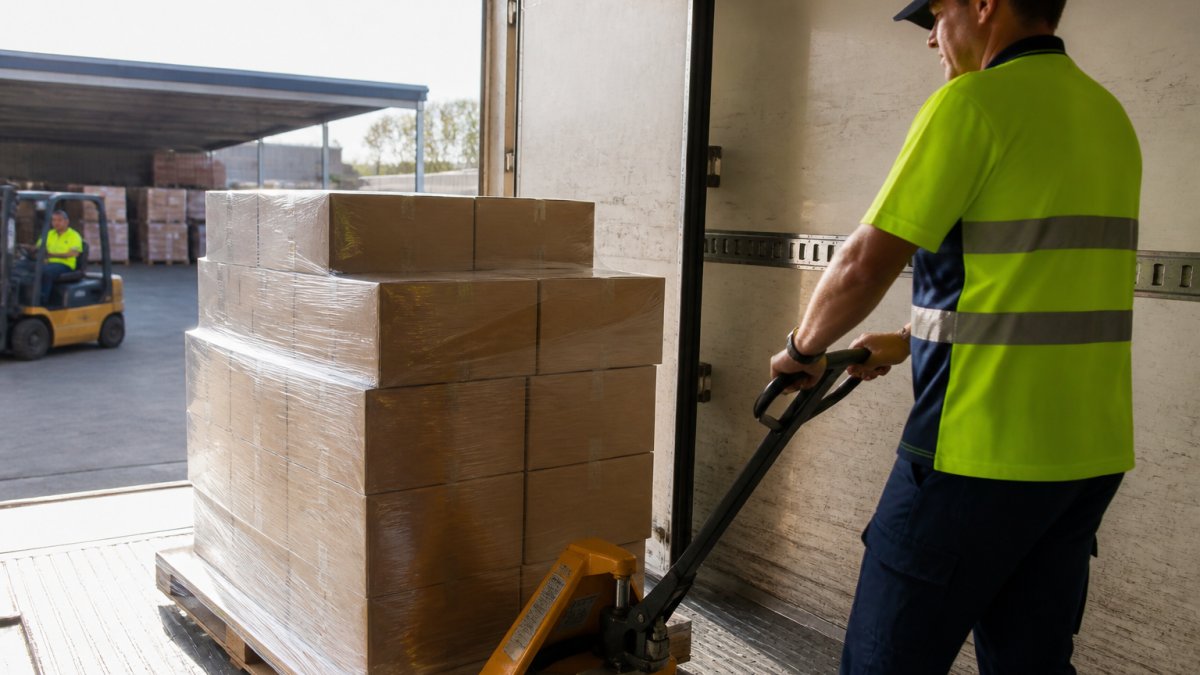
When you request a road freight quote, you’ll provide details about weight, dimensions, pickup location, delivery location, and the type of goods. The carrier assesses vehicle availability, fuel costs, and distance to calculate a price. This is where transparency matters: some carriers quote a base rate, then add fuel surcharges, toll fees, and handling charges later.
Once you confirm the booking, the carrier schedules a pickup. For standard freight, this typically happens within 24-48 hours. Your goods are loaded onto a truck, often consolidated with other shipments heading the same direction to reduce costs.
Tracking during transit varies by carrier. Real-time GPS tracking is now standard with professional operators, though some smaller carriers still offer basic status updates only. Your shipment typically arrives at the destination within the quoted timeframe, where it’s unloaded and held for collection or delivered to the final address.
The speed of road freight depends on distance and consolidation. A 200-kilometre shipment might arrive the next day. A 1,500-kilometre shipment consolidated with others might take 5-7 days. Direct, non-consolidated freight costs more but moves faster.
Road Freight Costs: What Affects Your Quote
Road freight pricing is driven by several factors, and understanding them helps you negotiate fairly and predict costs accurately.
Distance is the primary cost driver. Longer routes consume more fuel and driver time, so expect to pay proportionally more. However, pricing isn’t always linear: a 500-kilometre shipment doesn’t cost twice as much as a 250-kilometre one, because fixed costs like depot handling are spread across the distance.
Weight and dimensions determine which vehicle you need. A 500-kilogram parcel fits on a standard van. A 5-tonne pallet needs a larger truck. A 20-tonne load needs a heavy vehicle with specific regulatory compliance.
Freight type affects pricing too. Standard goods like boxes or pallets move at base rates. Perishables requiring temperature-controlled vehicles cost 20-40% more because the carrier must maintain cold-chain equipment and comply with food safety standards.
Timing influences availability and price. Urgent shipments booked for next-day delivery cost more than standard shipments booked a week ahead. Peak seasons (Christmas, end of financial year) see higher rates because demand exceeds available capacity. Off-peak bookings sometimes qualify for discounts.
Fuel surcharges are standard across the industry. When fuel prices rise, carriers pass the increase to customers. These are usually calculated as a percentage of the base rate or a fixed amount per kilometre. Always ask whether fuel surcharges are included in the quoted price or added separately.
Avoid carriers who quote a suspiciously low rate then add multiple surcharges at the last minute. A transparent quote should clearly itemise: base freight cost, fuel surcharge (if applicable), toll fees, and any handling or consolidation charges. Compare total landed costs, not base rates alone.
Road Freight Documentation and Compliance
Road freight moves under regulatory oversight that varies by shipment type and distance. Understanding your obligations prevents delays and fines.
For domestic road freight within Australia, standard commercial goods require a consignment note. This document identifies the shipper, receiver, contents, weight, and special handling instructions. It’s your proof of what was sent and when, and it protects both you and the carrier in case of loss or damage.
Perishable goods require additional documentation. Food items must comply with biosecurity standards, and some require import or export permits depending on origin and destination. Temperature-controlled shipments need temperature logs to prove the cold chain was maintained during transit.
Hazardous materials require a Safety Data Sheet (SDS) and proper labelling. The Australian Dangerous Goods Code defines what qualifies as hazardous (flammable, corrosive, toxic, etc.) and prescribes packaging, vehicle requirements, and driver training.
Oversized freight has weight and dimension limits on public roads. Vehicles exceeding 19 tonnes (Gross Vehicle Mass Rating) or carrying loads wider than 2.5 metres or longer than 12.5 metres require permits and sometimes escort vehicles.
Insurance is critical but often overlooked. Standard carrier liability is limited by law and often covers only a fraction of the goods’ value. If your shipment is high-value or irreplaceable, purchase additional freight insurance. This protects you if goods are lost, damaged, or delayed due to carrier negligence.
Real-Time Road Freight Tracking and Visibility
Visibility during transit has become a competitive expectation. Knowing where your shipment is, when it will arrive, and whether it’s on schedule reduces uncertainty and lets you plan downstream operations.
Modern road freight carriers use GPS tracking that updates in real time or near-real time. You can see the truck’s location on a map, estimated arrival time, and any delays. Some platforms show driver contact information so you can call ahead if you need to arrange a specific delivery time.
Tracking quality varies by carrier and service level. Premium carriers offer live tracking through a web portal or app, with notifications when the shipment is picked up, in transit, and out for delivery. Budget carriers might offer only status updates at key milestones (picked up, in transit, delivered) with no real-time visibility between events.
For time-sensitive shipments or high-value goods, real-time tracking is worth the premium. You can alert the receiver when the truck is 30 minutes away, coordinate access to loading docks, and confirm delivery before the driver leaves. For standard shipments where a 2-hour delivery window is acceptable, milestone-based tracking is usually sufficient.
Documentation tracking is equally important. As your shipment moves through the supply chain, consignment notes, delivery confirmations, and any damage reports should be available digitally. This creates an audit trail that protects both you and the carrier if disputes arise.
Tracking technology has evolved from “call the carrier and ask where your shipment is” to real-time visibility. If your business depends on knowing delivery status without making phone calls, confirm that your carrier offers live tracking before booking.
Road Freight vs Rail Freight: When to Use Each
Road and rail freight serve different needs, and choosing the right mode saves money and prevents delays.
Road freight is faster for short to medium distances (under 1,500 kilometres). It offers door-to-door service, flexible pickup and delivery times, and no requirement for goods to be consolidated at rail terminals. Road freight is the only option if your pickup or delivery point lacks rail access, which describes most regional and rural locations.
Rail freight is cheaper per tonne for long distances and heavy loads. A 50-tonne shipment from Melbourne to Brisbane costs less by rail than by road, even accounting for slower transit time.
Transit time differs significantly. Road freight typically delivers in 2-7 days depending on distance. Rail freight takes longer: the same Melbourne-to-Brisbane route takes 7-10 days because trains follow fixed schedules and may wait at terminals for consolidation. If your customer needs the goods in 3 days, rail won’t work.
Damage risk varies too. Road freight involves fewer handling steps (load truck, drive, unload), so goods experience less vibration and fewer opportunities for damage. Rail freight involves loading at origin depot, consolidation, rail transit, and unloading at destination, so fragile items face more risk unless specially packaged.
Choosing the Right Road Freight Provider
Your road freight provider directly impacts whether your goods arrive on time, undamaged, and within budget. Choosing well prevents costly mistakes.
Reputation and reliability matter more than price alone. A carrier that quotes 10% lower but misses delivery windows or damages goods will cost you more in the long run through lost sales, customer complaints, and replacement shipments.
Service coverage determines whether they can reach your locations. Some carriers operate only on major highways between capital cities. Others have regional networks and can access regional towns. If your shipments go to remote areas, confirm the carrier’s coverage before booking.
Technology and transparency are increasingly important. Does the carrier offer real-time tracking? Can you book and pay online, or do you need to phone and email? Do they provide itemised invoices that break down costs clearly, or do they bundle everything into a single line?
Specialisation matters for specific cargo. If you ship perishables regularly, choose a carrier with cold-chain expertise and proven temperature control. If you ship hazardous materials, verify the carrier holds the appropriate licences and has trained drivers.
At Seatram, we help businesses navigate these choices by matching shipments to carriers based on your specific needs: delivery timeline, cargo type, budget, and service requirements. We manage the booking, documentation, and tracking so you focus on your core business.
Businesses shipping 10+ shipments per month or requiring specialised handling (perishables, hazardous goods, oversized freight) benefit from partnering with a dedicated freight forwarder rather than booking directly with carriers.
Conclusion
Road freight is essential infrastructure for moving goods across the country quickly and flexibly. Understanding how it works, what drives costs, and how to choose the right provider transforms it from a necessary expense into a competitive advantage.
The key is matching your shipment to the right solution: distance, cargo type, timing, and service level all determine whether road freight is the right choice and which carrier will deliver best results. Seatram specialises in exactly this, we assess your shipment requirements, identify the optimal carrier or combination of carriers, handle all documentation and compliance, and provide real-time tracking so you know exactly where your goods are. Request a quote today and let us show you how tailored road freight solutions can simplify your supply chain.
Frequently Asked Questions
What types of goods can be transported by road freight?
Road freight handles parcels, pallets, and larger consignments including perishables, hazardous cargo, and oversized items. Specialised road freight services cater to temperature-controlled shipments, fragile goods, and items requiring specific handling. The flexibility of road freight makes it suitable for nearly any commodity, though hazardous materials must comply with Australian dangerous goods regulations and require proper documentation and vehicle certification.
What affects the cost of road freight?
Road freight pricing depends on several factors: distance travelled, weight and volume of your shipment, freight type (parcels versus larger loads), delivery speed required, fuel costs, and vehicle availability. Interstate transport typically costs more than domestic routes. Seasonal demand, access to pickup and delivery locations, and whether you need specialised handling also influence your quote. Request a detailed quote to understand all charges included in your rate.
How does road freight compare with rail freight?
Road freight offers door-to-door flexibility, faster delivery for shorter distances, and access to remote locations. Rail freight suits high-volume, long-distance shipments with lower per-tonne costs but requires rail infrastructure access and longer transit times. Road freight is ideal for interstate deliveries under 2,000 kilometres and time-sensitive cargo; rail works better for bulk commodities and heavy loads moving between major distribution hubs.
How can I track my road freight shipment in real time?
Modern road freight providers offer real-time tracking through online platforms or mobile apps, showing your shipment’s location, estimated delivery time, and driver updates. Tracking systems provide visibility throughout the transport network, from pickup through delivery. Ensure your provider offers live tracking rather than status updates that only show ‘in transit’ without specific location data. Request access to tracking tools before booking to confirm they meet your visibility needs.