
Last Updated: November 9, 2026
Quick Summary
A third party logistics provider, or 3PL, is a company that manages some or all of a business’s logistics on its behalf, including storing goods, picking and packing orders, arranging transport and handling returns. You keep your product and customers while the provider runs the physical movement and storage of goods.
- Decide which functions to hand over and how tightly to integrate the provider with your systems.
- Confirm the provider can support your specific storage conditions, such as temperature-controlled or hazardous goods.
- Ask how returns are received, graded and restocked before you commit.
- Request the full charge schedule and a sample invoice, not just a headline rate.
- Negotiate a trial period or performance review at three to six months rather than a long initial term.
Table of Contents
- What a Third Party Logistics Provider Does
- How Third-Party Logistics Works in Practice
- Freight Forwarder vs 3PL: Which Do You Need?
- 3PL Pricing and Costs: What Goes Into the Quote
- What a 3PL Service-Level Agreement Should Cover
- 3PL Provider Selection Checklist and Risks to Weigh
- Booking Your Next Shipment With Seatram
- Frequently Asked Questions
Choosing a third-party logistics provider is one of the more consequential decisions an Australian importer or e-commerce business makes, because it hands over control of your stock, your shipping timelines and often your customer experience. This guide explains what a third-party logistics provider does, how the work actually flows in practice, and how to decide whether you need a 3PL, a freight forwarder or both.
A third-party logistics provider, or 3PL, is a company that manages some or all of a business’s logistics on its behalf. That can mean storing goods, picking and packing orders, arranging transport or handling returns. The core idea is simple: you keep your product and your customers, and the provider runs the physical movement and storage of goods.
What a Third Party Logistics Provider Does
A third-party logistics provider takes responsibility for the operational side of getting goods from supplier to customer. The scope varies widely between providers, which is why it pays to define your requirements before you start comparing.
Core services: warehousing, fulfilment and transport
Most 3PL relationships start with warehousing and fulfilment. The provider receives inbound stock, records it against your inventory, stores it in appropriate conditions and then picks and packs orders when they arrive. Transport is usually the next layer, covering the movement of stock into the warehouse and out to carriers, customers or retail partners.
Storage conditions matter more than many first-time buyers expect. Temperature-controlled, food-grade or hazardous goods storage each have their own requirements, and not every facility is equipped for them. Ask any provider which storage types they can actually support rather than assuming a general warehouse will do.
Returns and reverse logistics
Returns are where many e-commerce operations quietly lose money. A good 3PL will receive returned goods, inspect them, restock what can be resold and handle disposal or refurbishment for what cannot. Reverse logistics that is handled poorly leaves returned stock sitting unprocessed, which distorts your inventory counts and slows your ability to refund customers. Confirm how a provider records, grades and restocks returns before you commit.
How Third-Party Logistics Works in Practice
In practice, a 3PL relationship runs as a repeating cycle. Stock is booked in, held, moved and dispatched, with information flowing back to you at each stage. The quality of that information flow often determines whether the relationship works.
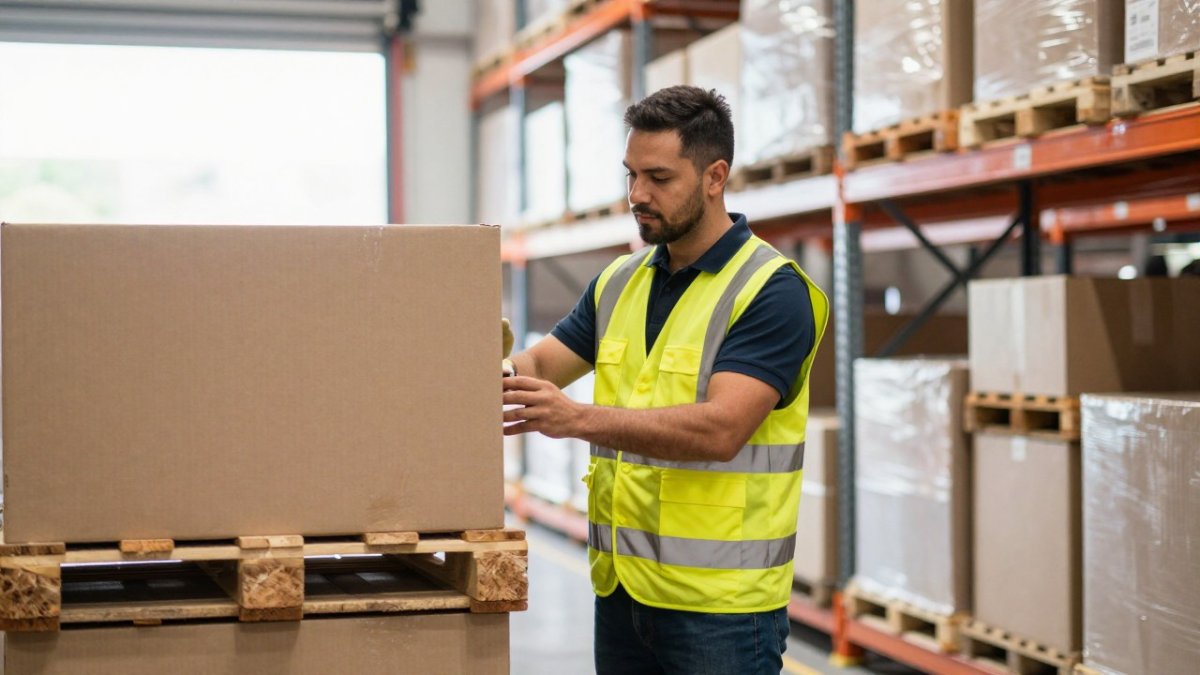
A typical cycle begins when you send purchase orders or inbound notices to the provider, indicating what is coming, when and in what quantity. The provider receives and checks the goods against those notices, then records them in its warehouse management system.
The weak points tend to be the handoffs: discrepancies at receiving, orders that fail to sync through an integration, and exceptions that nobody flags. Ask how the provider handles these cases, who you contact and how quickly they respond.
Freight Forwarder vs 3PL: Which Do You Need?
People often use “freight forwarder” and “3PL” interchangeably, but they solve different problems. A freight forwarder arranges the movement of goods across borders: booking sea or air space, handling documentation and coordinating with carriers. A 3PL focuses on what happens to the goods around that movement, namely storage, fulfilment and distribution.
Many businesses need both. Understand what a freight forwarder is liable for when shipments are delayed before you rely on one. An importer might use a freight forwarder to bring containers in from overseas, then a 3PL to receive, store and fulfil those goods domestically. Others only need one.
Shipping volume and product type are the deciding factors. Low-volume importers sometimes find a forwarder who also offers warehousing is enough. High-volume sellers usually benefit from a dedicated 3PL.
3PL Pricing and Costs: What Goes Into the Quote
Pricing for 3PL services depends on quantity, dates, storage conditions, delivery destinations and the level of service you require, so there is no single figure to quote. See exactly which charges a freight forwarder quote includes before you compare offers. For current pricing, request a quote tailored to your volumes and requirements. Discover practical ways to bring down shipping expenses for your business.
What you can do is understand the fee structures before quotes arrive, so you can compare them on equal terms.
Cost-plus pricing passes through the provider’s actual costs, carrier charges, packaging, labour, with an agreed margin or handling percentage on top.
Fixed-fee or dedicated-site pricing sets a monthly fee for a defined scope, often with a dedicated area of a warehouse and agreed labour hours.
Whichever model applies, ask for the full charge schedule, not a headline rate.
Accessorial charges are where budgets quietly break.
Total cost of ownership goes beyond the invoice.
The table below summarises the four common 3PL pricing models described in the article.
| Pricing model | Best for | Key trade-off |
|---|---|---|
| Transaction-based | Variable or seasonal volumes | Higher unit rates; minimum per-order charges |
| Management fee plus activity | Named contact and predictable support | Fixed retainer plus variable charges |
| Cost-plus | Transparent cost pass-through | Requires trust and invoice audits |
| Fixed-fee or dedicated-site | High-volume, stable operations | Risk if volumes fall below assumed level |
What a 3PL Service-Level Agreement Should Cover
A service-level agreement, or SLA, is the contractual document that defines what the provider must deliver and what happens if it does not. It is one of the most important documents you will sign, and it is easy to overlook under pressure to start quickly.
A solid SLA sets measurable commitments. These typically include order processing time, dispatch accuracy (the percentage of orders shipped correct and complete), inventory accuracy during cycle counts, and the response time for enquiries and exceptions.
It should also set out remedies. What credit or compensation applies if performance falls short? How are damaged or lost goods assessed and paid for? Who carries liability during storage and transit? Clarity on these points matters far more than the length of the document.
3PL Provider Selection Checklist and Risks to Weigh
Choosing a provider is easier when you work through the same questions for every candidate. Use this checklist to structure your evaluation:
- Can the provider store and handle your specific product type, including any temperature, food-grade or hazardous requirements, and does it hold the relevant licences and facilities?
- Does it integrate with your e-commerce platform, ERP or marketplace accounts, and can you see live inventory and order status through a portal or API?
- What are its order accuracy, on-time dispatch and inventory accuracy figures, and how are they measured and reported?
- Does it cover both inbound and outbound services, and how are returns received, graded and restocked?
- Can you see a full itemised quote, the accessorial schedule and a sample invoice before committing?
- What does the service-level agreement guarantee, how is each commitment measured, and what remedies apply if it is missed?
- Who carries liability for loss or damage during storage and transit, and what insurance does the provider hold and require you to hold?
- Who is your named contact, what are the escalation steps for urgent issues, and what are the response-time commitments?
- Can the provider scale for peak periods, what is the process for adding capacity, and at what cost?
- What are the contract term, notice period, exit provisions and data-return arrangements?
- Will it provide references from businesses of a similar size and product type?
Several risks deserve weight in your decision, and each has a contract mechanism you can negotiate.
Lock-in and exit. Long terms with high exit fees can trap you with a provider that stops performing.
Liability and insurance. Clarify who is responsible when goods are damaged, lost or stolen, and how claims are assessed and paid.
Concentration risk. If one facility or carrier handles most of your stock, a fire, flood, industrial dispute or carrier failure there can halt your business.
Data and systems risk. Your inventory and customer data pass through the provider’s systems.
Transition and dependency risk. Moving stock and integrations to a new provider takes time and carries operational risk.
Outsourcing is not always the right choice.
Booking Your Next Shipment With Seatram
Seatram provides freight forwarding and logistics services for sea, air and land freight, with both wharf-to-wharf and door-to-door options. Seatram tailors its service to your cargo and your timelines.
If you are weighing up a 3PL or forwarder for an upcoming shipment, request a quote and we will walk through the options with you. Get started with Seatram and manage your shipments from origin to destination.
Frequently Asked Questions
What does a third-party logistics provider do?
A third-party logistics provider, or 3PL, handles part or all of a business’s supply chain on its behalf. Typical work includes receiving and storing inventory, picking and packing orders, arranging domestic and international transport, and processing returns. Businesses use a 3PL to avoid owning warehouses and fleets, to scale up or down with demand and to reach distribution networks they could not build quickly themselves. Responsibilities are set out in the contract, so the scope of work should be confirmed in writing before any goods move.
What services does a 3PL provider offer?
Most 3PLs offer warehousing and inventory storage, order fulfilment, pick and pack, shipping and transportation coordination, and returns handling. Some also provide customs support, cross-docking and value-added tasks such as kitting or labelling. Service mixes differ widely, so it is worth asking which services are delivered in-house and which are subcontracted. Seatram provides freight forwarding and logistics services across sea, air and land, and can discuss a scope that fits your shipping volume.
How do I choose a third-party logistics provider?
Start by defining your volumes, product types, delivery destinations and any special handling needs such as temperature control or hazardous goods. Then compare providers on capability, location, technology, reporting, financial stability and references from businesses of a similar size. Ask for a trial period or pilot shipment where possible. A structured checklist makes comparisons fairer, and a written service-level agreement protects both sides once you choose.
What should a 3PL service-level agreement include?
A service-level agreement (SLA) should define measurable service standards such as order accuracy, dispatch times, inventory accuracy and response times for queries. It should also set out reporting frequency, how performance failures are handled, liability limits for loss or damage, insurance requirements, change-control procedures and terms for ending the contract. Clear definitions of each KPI prevent disputes later, so agree how each metric is calculated before signing.
What is the difference between a freight forwarder and a 3PL provider?
A freight forwarder arranges the movement of goods, usually by sea, air or road, and coordinates customs documentation and carriers. A 3PL provider goes further by managing warehousing, inventory and fulfilment as well as transport. Many businesses use a freight forwarder for international movements and a 3PL for storage and order processing, and some providers, including Seatram, offer both. Deciding which you need depends on whether your main gap is moving goods or running your warehouse operations.
How much does a third-party logistics provider cost?
Seatram has not published standard prices, and 3PL costs depend on quantity, dates, delivery destination, storage duration and the services included. Quotes typically combine storage fees, handling charges per order or pallet, transport costs and any surcharges. To compare quotes fairly, ask each provider to itemise every fee, including fuel surcharges, port fees and administration charges. Request a quote from Seatram to get pricing based on your own shipping profile.
When should a business outsource logistics to a 3PL?
Outsourcing tends to make sense when order volumes are variable, when storage space or staff time is costing more than a 3PL would charge, or when you need to reach new markets quickly. It is less suitable where your logistics are a core competitive advantage or where volumes are too small to justify the contract overhead. Weigh the trade-off between control and cost, and check whether a provider can give you the visibility and responsiveness your customers expect.
