
Last Updated: November 24, 2026
Quick Summary
Cold chain freight forwarding in Australia is the coordinated movement of temperature-sensitive cargo from pickup to delivery, with the temperature held within a defined range at every handover. Most failures happen at those handovers rather than in the refrigeration unit, so each stage needs its own temperature record.
- Most cold chain failures occur at handovers such as truck transfers, container yards and customs holds.
- Each stage of the chain needs its own temperature record, because regulators and receivers will ask for it.
- Pre-cool cargo before loading a reefer container, since a correctly set unit will not hold temperature for warm product.
- Air freight is faster but costs more and has limited capacity; sea freight in reefer containers is cheaper per kilogram for large volumes.
- Confirm the port-to-door plan before the vessel arrives, including refrigerated receiving, truck booking and collection within free time.
Table of Contents
- Cold Chain Packaging Requirements for Perishable Cargo
- Temperature Monitoring in Transit: What to Expect From Your Provider
- Air Versus Sea Freight for Temperature-Sensitive Goods
- Shipping Frozen Food Internationally: Documents and Compliance
- Managing Perishable Goods Shipping From Port to Door
- Booking Your Next Cold Chain Shipment With Seatram
- Frequently Asked Questions
Cold chain freight forwarding in Australia is the coordinated movement of temperature-sensitive cargo, from pickup through to delivery, with the temperature held within a defined range at every handover. Seatram provides freight forwarding across sea, air and land, so perishable and temperature-controlled goods can be moved with their handovers coordinated. The market behind it is growing: Mordor Intelligence estimates the Australian cold chain logistics market at USD 4.83 billion in 2026, rising to USD 5.89 billion by 2031 at a 4.06% compound annual growth rate (Mordor Intelligence Australia cold chain logistics market forecast). Demand for reliable cold-chain freight forwarding in Australia is rising alongside it.
A cold chain is only as strong as its weakest handover. A shipment can leave a cool store at the correct temperature and still spoil at a truck transfer, a container yard or a customs hold. Most failures happen in those gaps, not in the refrigeration unit itself.
For a typical export of chilled or frozen food, the chain runs in stages. The cargo is collected from the producer and moved to a temperature-controlled facility. It is then loaded into a reefer container or an insulated pallet system, transported to a port or airport, held while documents are cleared, and finally moved to the destination. Each stage needs its own temperature record, because a regulator or receiver will ask for it if something goes wrong.
Seatram coordinates these stages under one booking, which gives a single point of contact for tracing shipments. You can read a responsive cold chain logistics shipping playbook that walks through how this works in practice.
Watch out: a reefer container that is set correctly but loaded with warm product will not hold temperature. Pre-cool the cargo before it goes in.
Cold Chain Packaging Requirements for Perishable Cargo
The right packaging depends on the product, the transit time and the destination climate. A few principles hold across most perishable exports. Insulated shipping boxes and pallet covers slow heat transfer. Phase-change gel packs or dry ice keep the interior within range for a set period. Data loggers placed inside the load record the temperature independently of the carrier’s own system.
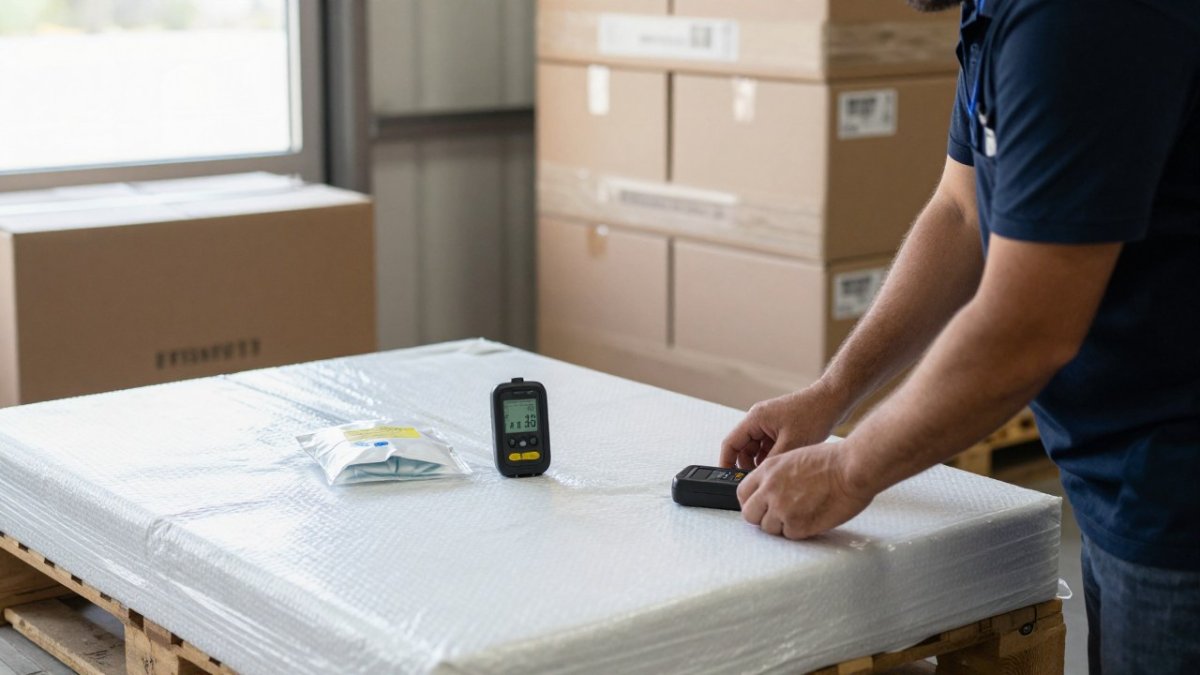
Packaging also needs to fit the transport mode. A pallet configuration that works in a reefer container may not meet the requirements of an airline’s cargo handling rules. Ask your forwarder to confirm the packing specification before the goods are produced, not after.
Temperature Monitoring in Transit: What to Expect From Your Provider
Temperature monitoring is the feature most shippers ask about and the one most often misunderstood. For a fuller look at perishables handling in transit, see cold chain logistics for perishables. A good provider should give you continuous temperature data for the whole journey, not a single reading at departure and arrival. Ask whether the data is recorded at intervals you can see, whether alerts are sent when a set threshold is breached, and who receives those alerts out of hours.
Confirm the monitoring arrangement in writing before you book, including the reporting interval and what happens to the record after delivery.
Air Versus Sea Freight for Temperature-Sensitive Goods
Air freight is faster and suits goods with short shelf lives, high unit values or tight delivery windows. The trade-off is cost and capacity, since air cargo space is limited and priced by weight and volume.
Sea freight in reefer containers is slower but considerably cheaper per kilogram for large volumes. It suits frozen goods, bulk chilled product and shipments where a few extra weeks in transit is acceptable. The main risks are port delays and the need to monitor the container from the moment it is loaded.
- Air freight, pros: speed, shorter exposure to temperature risk, tighter scheduling.
- Air freight, cons: higher cost, limited capacity, weight and volume restrictions.
- Sea freight, pros: lower cost for large volumes, suits frozen and bulk chilled cargo.
- Sea freight, cons: longer transit, exposure to port delays, more handovers to manage.
Pricing depends on quantity, dates and delivery terms. Visit the Seatram website or request a quote for current rates.
The two main modes differ in speed, cost and the risks you need to manage.
| Mode | Best for | Key difference |
|---|---|---|
| Air freight | Short shelf life, high unit value, tight windows | Faster, but higher cost and limited capacity |
| Sea freight (reefer) | Frozen goods, bulk chilled product, large volumes | Cheaper per kilogram, but longer transit |
| Air freight risks | Weight and volume restrictions | Higher cost and limited capacity |
| Sea freight risks | Port delays and more handovers | Longer transit and more monitoring needed |
Shipping Frozen Food Internationally: Documents and Compliance
Exporting or importing frozen and chilled food involves a set of documents and biosecurity requirements that vary by product and destination. Typically these include a commercial invoice, a packing list, a certificate of origin and any health or export certificates the destination country requires. Where the product is regulated, the relevant certificate must be issued before the goods leave Australia.
Verify the requirements for your specific product with the relevant Australian authority and the importing country before shipping. A missing certificate can hold a consignment at the border for days, which is enough to lose a frozen shipment entirely.
Managing Perishable Goods Shipping From Port to Door
The final leg is where many cold chains break down. A reefer container can arrive on time and still lose its cargo if it sits at a terminal without power, or if the consignee cannot collect it in the free-time window. Port detention and demurrage charges accumulate quickly, and perishable cargo has no time to wait.
Plan collection and delivery before the vessel arrives. Learn how to reduce detention charges and stop port delay losses that can spoil perishable cargo timing. Confirm that the receiving site can accept refrigerated goods, that a truck is booked, and that someone is available to inspect the load on arrival. Seatram can manage port-to-door movement as part of the same booking. Review practical steps to cut sea freight costs and delays in Australia before you plan the final leg.
Booking Your Next Cold Chain Shipment With Seatram
Before you commit to a provider, check that it can show you the temperature record for every stage, state clearly what its quotes include, and name who handles documentation and alerts. Find out what is included in freight forwarder quotes so you can compare offers on a like-for-like basis. Seatram is a specialist provider of end-to-end freight forwarding, with sea, air and land services and one platform for managing shipments.
To see how Seatram would handle your cold chain shipment, request a quote from Seatram and describe your product, volume, origin, destination and required temperature range.
Frequently Asked Questions
What is cold chain freight forwarding?
Cold chain freight forwarding is the arranging of transport for goods that must stay within a set temperature range from pickup to delivery. It covers refrigerated and frozen cargo, and often pharmaceuticals and other temperature-sensitive products. A forwarder coordinates the carriers, temperature-controlled equipment, customs paperwork and handover points so the cargo is not exposed to temperature swings at any stage. For Australian importers and exporters, the service typically spans airfreight, sea freight in reefer containers, and domestic road legs. Pricing depends on quantity, dates, route and delivery requirements, so request a quote from Seatram for current figures.
How is temperature maintained during freight transport?
Temperature is maintained through a combination of refrigerated equipment, insulated packaging and monitoring. Reefer containers and temperature-controlled trucks hold a set range, while pallets are often wrapped in insulation with phase-change or gel packs. Data loggers record conditions throughout the journey so any excursion can be identified and investigated. Handover points such as ports and cold stores are where many failures occur, so a good forwarder minimises the time cargo spends outside controlled conditions. Ask any provider how they manage these transfers before you commit.
Can temperature-sensitive goods be shipped by air and sea?
Yes. Airfreight is faster and suits high-value or short-life goods, while sea freight in refrigerated containers is usually more economical for larger volumes on longer routes. Each mode has trade-offs in transit time, capacity, handling points and cost. The right choice depends on the product’s shelf life, the destination market and your delivery deadlines. Seatram can advise on which option suits your cargo and provide a quote based on your specific shipment details.
What documents are needed to ship food internationally?
Documents vary by product and destination, but commonly include a commercial invoice, packing list, bill of lading or airway bill, and any health or export certificates required for food. Imports into Australia are subject to biosecurity and customs requirements, so the paperwork must be accurate before cargo arrives. Errors or missing certificates can delay clearance and lead to storage charges while cargo waits. Confirm the full documentation list with your forwarder early in the planning stage, and check current requirements with the relevant Australian authorities for your product.
What should I look for in a cold chain freight forwarder?
Look for proven experience handling temperature-controlled cargo, clear information about how they monitor conditions in transit, and transparent pricing with a full breakdown of what is included. Ask how they handle customs brokerage and biosecurity, who is responsible if a delay occurs, and what reporting you will receive during the journey. Responsive account management matters, particularly for smaller businesses with regular shipments. Request references from businesses with similar cargo and volumes, and compare written quotes side by side before deciding.
How do you ship perishable goods safely?
Safe shipping of perishable goods starts with pre-cooling the product, using appropriate packaging and loading it into equipment that is set and verified before loading. Temperature loggers should travel with the cargo, and the route should minimise time at transfer points. Documentation and clearance should be prepared in advance so cargo does not sit in uncontrolled conditions. Agree on the temperature range, alarm procedures and responsibilities in writing with your forwarder before the shipment departs.
