
Quick Summary
Cold chain logistics cost per shipment varies widely because pricing reflects the service required, not just distance. The required temperature range, handling complexity, storage time, monitoring and compliance obligations all shape the final figure, so no single universal rate applies.
- Temperature range is usually the biggest single cost driver, and frozen goods cost more than chilled.
- Ask for an itemised quote covering base freight, cooling, handling, storage, monitoring and surcharges.
- Protect-from-freeze options can cost less than active refrigeration where the cargo tolerates it.
- Compare quotes on matched assumptions, since a low headline rate may exclude fuel surcharges or port fees.
- The lowest freight rate is not always the lowest total cost once late or failed loads are counted.
Table of Contents
- Why Cold Chain Logistics Cost Per Shipment Varies So Widely
- Cold Chain Logistics Cost Factors That Drive the Price
- Refrigerated Freight Rates: Active Cooling Versus Protect-From-Freeze
- How to Read a Cold Chain Shipping Quote Without Surprises
- Why the Lowest Freight Rate Is Not Always the Lowest Total Cost
- How to Reduce Refrigerated Transport Costs Without Risking Product Quality
- Getting a Cold Chain Quote for Your Next Shipment with Seatram
- Frequently Asked Questions
Cold chain logistics cost per shipment varies more widely than most freight buyers expect. Two shipments of the same weight can carry very different bills, and the gap often comes down to temperature requirements, handling and how the load is monitored. This guide from Seatram explains what drives those costs, what a sensible quote should contain and where budgets usually go wrong.
Understanding the cost per shipment starts with a simple point: refrigerated freight is priced around the service it requires, not only the distance travelled. Cold-chain costs generally depend on the required temperature, how long goods are held, the shipment distance, how complex the handling is, the level of monitoring and the compliance obligations that apply. Each of those factors adds a layer to the final figure.
Why Cold Chain Logistics Cost Per Shipment Varies So Widely
A cold chain shipment is priced on what it needs to stay within its temperature range from pickup to delivery. A chilled load of produce on a short domestic run is a different job from a frozen pharmaceutical consignment that must stay below a set threshold for days. Each of those jobs uses different equipment, staffing and monitoring.
Lowest-looking quotes can exclude costs that matter. Before comparing numbers, check what each provider includes and what it treats as an extra. Prices should be read alongside the service scope, because two quotes with the same headline figure may cover very different levels of care.
Cold Chain Logistics Cost Factors That Drive the Price
Several inputs shape the cost of every refrigerated shipment. The most useful way to read a quote is to ask how each factor applies to your own cargo.
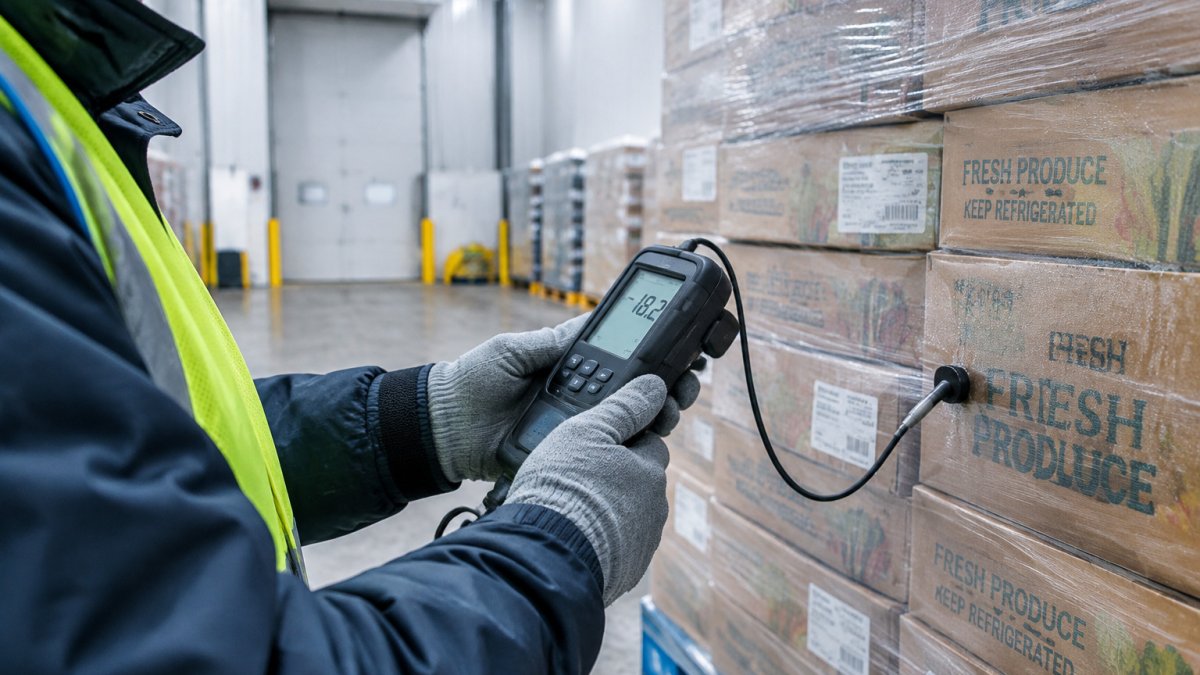
Temperature Range and Handling Complexity
The required temperature range is usually the biggest single driver. Chilled goods cost less to move than frozen goods, because the equipment must work harder and the margin for error is smaller at lower temperatures. Handling complexity adds further cost. Goods that need transfers between vehicles, cross-docking or repackaging require more labour and more time at each step.
Watch out: a shipment that needs a narrow temperature band can cost materially more than one with a wider tolerance, even when the weight and distance are identical. Confirm the exact band before you request a rate. For practical handling guidance on these products, see how to ship temperature sensitive products safely.
Storage Duration, Distance and Monitoring
Time in storage adds cost in two ways: the facility charges for space and power, and each extra day adds to the risk of temperature excursions. Distance matters too, but it does not work in a straight line. A longer route increases fuel and driver costs, and it also multiplies the number of handover points where a cold chain can break. Continuous temperature monitoring, with data logged along the route, is an added service that protects the cargo and the paperwork around it. Whether it is included in the price is a question worth asking every provider.
The article points to several inputs that shape the cost of every refrigerated shipment, summarised below.
| Cost factor | What drives it | Note |
|---|---|---|
| Temperature range | Required band sets equipment effort | Frozen costs more than chilled |
| Handling complexity | Transfers, cross-docking, repackaging | Each step adds labour and time |
| Storage duration | Space, power and temperature risk | Each extra day adds cost |
| Distance | Fuel, driver time and handover points | Longer routes add break points |
| Monitoring | Continuous logged temperature data | Ask if included in the price |
| Compliance obligations | Paperwork and regulatory requirements | Adds a layer to the final figure |
Refrigerated Freight Rates: Active Cooling Versus Protect-From-Freeze
Not every shipment needs active refrigeration. Where the cargo tolerates it, some shippers choose protect-from-freeze solutions instead. These keep goods above freezing without running a full cooling system, and they are generally less expensive than a refrigerated load. Protect-from-freeze options can cost less than refrigerated loads because they do not rely on active cooling.
The decision comes down to the product. If the goods must stay within a chilled band, active cooling is usually necessary. If the main risk is freezing, a protect-from-freeze approach may meet the requirement at a lower cost. Ask your forwarder to confirm which option the product specification allows, rather than defaulting to the most expensive service.
How to Read a Cold Chain Shipping Quote Without Surprises
A useful cold chain quote should break the price into its parts. The itemised structure below is the format to ask for, because it makes like-for-like comparison possible.
The Line Items a Cold Chain Quote Should Contain
Ask for each of the following as a separate line, with the assumption behind it stated in writing:
- Base freight charge, the movement itself, quoted per pallet, per kilogram chargeable weight, or per container, depending on the mode.
- Temperature-control element, the refrigeration or active-cooling component, which may be bundled into the base rate or shown separately. Ask which.
- Handling and transfer fees, cross-dock, repalletising, tempering, and any manual handling beyond standard pallet movement.
- Storage charges, per pallet position per week, with the inbound and outbound rates stated, plus any power connection fee.
- Monitoring and documentation, data loggers, validated monitoring systems, alarm escalation, and the paperwork that supports a temperature claim.
- Surcharges, fuel surcharges, port fees, security fees, and any seasonal or congestion surcharge, each with the basis on which it is calculated.
- Pickup and final delivery, whether these are included or quoted as extras, and whether tail-lift, inside delivery, or appointment windows attract a further charge.
A quote that gives a single lump sum makes it hard to compare providers fairly, because you cannot see which elements are included and which will appear later as variations.
A Worked Example of How the Lines Move
Consider two chilled consignments of the same weight moving on the same lane. The first is a full pallet set moving direct from a distribution centre to a retail DC with one cross-dock. The second is a part-pallet set moving through two cross-docks with a tempering step before dispatch.
This is why the assumptions matter as much as the price. Note the temperature range, the expected transit time, the number of handovers, and whether the quote covers pickup and final delivery. If any of those assumptions change, the price will change too.
Watch out: a quote that excludes fuel surcharges or port fees can look cheaper than one that includes them, even when the all-in cost is higher. Ask for the surcharge basis and whether it is capped.
Benchmarking Before You Compare
Before you put quotes side by side, establish a benchmark for your own lane. Ask two or three providers for an indicative rate on the same scope, and ask each to confirm the assumptions in writing. Indicative rates on the same scope are easier to compare once the assumptions are matched. If one quote sits well below the others, the first question is what it excludes, not whether it is a bargain.
For a like-for-like comparison, put each quote into the same format before you judge them. Our guide on how to compare freight quotes in Australia walks through that process step by step. It is worth doing this before you decide, because small differences in scope can outweigh a visible gap in price.
The Questions That Reveal a Weak Quote
A short set of questions will separate a robust quote from a thin one. Ask what happens if the retail appointment is missed and the load waits overnight, who pays for the storage and the power. Ask whether the monitoring data is provided to you as a matter of course or only on request. Ask whether the quote assumes a full trailer or a part load, and what the rate becomes if the volume changes. Ask whether the provider has confirmed the lane and the equipment, or whether the rate is indicative pending a feasibility check.
A provider that answers these questions in writing before you book is giving you a quote you can rely on. One that deflects them is giving you a headline figure that will move.
Why the Lowest Freight Rate Is Not Always the Lowest Total Cost
The cheapest quote on paper can end up costing more. A low frozen-freight rate can become expensive if a shipment is late, has a temperature problem, misses a retail appointment or must be handled again. A single failed load can cost far more than the saving on the original rate.
Total cost includes the value of the goods, the price of a rejected delivery, the time lost to re-booking and the effect on customer relationships. A slightly higher rate from a provider with stronger monitoring and a reliable record may be the cheaper choice once those risks are counted. The same reasoning applies to fuel surcharges and port fees that appear late. Ask what is included, and what is not, before you commit.
How to Reduce Refrigerated Transport Costs Without Risking Product Quality
Savings are possible if you plan shipments with the cold chain in mind. Consolidating orders into fuller loads can lower the cost per unit, provided the product stays within its temperature requirements. Booking with enough lead time reduces the premium that comes with urgent, short-notice movements. Matching the service level to the actual product need, rather than paying for the highest specification by default, also helps.
Avoid cutting corners on monitoring or on the temperature band to save money. A small saving on the rate is not worth a spoiled shipment. For practical steps on lowering shipping spend without weakening your controls, see our playbook on seven sea freight steps that cut costs and delays in Australia.
Getting a Cold Chain Quote for Your Next Shipment with Seatram
Seatram is a specialist provider of freight forwarding and logistics services, delivering tailored end-to-end supply chain solutions across sea, air and land freight. Cargo reaches its destination safely, on time and on budget is the outcome we aim for with every shipment.
Pricing for cold chain work depends on the temperature range, distance, storage time and monitoring needs of your specific shipment. To see what your consignment would cost, request a quote from Seatram.
Last Updated: November 12, 2026
Frequently Asked Questions
How much does cold chain logistics cost per shipment?
Cold chain logistics cost per shipment is not a fixed figure. It depends on the required temperature range, how long the cargo is stored, the distance and route, handling complexity, monitoring requirements and the compliance documents needed. These variables, rather than a single universal rate, shape the cost. For a figure that reflects your cargo, request a quote from Seatram, since pricing depends on quantity, dates and delivery requirements.
What factors affect the cost of refrigerated freight?
The main factors are the temperature the cargo must be held at, how long it sits in storage, the shipment distance, the complexity of handling, the level of temperature monitoring and the compliance requirements that apply. Protect-from-freeze solutions can cost less than fully refrigerated loads where the cargo allows, because they avoid active cooling. Seatram can review your specific cargo requirements to identify which of these factors apply to your shipment.
What should a cold chain logistics quote include?
A useful cold chain shipping quote should state the required temperature range, the expected transit and storage times, the origin and destination, the handling and monitoring included, and any compliance documentation. Ask whether fuel surcharges, port charges and handling fees are included or billed separately, so you can compare quotes on total cost rather than the headline freight rate.
Is air freight or sea freight cheaper for temperature-controlled cargo?
The cheaper option depends on the cargo’s transit time requirements, its value, the distance involved and how long it can tolerate the journey. Sea freight is generally slower and can suit longer routes where time is less critical, while air freight is faster but usually more expensive. Seatram can compare both modes for your shipment so you can weigh cost against delivery timing and product quality.
