
Quick Summary
Dangerous goods shipping cost in Australia is built from a base freight rate plus extra charges for specialist packaging, handling, documentation and a dangerous goods surcharge, so the final price depends on the cargo class, weight, dimensions, route and mode of transport. Air freight is often restricted and billed on chargeable weight, while sea freight usually lowers per-unit costs for larger volumes.
- Confirm the UN number, class and packing group from the safety data sheet before requesting a quote.
- Base freight is billed on the greater of gross weight or volumetric weight.
- Dangerous goods surcharges are usually added on top of the base freight rate.
- Packaging, documentation and handling charges often sit outside the freight quote.
- Compare quotes on total landed cost and confirm the carrier will accept your goods.
Table of Contents
- Dangerous goods classes and UN classifications
- What Drives Dangerous Goods Shipping Costs
- Dangerous Goods Air Freight Cost: What to Expect
- Dangerous Goods Sea Freight Cost and Lead Times
- Understanding Dangerous Goods Shipping Fees and Surcharges
- How to Get an Accurate Dangerous Goods Freight Quote
- Requesting Your Dangerous Goods Quote from Seatram
- Frequently Asked Questions
What Counts as Dangerous Goods Under Australian Rules
Dangerous goods are substances or articles that pose a risk to people, property or the environment during transport. In Australia, they are governed by the Australian Dangerous Goods Code, which applies to road, rail, sea and air movements within the country. Whether your cargo falls into this category determines the packaging, documentation and carrier options available to you, and it is a major factor in the final price. For the broader steps, see how to ship dangerous goods internationally.
Getting the classification right matters, because misdeclared cargo is where costs spiral. Australian Dangerous Goods Code, National Transport Commission
Dangerous goods classes and UN classifications
Dangerous goods are grouped into classes, each with its own hazard profile. Flammable liquids, gases, corrosives and toxic substances are common examples.
Packing group also matters. Substances are graded by the degree of danger they present, and this grading affects how they can be packed and carried. A higher-risk substance typically needs stricter containment and may face tighter carrier restrictions.
Watch out: guessing a UN number from a product name is a common error. Check the safety data sheet for the exact classification before requesting a quote.
Domestic versus international shipping rules
Domestic movements within Australia follow the Australian Dangerous Goods Code. International shipments must also meet the requirements of the destination country and the mode of transport, which can include air and sea rules set by international bodies. A shipment that is compliant domestically may still need additional documentation or packaging to leave the country.
What Drives Dangerous Goods Shipping Costs
The price of moving dangerous goods is rarely a single figure. It is built from a base freight rate plus the extra handling that hazardous cargo demands. Those extras include specialist packaging, segregated storage, trained handling, and additional documentation.
Shipment details change the final number. Weight, dimensions, the number of packages, the class of goods and the route all feed into the quote. Carriers also apply surcharges for dangerous cargo on top of standard freight. For heavy or unusual cargo, see the guide to importing heavy machinery to Australia.
Not every carrier accepts every class of dangerous goods. Before comparing prices, confirm that the carrier will accept your goods at all.
Dangerous Goods Air Freight Cost: What to Expect
Air freight is often the faster option for dangerous goods, but it is also among the most restricted. Many hazardous substances cannot travel on passenger aircraft, and those that can may face stricter packaging rules. The cost difference between air and road is rarely just the freight rate, it is the combination of restrictions, packaging and documentation that air travel demands.
Air pricing for dangerous goods follows the same logic as general air cargo, with the hazard layer added on top:
- Chargeable weight, air freight is billed on the greater of actual gross weight and volumetric weight, so bulky but light dangerous goods can be charged at a higher weight than the scales show.
- Restriction level, fully regulated goods, limited quantities and exempt goods sit at different price points. Limited quantities and exempt goods can move more cheaply, but only if they meet the conditions set out in the code and the relevant air rules.
- Packaging and marking, air transport often requires stricter UN-specification packaging, hazard labels and shipper’s declarations than road, and those costs sit outside the freight rate.
- Handling and screening, airports and ground handlers apply their own acceptance rules, and screening or segregation can add handling charges.
- Route and service, direct versus connecting services, and passenger versus freighter aircraft, change both availability and price.
A common pattern is that a small, fully regulated air shipment is dominated by per-shipment minimums and documentation costs, while a larger consignment is driven by chargeable weight and the per-kilogram DG rate. That is why two quotes for the same product can differ sharply once the restriction level and packaging are taken into account.
Before requesting air quotes, confirm three things: whether the goods can travel by air at all, whether they qualify as limited quantity or exempt, and what packaging and documentation the airline and ground handler require. A quote built on the wrong restriction level will be revised, or rejected, later.
Pricing depends on quantity, dates and delivery, so request a quote for your specific cargo rather than relying on a general estimate. When you compare air quotes, ask each provider to state the restriction level assumed, the chargeable weight used and every surcharge included, so the comparison is like for like.
Dangerous Goods Sea Freight Cost and Lead Times
Sea freight generally offers lower per-unit costs for larger volumes, which is why many businesses use it for bulk hazardous cargo. The trade-off is time. Sea movements carry longer lead times and require coordination between the origin, the port and the destination.
Containerised dangerous goods need careful planning. Container loading, segregation from incompatible goods and port acceptance rules all add steps. Build these into your schedule before you commit to a sailing date.
Understanding Dangerous Goods Shipping Fees and Surcharges
Surcharges are where many quotes become unpredictable. A dangerous goods surcharge is typically added on top of the base freight rate, and it may be calculated per shipment, per kilogram, or using whichever method produces the higher amount. The surcharge is only one line in a longer list, so it pays to know what else can appear.
A typical dangerous goods quote is built from several layers:
- Base freight rate, driven by chargeable weight (gross weight or volumetric weight, whichever is greater), dimensions, route and service level.
- Dangerous goods surcharge, the carrier’s fee for accepting and handling regulated cargo, often with a per-shipment minimum and a per-kilogram rate.
- Packaging and containment, UN-specification packaging, absorbent material, inner packagings and overpacks, which are often bought separately from the freight quote.
- Documentation, shipper’s declarations, safety data sheets and any dangerous goods paperwork the carrier requires.
- Handling and storage, segregated storage, trained handling and, at ports or airports, terminal handling charges.
- Ancillary fees, fuel surcharges, security fees, redelivery, reclassification and waiting time if paperwork is wrong.
Surcharge structures vary between carriers, and a single line can behave very differently depending on the shipment. Ask your forwarder to confirm how the surcharge is calculated for your consignment.
Ask every provider to list all surcharges in writing. Hidden fees are the most common reason a low initial quote becomes an expensive shipment.
Compare the surcharge methodology across quotes, not just the headline freight rate. You can read more about what is included and excluded in freight forwarding quotes in our guide to avoiding hidden costs in freight forwarding, and check what is included in freight forwarding quotes before you accept a price.
How to Get an Accurate Dangerous Goods Freight Quote
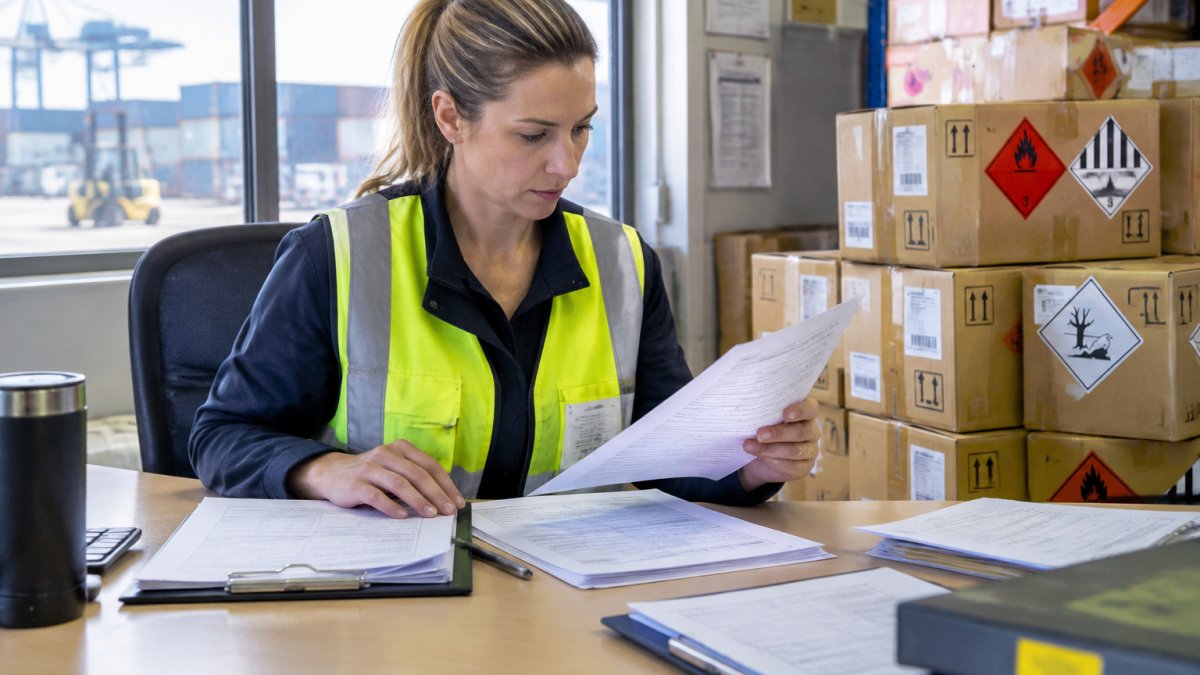
An accurate quote starts with accurate inputs. Provide the UN number and class, packing group, package type and count, gross weight per package, total weight, dimensions, origin, destination and required delivery date. Missing details lead to revised quotes later.
Attach the safety data sheet and confirm the carrier accepts your goods before comparing prices. A cheap quote that the carrier later refuses to accept is no saving at all.
Compare quotes on total landed cost, not the base rate alone. Our guide on how to compare freight quotes in Australia explains which lines to check side by side.
| section:How to Get an Accurate Dangerous Goods Freight Quote
Requesting Your Dangerous Goods Quote from Seatram
At Seatram, we are a specialist provider of freight forwarding and logistical services across sea, air and land. Pricing depends on quantity, dates and delivery, so we recommend sending us your shipment details to request a quote.
Frequently Asked Questions
How much does it cost to ship dangerous goods?
Dangerous goods shipping costs depend on the goods’ class, packaging, weight or volume, origin, destination and mode. Carriers add dangerous-goods surcharges on top of the base freight rate. Because service eligibility and charges vary, pricing for your shipment depends on its details. Request a quote from Seatram for a figure based on your specific consignment.
Is dangerous goods shipping more expensive than standard freight?
Usually yes. Dangerous goods require extra handling, compliant packaging, labelling, documentation and sometimes restricted carrier services, and these add cost. Some goods are also limited to specific carriers or services, which can narrow your options. The difference depends on the class and quantity involved, so the most reliable comparison is a freight quote for your exact shipment rather than a general estimate.
What information do I need to provide when booking dangerous goods freight?
Have the UN number, proper shipping name, dangerous goods class and packing group ready, along with the safety data sheet, quantities, packaging type, shipment weight and dimensions, origin and destination, and your preferred transport mode. Accurate details let the forwarder confirm carrier acceptance, apply the correct surcharges and check documentation. Incomplete or incorrect declarations can delay the shipment or lead to additional charges, so providing complete information upfront helps keep the quote accurate.
Does dangerous goods shipping need compliance with the Australian Dangerous Goods Code?
Yes. Transport of dangerous goods within Australia is governed by the Australian Dangerous Goods Code (ADG Code), which sets requirements for classification, packaging, labelling, marking and documentation. International shipments must also meet the rules of the relevant transport mode and destination. Working with a forwarder that handles these requirements helps keep your shipment compliant and reduces the risk of rejection or delay at the carrier.
