Table of Contents
- What End-to-End Logistics Solutions Actually Do
- Supply Chain Visibility Tools and Real-Time Tracking
- Freight Forwarding Best Practices for Reliable Delivery
- Logistics Risk Mitigation Strategies That Protect Your Cargo
Last Updated: August 30, 2026
What End-to-End Logistics Solutions Actually Do
End-to-end logistics solutions manage every stage of your shipment’s journey, from collection at the point of origin through to final delivery at the destination. This integrated approach eliminates handoffs between different service providers and keeps your cargo under one accountable team throughout its entire movement.
Most businesses treat logistics as a series of disconnected transactions. They book freight with one provider, arrange customs clearance with another, and coordinate warehousing separately. Each transition introduces delays, communication gaps, and finger-pointing when something goes wrong. End-to-end logistics solutions consolidate these functions into a seamless workflow where visibility and accountability flow continuously from start to finish.
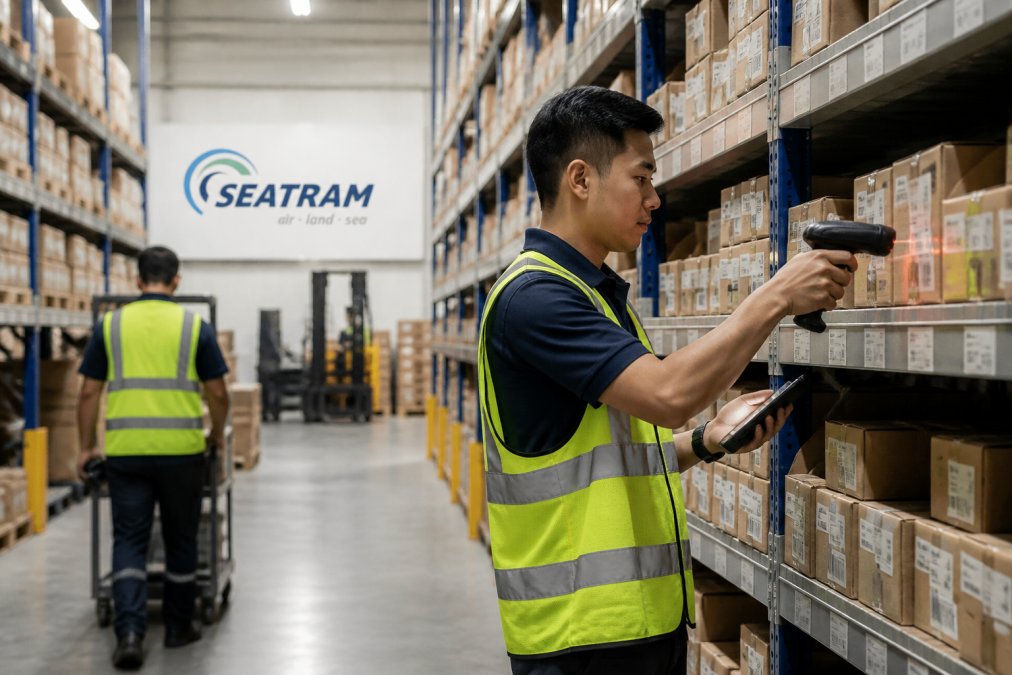
At Seatram, we manage this complexity by combining freight forwarding expertise with customs brokerage, warehousing, and distribution capabilities. Your cargo stays within a single supply chain ecosystem, reducing handoffs and creating a unified tracking thread across sea, air, and land movements.
Supply Chain Visibility Tools and Real-Time Tracking
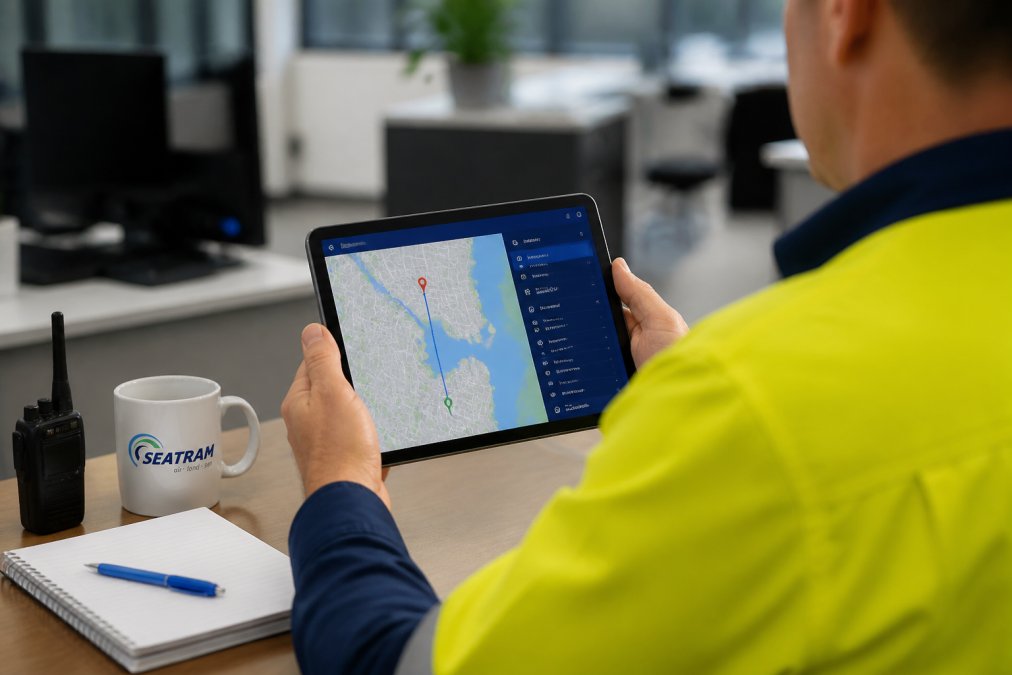
Real-time tracking transforms logistics from a black box into a transparent operation. Rather than receiving status updates that say "in transit" for weeks, you see exactly where your shipment is, when it will arrive, and what’s happening at each step.
Effective supply chain visibility requires systems that capture data at multiple touchpoints: departure from origin, border crossings, port movements, customs processing, and final-mile delivery. The best platforms consolidate this information into a single dashboard so you don’t have to chase updates across email, phone calls, and multiple portals.
Integration matters here. Your tracking system needs to communicate with your warehouse management software, your accounting system, and your customer-facing order platform. When these systems work together, you can automatically update customers, trigger internal workflows, and flag exceptions before they become problems.
Freight Forwarding Best Practices for Reliable Delivery
Reliable delivery starts with accurate freight planning. This means understanding your cargo’s dimensions, weight, classification, and handling requirements before you book space. Oversized items, hazardous materials, and temperature-sensitive goods each require different approaches, and getting the classification wrong creates delays and cost overruns.
Documentation is where most freight forwarding problems originate. Incomplete or incorrect paperwork triggers customs holds, port delays, and missed delivery windows. The paperwork must match your cargo exactly: weights, descriptions, HS codes, and country of origin all need to align. A single discrepancy can halt your shipment at the border.
Carrier selection depends on your timeline and budget. Full container loads (FCL) work best for large volumes where you control the entire container. Less than container load (LCL) services share space with other shipments and cost less per unit, but add consolidation time. Air freight moves fastest but costs significantly more. The right choice depends on your specific shipment profile, not on what worked last time.
Logistics Risk Mitigation Strategies That Protect Your Cargo
Cargo damage, theft, and delays are predictable risks, and they’re manageable through deliberate planning. Insurance covers financial loss, but it doesn’t replace lost sales or damaged customer relationships. Prevention is always cheaper than claims.
Environmental controls matter for perishables and sensitive goods. Cold-chain logistics requires monitoring temperature throughout the journey, not just at the warehouse. A single break in the temperature chain can spoil inventory worth thousands. The same principle applies to hazardous materials, which need specific handling, storage, and documentation at every stage.
Contingency planning addresses what happens when schedules slip. Which suppliers can you activate if your primary shipment is delayed? How long can your business absorb late arrival without cascading problems? Building redundancy into your supply chain, backup carriers, safety stock at key locations, or flexible production schedules, protects you when disruptions occur.
Logistics complexity grows with your business. What works for occasional shipments breaks down when you’re managing dozens of movements across multiple routes and modes. The right partner handles this scaling for you, turning supply chain management from a reactive scramble into a managed operation. Seatram’s tailored approach means your specific requirements, whether cold-chain perishables, hazardous cargo, or oversized equipment, get the expertise they need. Request a quote today and see how integrated logistics simplifies your operations.
Frequently Asked Questions
What are the core components of end-to-end logistics?
End-to-end logistics encompasses procurement, warehousing, freight forwarding, customs clearance, and final delivery. It integrates supply chain management across multiple transport modes (sea, air, land) with real-time visibility and inventory control. A comprehensive logistics partner handles documentation, quality control, and last-mile delivery, ensuring cargo moves seamlessly from point of origin to final delivery point without handoffs between providers.
How do end-to-end logistics solutions improve supply chain visibility?
Integrated logistics platforms provide real-time tracking across every stage of your shipment. You see cargo movement through linehaul transportation, port handling, customs processing, and distribution. This visibility reduces uncertainty, enables proactive problem-solving, and allows you to communicate accurate delivery dates to customers. Supply chain visibility tools eliminate the 'black hole' periods where status remains unknown for weeks.
What should businesses look for in a logistics partner?
Choose a provider offering customised solutions tailored to your specific cargo type (perishables, hazardous goods, oversized items) with proven expertise in your industry. Verify they handle both FCL and LCL shipments, manage customs brokerage and biosecurity compliance, and provide transparent pricing without hidden surcharges. Responsive customer service, real-time tracking capability, and references from companies similar to yours are essential for reliable operations.
This article was written using GrandRanker