
Table of Contents
- Why Businesses Look Beyond a Single Freight Forwarding Provider
- Customs Clearance Services Australia: What a Reliable Provider Must Offer
- How to Choose a Customs Broker That Fits Your Business
- Freight Forwarding Logistics Solutions: Sea Freight vs Air Freight
- Boutique Providers vs Large-Scale Logistics Networks: A Cost-Benefit View
- Technology, Cargo Tracking, and Supply Chain Visibility
- Risk Mitigation: What Separates Dependable Logistics Partners
- Conclusion
Last Updated: August 17, 2026
Why Businesses Look Beyond a Single Freight Forwarding Provider
Freight forwarding is too critical a function to leave in the hands of a single provider without question. Supply chains break, carriers change their routes, and compliance requirements shift. Businesses that rely exclusively on one logistics partner often discover this the hard way: a missed customs deadline, an unexpected surcharge, or a cargo delay that costs them a client relationship.
At Seatram, we work with importers and exporters across manufacturing, automotive, food and beverage, and retail who have all asked the same question at some point: are there better alternatives out there, and how do I evaluate them properly? This guide answers exactly that.
The case for exploring alternatives to any single freight forwarding provider comes down to three practical realities. First, no single logistics company excels at every trade lane, cargo type, or service level. Second, competitive tension keeps pricing honest. Third, as your business scales or diversifies, your logistics requirements will almost certainly outgrow what a generalist or regionally focused provider can offer.
According to the Australian Bureau of Statistics trade data, Australia’s goods trade flows involve hundreds of ports and thousands of commodity classifications. That complexity demands a provider with genuine depth, not just a broad service list on a website.
The right freight forwarding partner should grow with you. The wrong one will slow you down at exactly the wrong moment.
Customs Clearance Services Australia: What a Reliable Provider Must Offer
Customs clearance services in Australia are the operational backbone of any import or export movement. A reliable provider must hold a current Customs Broker licence issued under the Customs Act 1901, maintain documented processes for tariff classification, and demonstrate consistent accuracy across entry lodgements with the Australian Border Force.

What separates a competent customs clearance service from a merely adequate one is not just speed. It is the ability to anticipate compliance issues before they trigger a hold, correctly classify goods under the Working Tariff, and communicate clearly when something needs your attention.
Regulatory Compliance and Australian Border Force Requirements
The Australian Border Force governs all import and export activity at the border, and compliance with its requirements is non-negotiable. A freight forwarding provider must be able to lodge import declarations accurately through the Integrated Cargo System, manage duty and GST obligations, and handle voluntary disclosures when errors occur. Providers who treat compliance as a checkbox rather than a discipline will eventually cost you more in penalties and delays than they save in fees. Check whether your provider has a documented compliance framework and ask specifically how they handle classification disputes.
Biosecurity Requirements and Documentation Accuracy
Biosecurity is one of the most common sources of cargo delays at the Australian border. The Department of Agriculture, Fisheries and Forestry biosecurity import conditions sets out specific treatment, inspection, and documentation requirements for many goods, particularly timber, plant material, food products, and certain machinery. A provider that does not proactively flag biosecurity requirements during pre-shipment planning is a liability. Documentation accuracy is equally critical: errors in country of origin, commodity descriptions, or treatment certificates can result in goods being held, treated at your cost, or refused entry entirely.
How to Choose a Customs Broker That Fits Your Business
Choosing a customs broker is not about finding the cheapest quote. The broker you select becomes an extension of your compliance function, and their mistakes become your legal exposure. The right question is not “what do you charge?” but “how do you handle complexity?”
|
Evaluation Criterion |
What to Look For |
Red Flag |
|---|---|---|
|
Licensing |
Current Customs Broker licence under Customs Act 1901 |
Unable to provide licence number |
|
Tariff classification |
Demonstrated process for complex goods |
Relies solely on importer’s description |
|
Documentation accuracy |
Internal review process before lodgement |
High rate of amendment requests |
|
Rate transparency |
Itemised quote with inclusions listed |
Vague “all-in” pricing with no breakdown |
|
Communication |
Named account contact, defined response times |
Generic inbox, no dedicated contact |
|
Technology |
Online portal or tracking system |
Manual email-only updates |
Licensing, Accreditation, and Track Record
A licensed customs broker must be registered with the Australian Border Force and hold a current licence under the Customs Act 1901. Beyond the licence, look for membership of the Customs Brokers and Forwarders Council of Australia, which sets professional standards and provides ongoing education for members. Track record matters too. Ask for references from businesses with similar cargo profiles to yours. A broker experienced in automotive parts will approach tariff classification and import documentation very differently from one whose background is in consumer electronics.
Transparency on Rates, Surcharges, and Inclusions
This is where many importers get stung. A freight forwarding quote that looks competitive on day one can look very different by the time the invoice arrives. Fuel surcharges, port congestion levies, documentation fees, and terminal handling charges can add substantially to the base rate. Ask every provider to give you an itemised quote that explicitly lists what is and is not included. If a provider is reluctant to do this, treat that as a signal. Pricing transparency is not just good practice; it is a baseline indicator of how a provider will behave when something goes wrong.
Freight Forwarding Logistics Solutions: Sea Freight vs Air Freight
The choice between sea freight and air freight is rarely just about cost. It is about matching the mode to the cargo, the timeline, and the risk profile of the shipment.
Sea freight remains the backbone of international trade for high-volume, lower-urgency cargo. Full Container Load and Less than Container Load options give importers flexibility depending on volume. Port operations in Australia are well-connected to major Asian, European, and American trade lanes, and sea freight remains significantly more cost-effective per cubic metre than air for most commodity types.
Air freight is the right choice when time is the critical variable. Perishable goods, urgent spare parts, high-value low-weight cargo, and time-sensitive retail stock all suit air freight. The trade-off is cost: air freight rates per kilogram are substantially higher than sea, and that differential widens considerably for heavy or bulky cargo.
A capable logistics provider should offer both modes and be willing to advise on the right choice for each shipment rather than defaulting to whatever generates the most margin. Freight consolidation services, where your cargo shares container space with other shippers’ goods, can reduce sea freight costs significantly for businesses that do not fill a full container on every shipment.
The best providers also offer door-to-door delivery options, managing the entire chain from origin pickup through customs clearance to final delivery, rather than handing off responsibility at the wharf.
Boutique Providers vs Large-Scale Logistics Networks: A Cost-Benefit View
Most businesses assume that larger logistics networks automatically mean better service. The reality is more nuanced.
Large-scale providers offer global logistics network reach, established carrier relationships, and technology platforms that smaller operators cannot match. For businesses with complex multi-country supply chains or very high shipment volumes, that scale genuinely matters. The downside is that mid-size and smaller importers often find themselves deprioritised. When a large provider is managing thousands of shipments, your 15-20 monthly consignments are unlikely to receive senior attention.
Boutique providers, by contrast, tend to offer more direct account management, faster response times, and a willingness to customise their approach to your specific requirements. The trade-off is that their carrier relationships and global logistics network may be narrower, which can affect freight rates and options on less common trade lanes.
The cost-benefit calculation depends on your volume, your trade lanes, and how much complexity sits in your cargo. A specialist provider with deep experience in your commodity type will often outperform a generalist network on both service quality and landed cost, even if their headline rates look similar.
Technology, Cargo Tracking, and Supply Chain Visibility
Supply chain visibility is no longer a premium feature. It is a baseline expectation.
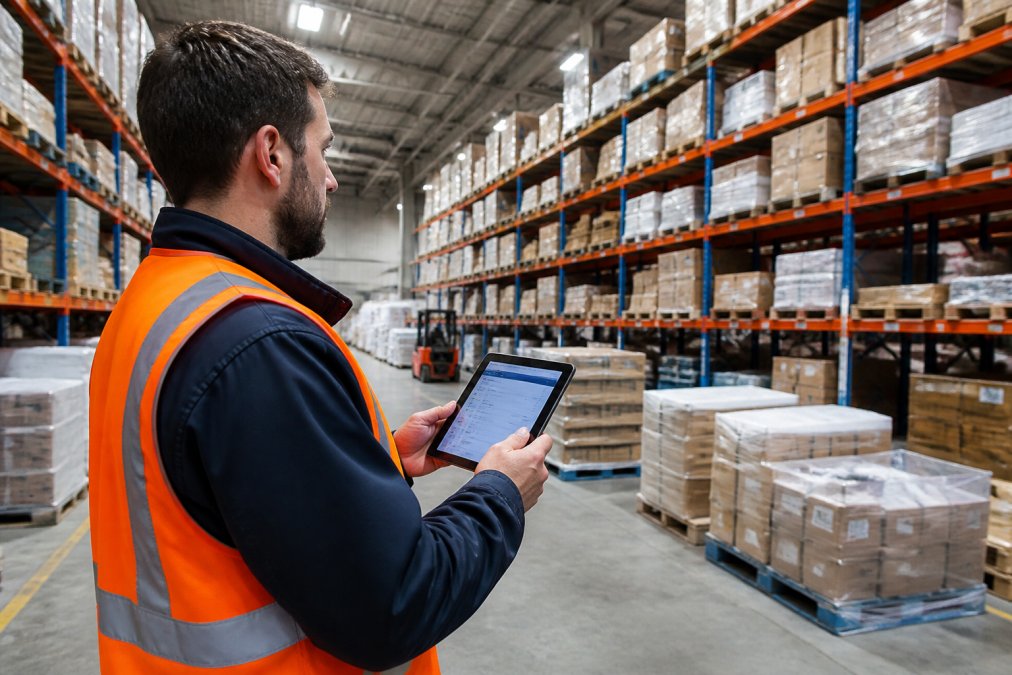
A freight forwarding provider that cannot give you real-time cargo tracking is not a viable partner for businesses that need to plan around arrival times, manage inventory, or respond to customer queries. The standard has moved well beyond a status field that reads “in transit” for three weeks without an update.
What good technology looks like in practice:
- Live shipment status linked to actual carrier milestones, not just estimated departure and arrival dates
- Exception alerts that notify you proactively when a delay, hold, or documentation issue arises
- Document management that gives you access to your commercial invoices, bills of lading, and customs entries in one place
- Integration capability with your own ERP or inventory systems for high-volume shippers
The World Customs Organization’s SAFE Framework of Standards has driven significant investment in digital customs infrastructure globally, and Australian Border Force has aligned its systems accordingly. Providers who have invested in technology that connects to these systems will handle your customs clearance faster and with fewer errors than those still relying on manual processes.
Cargo tracking is also a risk management tool. When you can see exactly where a shipment is, you can make better decisions about inventory, production scheduling, and customer commitments. A provider that treats tracking as an afterthought is effectively asking you to manage your supply chain blind.
Risk Mitigation: What Separates Dependable Logistics Partners
The real test of a freight forwarding provider is not what happens when everything goes to plan. It is what happens when it does not.
Cargo delays, customs holds, biosecurity interventions, carrier equipment shortages, and port congestion are all part of international freight. The question is not whether your provider will encounter these problems. It is whether they have the processes, relationships, and communication discipline to resolve them quickly and keep you informed throughout.
Dependable logistics partners demonstrate risk mitigation in specific ways:
- Proactive communication: They tell you about a problem before you have to ask. A hold at the border should trigger a call to you, not silence until you chase them.
- Alternative routing: When a carrier cancels or a port is congested, a provider with genuine carrier relationships can rebook quickly. A provider with limited options will leave you waiting.
- Documentation accuracy: Most customs delays are caused by documentation errors. A provider with strong internal review processes catches these before lodgement, not after a hold has been applied.
- Bonded warehouse access: For cargo that needs to be held pending inspection or re-export, access to a bonded warehouse gives you options that a provider without this capability cannot offer.
- Regulatory knowledge: Tariff classification disputes, customs valuation queries, and import permit requirements all require specific expertise. Providers who treat these as edge cases rather than core competencies will struggle when they arise.
A common mistake is choosing a provider based solely on freight rates without assessing their capability to handle exceptions. The cost of a single mishandled customs hold can exceed months of savings from a lower base rate.
Seatram’s approach centres on tailored end-to-end supply chain solutions, which means taking responsibility for the full movement rather than managing only the parts that are straightforward. That distinction matters most when something goes wrong mid-shipment.
Choosing the right freight forwarding partner is one of the highest-use decisions an import or export business makes, yet many businesses revisit it only after a costly failure. Seatram provides specialist freight forwarding and logistics services with a focus on customised solutions for each client’s specific cargo, trade lanes, and compliance requirements. Whether you need sea freight, air freight, or full door-to-door supply chain management, the Seatram team handles the complexity so you can focus on your business. Request a quote from Seatram and find out what a genuinely responsive logistics partner looks like in practice.
Frequently Asked Questions
What should I look for when choosing a customs broker in Australia?
Check that the broker holds a valid Customs Broker Licence issued under the Customs Act 1901 and is registered with the Australian Border Force. Beyond licensing, assess their experience with your specific cargo type, their accuracy on tariff classification and customs valuation, how they handle biosecurity requirements, and whether they communicate proactively when delays arise. A broker who explains every charge upfront and provides clear export documentation guidance is far easier to work with long-term than one who quotes low and surprises you later.
What is the difference between a freight forwarder and a customs broker?
A freight forwarder arranges the physical movement of cargo — booking sea freight or air freight capacity, coordinating port operations, managing cargo handling, and organising door-to-door delivery. A customs broker is a licensed specialist who manages the regulatory side: lodging import and export entries, classifying goods for tariff purposes, and ensuring compliance with Australian Border Force requirements. Many logistics providers offer both services under one roof, which simplifies supply chain management and reduces the risk of miscommunication between separate parties.
How do I verify that a freight forwarder is licensed by the Australian Border Force?
The Australian Border Force maintains a public register of licensed customs brokers. You can search the ABF website directly using the company or individual's name. For freight forwarders who are not customs brokers themselves, check whether they partner with a licensed broker and ask for that broker's licence number. Membership of the Freight & Trade Alliance or the Australian Federation of International Forwarders is also a useful indicator of industry standing, though it does not replace ABF licensing verification.
Are smaller freight forwarders able to handle complex or high-volume shipments?
Many specialist providers manage high shipment volumes and complex cargo types — including perishables requiring cold-chain logistics, over-dimensional machinery, and automotive imports — more attentively than large-scale providers whose account teams are spread across hundreds of clients. The deciding factor is not company size but depth of expertise, global logistics network access, and the quality of their customs clearance processes. Ask any prospective provider for references from businesses with similar cargo profiles and shipment frequency before committing.
This article was written using GrandRanker