
Quick Summary
Heavy lift cargo shipping cost is not set by a simple per-kilogram rate. It depends on the full breakdown of freight, lifting and handling, heavy-lift surcharges, port and inland charges, permits and escorts, insurance, and contingency allowances. Weight, dimensions, centre of gravity and lifting points often shape the final cost more than the headline freight rate.
- A complete quote breaks costs into freight, handling, surcharges, port charges, inland transport, permits, insurance and contingency.
- Heavy-lift surcharges are often the largest variable and are frequently buried inside a lump sum.
- Ask each provider what is excluded, since hidden exclusions often make cheap quotes expensive.
- Oversized road moves can need separate permits per jurisdiction, plus route surveys and escorts.
- Where cargo fits a container, a container option is usually cheaper; otherwise choose breakbulk or project shipping.
Table of Contents
- What Heavy Lift Cargo Shipping Actually Covers
- Heavy Lift Shipping Quote: What a Complete Quote Includes
- Heavy Haulage Cost Factors: Weight, Dimensions and Engineering
- Oversized Cargo Shipping Cost: Route, Permits and Escorts
- Mining Equipment Transport: Why Project Cargo Pricing Differs
- Sea Freight Versus Breakbulk and Container Options for Heavy Cargo
- Requesting a Heavy Lift Quote From Seatram
- Frequently Asked Questions
What Heavy Lift Cargo Shipping Actually Covers
Last Updated: November 11, 2026
Heavy lift cargo shipping moves pieces that are too heavy, too long or too awkward for standard containers and conventional lifting. Think transformers, generator sets, process vessels and mining equipment. Pricing for this work rarely follows a simple per-kilogram rate, which is why quotes for heavy lift cargo shipping cost can look inconsistent from one provider to the next.
The category is broader than most buyers expect. It can mean a single out-of-gauge machine loaded onto a project carrier, or a multi-leg move that combines road haulage, port handling and sea freight. Bertling’s overview of heavy-lift and project cargo services describes this kind of door-to-door supervision as part of its heavy-lift work.
Market conditions also move the numbers.
Dimensions, gross weight, centre of gravity and lifting points often shape the final cost of heavy lift work more than the headline freight rate.
Heavy Lift Shipping Quote: What a Complete Quote Includes
A useful heavy lift quote breaks the cost into its components. A single lump sum tells you very little about what you are paying for, and it makes comparing providers almost impossible. The sections below explain what each line item actually represents, how it is typically calculated, and where the money usually goes on a real heavy-lift move.
Ocean or air freight. For containerised heavy cargo this is a base freight rate per container, often quoted per cubic metre or per tonne for LCL. For out-of-gauge cargo it is usually a breakbulk or project-carrier rate, priced per freight tonne (revenue tonne) or on a charter basis. A freight tonne is generally one cubic metre or one metric tonne, whichever produces the greater charge, so bulky-but-light pieces are priced on volume and dense pieces on weight.
Origin and destination handling. Lifting, loading, lashing and securing at each port or inland point. This is where heavy lift diverges most from general freight: a 30-tonne piece may need a mobile harbour crane, a spreader beam, custom slings and a lift study, none of which appear in a container rate. Handling is often quoted per lift or per piece rather than per tonne.
Heavy-lift surcharges. Charges applied when a piece exceeds standard lifting capacity, needs specialist equipment, or falls outside a terminal’s routine handling. These are frequently the largest single variable in a heavy-lift quote and are the line item most often buried inside a lump sum.
Port and terminal charges. Wharfage, documentation, berth-related fees and terminal handling. These are usually passed through at cost plus an administration margin, and they vary by port and by whether the cargo is containerised, breakbulk or RoRo.
Inland transport. Road or rail haulage to and from the port, including any heavy-haulage equipment, route surveys and escort requirements. For oversized loads this leg can rival or exceed the ocean freight charge.
Permits and escorts. Where a road route requires them, covered in more detail in the next section.
Insurance. Cargo cover appropriate to the value and fragility of the goods, usually priced as a percentage of the insured value (commonly a small fraction of a percent to low single-digit percent, depending on cargo and route).
Contingency and risk allowance. Project cargo quotes often carry an allowance for weather delays, port congestion, re-stowage or schedule changes. Ask whether the allowance is fixed or open-ended.
In heavy-lift work, ocean freight is often only part of the total, which is why a low ocean rate does not guarantee an affordable shipment.
Watch out: a quote that shows only a single freight rate and a total, with no breakdown of lifting, permits or inland legs, gives you no way to check whether the cheap-looking number excludes the costs that will actually dominate the job.
Ask every provider to state what is excluded, as hidden exclusions are a common reason an apparently cheap quote becomes expensive.
Heavy Haulage Cost Factors: Weight, Dimensions and Engineering
Weight is the first thing buyers ask about, but it is rarely the only thing that drives price. Heavy-lift pricing depends on how much dedicated equipment and engineering each individual piece needs, so a weight-only comparison can miss the main cost drivers.
Consider these factors together:
- Gross weight and distribution: a 40-tonne piece with an even load is simpler to handle than a 25-tonne piece with an off-centre centre of gravity
- Dimensions: length, width and height determine whether the cargo is out-of-gauge and which equipment is needed
- Lifting points and rigging: whether the item has engineered lifting points or needs custom rigging
- Fragility and value: this affects packing standards and insurance
- Engineering review: some shipments need a lift study or stowage plan before sailing
It helps to ask the provider how they would handle your specific item, not just what they charge per tonne.
Oversized Cargo Shipping Cost: Route, Permits and Escorts
Route often matters as much as the cargo itself. An oversized load that travels a well-serviced port-to-port corridor may cost far less than one that needs a custom road route through restricted areas. The reason is that oversized road transport is governed by a patchwork of state and territory rules, and each jurisdiction can impose its own limits on mass, dimensions, travel times and escort requirements.
Permits. Road transport of oversized loads usually requires an oversize or overmass permit from the relevant state or territory road authority, and often a separate permit for each jurisdiction the load crosses. To see the full process from origin to destination, read how to ship oversized equipment internationally. Permit conditions can specify approved routes, travel windows (frequently outside peak hours), maximum speeds and escort levels.
Route surveys and bridge limits. Before a permit is granted, the route may need a survey to confirm clearances, bridge load limits, overhead obstructions and turning radii. A piece that is within mass limits but too tall for an overhead structure, or too heavy for a bridge on the direct route, may need a longer alternative route, and that detour is a direct cost. Route surveys and engineering assessments are chargeable and are usually quoted separately from the haul itself.
Escorts. Some routes require pilot vehicles, and the most restrictive loads may require police escorts at set times. Escort requirements are set by the road authority and can change the schedule as much as the cost, because escorted movements often run only in defined windows.
Multimodal transfers. Every change between road, rail and sea means another handling event, another set of lifting equipment and another potential delay. A port-to-door move that involves a rail leg, for example, adds a rail terminal lift at each end plus the rail freight itself. Ask the provider to show each leg separately so you can see where the money goes, and ask specifically whether terminal handling at each transfer point is included.
Last-mile access. The final leg is often the constraint. Site access may be limited by gate widths, overhead cables, soft ground or the absence of a crane able to lift the piece at the destination. Crane access at the delivery site is a cost item in its own right and is frequently omitted from ocean-freight quotes.
A practical way to control these costs is to ask for a route and permit plan before the quote is finalised, showing each jurisdiction, the permit class required, whether a route survey is needed, and the escort level for each leg. That plan is what turns an unpredictable oversized-cargo cost into a comparable one.
Mining Equipment Transport: Why Project Cargo Pricing Differs
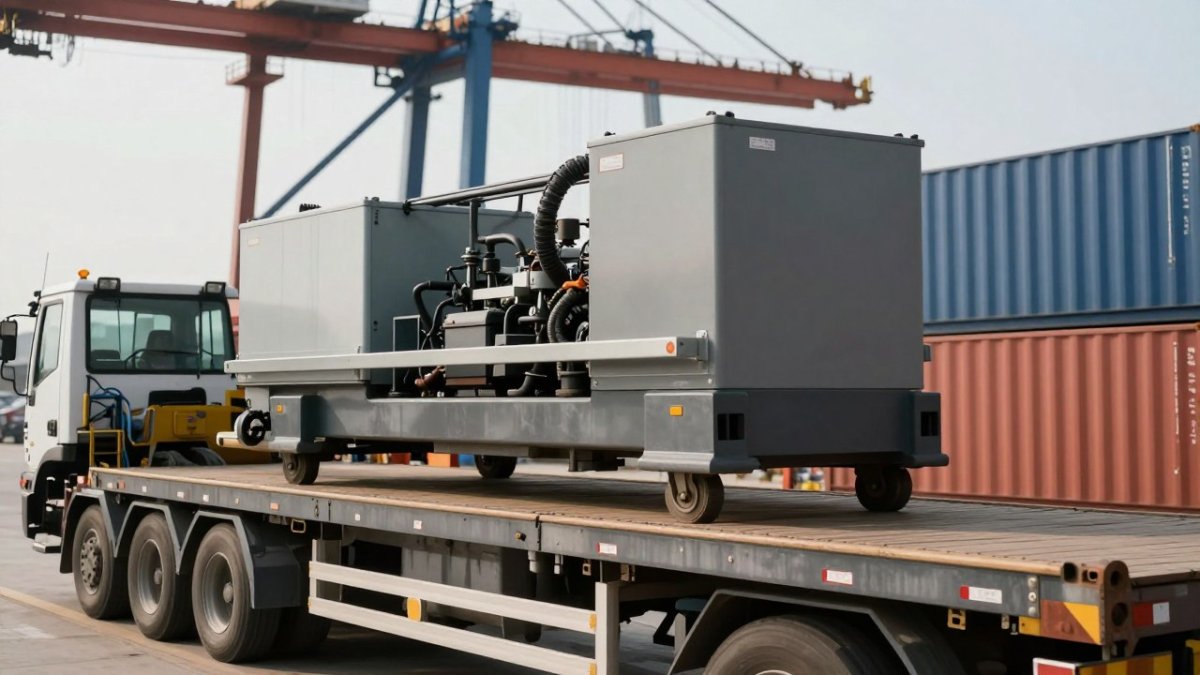
Mining equipment is one of the clearest examples of why project cargo is priced differently from standard freight. Haul trucks, crushers and drive systems are often large, heavy, expensive and needed on a fixed schedule at a remote site.
Because of this, pricing usually reflects:
- Dedicated equipment and sometimes custom rigging
- Coordination across several modes and several parties
- Tighter schedules, since a delayed component can hold up a whole project
- Site access constraints at both ends of the journey
Standard container rates do not capture these factors, so a like-for-like comparison requires the same scope from each bidder.
Sea Freight Versus Breakbulk and Container Options for Heavy Cargo
Choosing the right mode is one of the biggest levers on total cost. Most heavy cargo moves by one of three methods:
| Option | Typical use | Main cost driver | Best for |
|---|---|---|---|
| Full container load (FCL) | Items that fit inside a 20 or 40 foot container | Container rate and handling | Standard-sized, moderately heavy items |
| Flat-rack or open-top container | Items too tall or wide for a closed container | Flat-rack rate and securing | Long or tall pieces |
| Breakbulk or project vessel | Very heavy or out-of-gauge cargo | Vessel charter or dedicated slot, plus lifting | Items beyond container limits |
Less-than-container load (LCL) can suit smaller heavy pieces, but it is rarely practical for true heavy lift work because of handling restrictions.
Where the cargo fits a container, a container option is usually cheaper and simpler. Where it does not, a breakbulk or project solution is the appropriate answer.
Requesting a Heavy Lift Quote From Seatram
A good quote starts with good information. Before you contact us, gather the following:
- Exact dimensions (length, width, height) and gross weight
- Centre of gravity and lifting points, if known
- Origin and destination, including site access details
- Required delivery window and any hard deadlines
- Any permit or escort requirements you already know about
- Cargo value for insurance purposes
With that information, a quote can be prepared for your shipment. Pricing for each shipment depends on quantity, dates and delivery, so accurate figures are provided only after your cargo has been reviewed. You can request a heavy lift quote from Seatram to start that conversation.
Frequently Asked Questions
How is heavy lift cargo shipping cost calculated?
Heavy lift cost is usually built from several components rather than a single per-kilogram rate. Carriers price the vessel or equipment needed, the handling and lifting operation, port charges at origin and destination, inland haulage, and any engineering or lashing work the cargo requires. Some providers also add surcharges for fuel and port congestion. For an accurate figure, provide the weight, dimensions, origin, destination and required delivery window to Seatram and request a quote.
What information is needed for a heavy lift shipping quote?
A reliable heavy lift quote needs the exact gross weight, length, width and height of each piece, along with its centre of gravity and any lifting points. The origin and destination addresses, preferred port and required delivery date also affect routing and cost. Details about the cargo’s condition, whether it is machinery, mining equipment or a structure, and any hazardous components help determine handling requirements. Providing drawings or photographs of the item speeds up the review. Incomplete information is a common reason quotes change after booking, so supplying full specifications at the outset is worthwhile.
Does heavy lift cargo require special permits or equipment?
Oversized and overweight loads often need road transport permits, route approvals and sometimes escort vehicles, depending on the state or territory and the dimensions of the load. Heavy items may also need specialised equipment such as modular trailers, cranes, skidding systems or lashing gear. Requirements vary by route and mode, so confirm them with your freight forwarder early in planning. Confirm the approvals and equipment that may apply to your shipment with your freight forwarder early in planning.
What is included in a heavy lift freight quote?
A complete quote should itemise the main freight charge, lifting and handling, port charges, documentation, inland transport at each end, and any permit, escort or engineering fees. Fuel and other surcharges should be stated separately, along with any insurance or contingency allowance. Quotes that show only a headline rate often leave these costs for later. Ask for a breakdown of every line item and confirm what is excluded before accepting.
