
Table of Contents
- What’s Driving International Shipping in 2026
- Reducing International Shipping Costs Without Cutting Corners
- Supply Chain Risk Management Strategies for Volatile Markets
- Navigating Customs Clearance and Regulatory Compliance
- Logistics Technology Integration for 2026
- Last-Mile Delivery and Reverse Logistics Strategy
- Choosing the Right Freight Forwarding Partner
- Conclusion
Last Updated: August 17, 2026
What’s Driving International Shipping in 2026
International shipping strategies for 2026 look fundamentally different from what worked three years ago. At Seatram, we work with importers and exporters across manufacturing, retail, and food and beverage, and the pressure points are consistent: cost volatility, compliance complexity, and unpredictability in global freight markets. The core tension is this: supply chains optimised purely for efficiency are fragile, while those built for resilience often sacrifice margin. The real challenge in 2026 is finding the balance.
Port Congestion and Geopolitical Risk
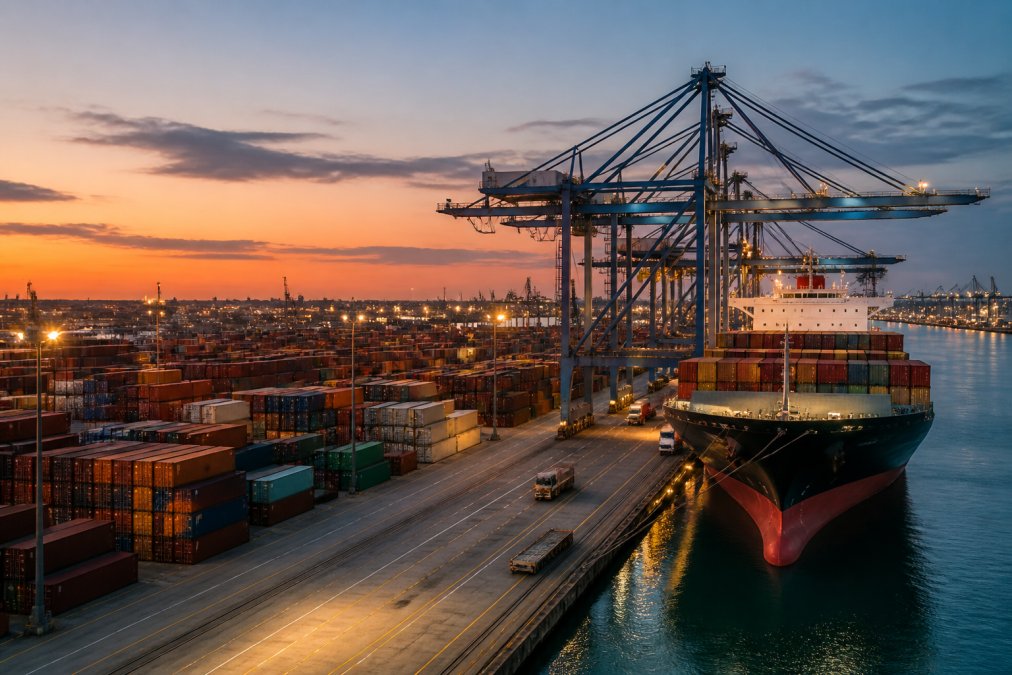
Port congestion remains one of the most disruptive forces in global freight, adding days or weeks to transit times and triggering storage penalties that erode margins. Geopolitical instability has forced many businesses to reroute cargo through longer, costlier alternatives. For businesses relying on just-in-time inventory, this model breaks. Building buffer stock and multi-routing contingencies into your supply chain design is no longer optional.
Sustainability Regulations Reshaping Freight
Regulatory pressure on carbon footprint reduction is accelerating. The International Maritime Organisation’s decarbonisation targets are reshaping carrier pricing structures, with low-sulphur fuel requirements and emerging carbon levies now flowing through to freight rates. According to the International Maritime Organisation’s strategy on greenhouse gas emissions, the sector is committed to reaching net-zero emissions by or around 2050. For shippers, sustainability directly affects your cost base and carrier options.
Reducing International Shipping Costs Without Cutting Corners
The biggest mistake operations managers make when cutting international shipping costs is focusing on the quoted freight rate while ignoring total landed cost. Fuel surcharges, port fees, documentation charges, and customs delays can easily double what looked like a competitive rate on paper. Genuine cost reduction comes from structural decisions, not rate shopping.
Freight Mode Selection: LTL, FCL, and Multimodal Options
Choosing between LTL (Less-than-Truckload), FCL (Full Container Load), and multimodal transport is the single highest-impact decision in freight cost management.
- FCL suits high-volume, regular shippers and only makes sense when your cargo fills at least 70-80% of the container.
- LTL allows you to pay for only the space you use, making it cost-effective for smaller or irregular shipments, though transit times are typically longer.
- Multimodal transport combines sea, rail, and road legs to optimise cost and speed. For long-haul routes, a sea-plus-rail combination often beats pure ocean freight on both time and price.
|
Freight Mode |
Best For |
Trade-off |
|---|---|---|
|
FCL (Full Container Load) |
High-volume, regular shipments |
Cost-inefficient for small loads |
|
LTL (Less-than-Truckload) |
Smaller or irregular cargo |
Longer transit times |
|
Multimodal Transport |
Long-haul, cost-sensitive routes |
More complex coordination |
|
Air Freight |
Time-critical, high-value goods |
Significantly higher cost |
Shipping Consolidation and Zone-Skipping
Shipping consolidation groups multiple smaller shipments into a single container, reducing per-unit freight costs substantially. Zone-skipping moves consolidated freight closer to the end customer before injecting it into the local delivery network, reducing last-mile delivery costs and transit times simultaneously.
Supply Chain Risk Management Strategies for Volatile Markets
Supply chain risk management is about knowing which risks you are carrying, which ones you can transfer, and which ones require operational hedging. The businesses that weathered recent supply chain volatility best had mapped their dependencies before disruption hit.
Carrier Diversification and Nearshoring
Relying on a single carrier or trade lane is a concentration risk. Carrier diversification, maintaining relationships with two or three carriers on critical routes, gives you options when capacity tightens. Nearshoring, shifting sourcing or manufacturing closer to the destination market, reduces exposure to long-haul disruptions and shortens lead times. The trade-off is often higher unit production costs, requiring genuine total-cost-of-ownership analysis. A practical middle ground is a dual-sourcing model: a primary supplier in a lower-cost region and a secondary nearshore supplier that can flex up when the primary is disrupted.
Insurance and Risk Mitigation Frameworks
Cargo insurance is one of the most underutilised tools in international freight. Under standard carrier liability terms, compensation in the event of loss or damage is typically calculated on a weight basis, not commercial value. For high-value cargo, this gap can be significant.
A practical risk mitigation framework for 2026 should include:
- Cargo insurance covering commercial value, not just carrier liability limits
- Documented incoterms agreed with all suppliers and buyers
- Supplier diversification across at least two origins for critical inputs
- Freight audit processes to catch billing errors and overcharges
- Contingency routing plans for your three highest-volume trade lanes
Navigating Customs Clearance and Regulatory Compliance
Customs clearance is where international shipping strategies either hold together or fall apart. Administrative friction at the border is one of the leading causes of shipment delays, and most of it is avoidable with proper preparation. Customs clearance is the formal process by which goods are approved for entry into or exit from a country, involving documentation verification, duty and tax assessment, and regulatory compliance checks. In Australia, this process is governed by the Australian Border Force, which administers the Customs Act 1901.
The most common compliance failures are documentation errors: incorrect or incomplete commercial invoices, missing certificates of origin, or tariff classification mistakes that trigger manual review. Tariff mitigation is an underutilised strategy for businesses importing regularly. Understanding applicable Free Trade Agreements, particularly those Australia has in force with major trading partners, can meaningfully reduce duty liability. For businesses importing automotive parts, perishables, or over-dimensional machinery, additional permits, biosecurity clearances, and specialist handling requirements apply, which is why specialist customs brokerage matters.
Logistics Technology Integration for 2026
Technology is reshaping logistics operations faster than most businesses are adopting it. The gap between what is available and what most mid-market shippers actually use represents a significant operational opportunity.
AI, Predictive Analytics, and Real-Time Tracking
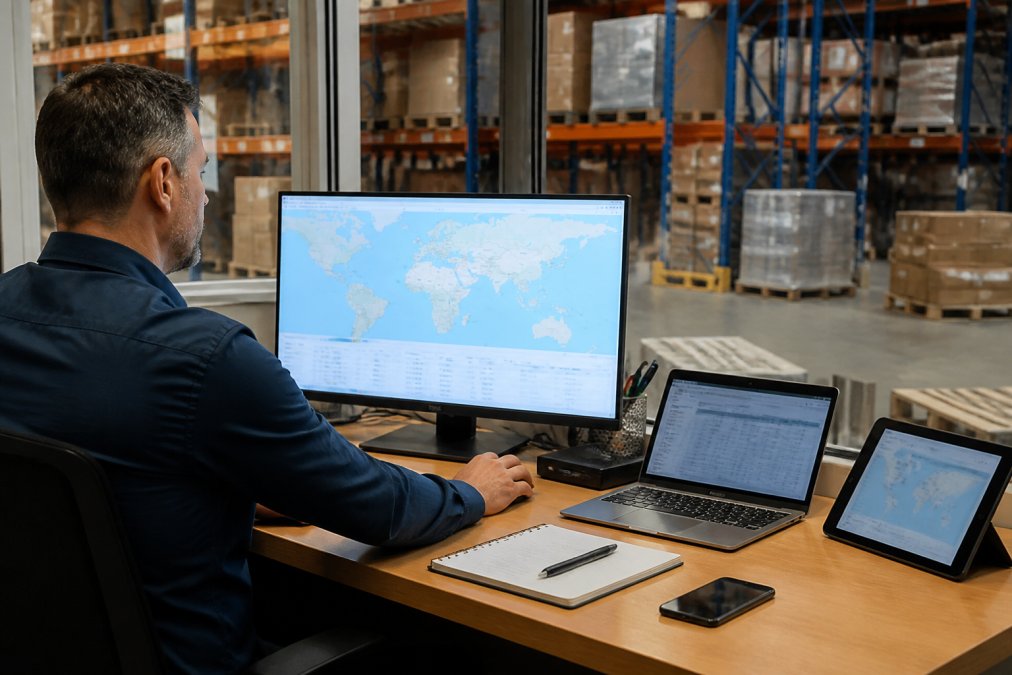
Predictive analytics is now being applied across demand forecasting, carrier selection, and port congestion prediction. AI-driven tools can model likely transit disruptions based on weather, port throughput data, and carrier performance history, giving shippers earlier warning to activate contingency plans. Real-time tracking has moved from a differentiator to a baseline expectation. Supply chain visibility platforms consolidate tracking data across carriers, modes, and legs into a single view. According to Gartner’s supply chain technology research, supply chain visibility is consistently ranked among the top investment priorities for logistics leaders.
Cybersecurity in Digital Freight Forwarding
Cybersecurity in digital freight forwarding is a growing risk as more shipment data, customs documentation, and financial transactions move through connected platforms. Freight data contains commercially sensitive information: supplier identities, pricing, volumes, and trade routes. Practical steps include verifying that your freight forwarder’s digital platforms use encrypted data transmission and access controls, ensuring customs documentation is transmitted through secure, authenticated channels, reviewing your own internal access controls for freight management systems, and understanding where your shipment data is stored and who has access to it.
Last-Mile Delivery and Reverse Logistics Strategy
Last-mile delivery is the most expensive and operationally complex segment of the supply chain, typically accounting for a disproportionate share of total delivery cost. Zone-skipping, micro-fulfilment centre placement, carrier mix optimisation, and delivery time-window management all improve first-attempt success rates and reduce costs.
Reverse logistics is the process of moving goods from the end customer back through the supply chain for return, repair, recycling, or disposal. A functional reverse logistics strategy should define clear return routing, condition assessment and disposition rules, carrier agreements that include return freight at negotiated rates, and customer communication processes that set accurate expectations on timelines.
Choosing the Right Freight Forwarding Partner
The difference between a freight forwarder and the right freight forwarder comes down to three things: capability match, communication quality, and transparency on costs.
Capability match means your forwarder has genuine expertise in your commodity type. Cold-chain logistics for perishables, over-dimensional handling for heavy machinery, and specialist customs brokerage for automotive parts each require different infrastructure and knowledge. Communication quality is non-negotiable. A forwarder who provides genuine real-time tracking, proactive exception alerts, and clear documentation support removes significant operational burden. Transparency on costs is where the industry has a credibility problem. Fuel surcharges, port fees, and documentation charges are legitimate costs, but they should be disclosed upfront, not discovered on an invoice.
Seatram’s approach is straightforward: tailored end-to-end supply chain solutions with a single platform for shipment management and a team that operates with the responsiveness the job demands. For businesses managing complex freight across multiple modes and origins, that combination of specialist capability and operational transparency makes the difference. Request a quote from Seatram to see how a tailored freight solution compares to your current arrangement.
International shipping in 2026 rewards businesses that plan structurally and penalises those that treat freight as a transactional cost. The volatility is real, the regulatory complexity is growing, and the technology gap between leading and lagging operators is widening. Seatram works with businesses across manufacturing, retail, food and beverage, and automotive to build freight strategies that hold up under pressure, combining specialist capability in customs clearance, multimodal transport, and end-to-end supply chain management with the communication standards that operations teams actually need. To see what a tailored international shipping strategy looks like for your business, get in touch with the Seatram team and request a quote.
Frequently Asked Questions
What are the key international shipping trends for 2026?
The most significant shifts in 2026 centre on supply chain resilience, logistics automation, and tightening sustainability regulations. Businesses are moving toward multimodal transport, carrier diversification, and real-time tracking to manage shipping volatility. Regulatory compliance pressure, particularly around carbon footprint reduction, is also reshaping how freight forwarders and shippers structure their contracts and select carriers. Nearshoring is gaining traction as a buffer against geopolitical risk and extended lead times.
How can businesses reduce international shipping costs in 2026?
Reducing international shipping costs starts with choosing the right freight mode for each shipment. LTL (Less-than-Truckload) and shipping consolidation work well for smaller volumes, while FCL (Full Container Load) suits high-volume routes. Zone-skipping cuts handling steps and transit time. Conducting regular freight audits to catch billing errors and unnecessary surcharges also produces consistent savings. Working with a freight forwarding partner who provides transparent, all-inclusive pricing prevents unexpected charges from eroding your budget.
What are the major supply chain challenges expected in 2026?
Port congestion, geopolitical instability, and shifting trade agreements remain the dominant challenges. Businesses importing raw materials or finished goods face storage penalties and administrative friction when shipments are delayed at border crossings. Cybersecurity threats targeting digital freight platforms are also growing. Supply chain visibility gaps, where tracking data is unreliable or delayed, continue to create operational blind spots. Proactive supply chain risk management strategies, including insurance coverage and diversified carrier networks, are essential to absorb these shocks.
How do I choose the right freight forwarding partner for 2026?
Look for a freight forwarder with demonstrated expertise across sea, air, and land freight, and the ability to handle customs clearance end-to-end. Transparent pricing, responsive communication, and real-time tracking capability are non-negotiable. Ask specifically about their experience with your cargo type, whether perishables, over-dimensional machinery, or automotive vehicles, and request references from businesses with similar shipment profiles. A partner who treats your account with attention regardless of volume is worth far more than one who quotes low and disappears.
What impact will sustainability regulations have on international shipping?
Sustainability requirements are tightening across major shipping lanes. The International Maritime Organisation's decarbonisation targets are pushing carriers to adopt cleaner fuels and report emissions data more rigorously. For Australian importers and exporters, this translates to higher base freight costs on some routes as carriers invest in compliance. Choosing freight forwarders who actively track carbon footprint reduction options, such as consolidated shipments or lower-emission vessel classes, helps businesses stay ahead of both regulatory requirements and customer expectations around green supply chains.
What is reverse logistics and why does it matter in 2026?
Reverse logistics covers the movement of goods back through the supply chain, including returns, repairs, remanufacturing, and disposal. As ecommerce fulfillment volumes grow, so does the cost of unmanaged returns. A clear reverse logistics strategy reduces storage penalties, recovers product value, and keeps customs clearance documentation accurate for returned international goods. Businesses that build reverse logistics into their freight planning rather than treating it as an afterthought consistently recover more value and face fewer regulatory complications.