
Last Updated: November 20, 2026
Quick Summary
Specialised logistics in Australia covers freight that standard carriers will not or cannot handle well, such as oversized loads, temperature-controlled cargo, hazardous goods and heavy industrial equipment. Whether it is worth paying for depends on whether the provider has handled comparable cargo, manages permits and can evidence its process.
- Specialised freight includes oversized loads, cold chain cargo, hazardous goods and heavy industrial equipment.
- Over-dimensional permits are issued by the National Heavy Vehicle Regulator and state or territory road authorities.
- Ask providers for two or three recent examples of comparable cargo, including permits and issues.
- Regulatory and permit capability is weighted at 20% when scoring specialised providers.
- Compare landed costs across the full journey, since low headline rates often exclude port fees, permits and escorts.
Table of Contents
- What Specialised Logistics Covers in Australia
- Mining Equipment Transport in WA: What Changes
- Oversized Freight Transport and Route Planning
- Cold Chain Logistics for Perishable and Temperature-Sensitive Cargo
- Over-Dimensional Transport Permits and Compliance
- How to Choose a Specialised Logistics Provider
- Request a Quote for Your Next Specialised Shipment
- Frequently Asked Questions
What Specialised Logistics Covers in Australia
Specialised logistics in Australia means moving freight that standard carriers will not, or cannot, handle well. That includes oversized loads, temperature-controlled cargo, hazardous goods and heavy industrial equipment.
Seatram offers freight forwarding and logistics services across sea, air and land freight, with both wharf-to-wharf and door-to-door options. The core question for most businesses is not whether they need a logistics partner, but whether a specialist is worth paying for compared with a general carrier.
Third-party logistics (3PL) providers typically cover several linked services: warehousing and storage, freight and transport, order processing, distribution and last-mile delivery. Specialised providers can add handling expertise for cargo that does not fit those standard workflows.
Mining Equipment Transport in WA: What Changes
Moving mining equipment in Western Australia introduces constraints that general freight rarely faces. Machinery is often heavy, awkwardly shaped and needed on tight project timelines. Routes may run through remote terrain where delivery windows depend on road conditions and permit approvals.
Planning matters more than speed. A shipment that arrives early but without the correct permits can stall at the roadside for days. Businesses comparing providers should ask how route approvals, escort requirements and site access are arranged before committing to a schedule.
Oversized Freight Transport and Route Planning
Oversized freight refers to loads that exceed standard vehicle dimensions or weight limits. For the sea leg of such a move, see practical guidance on shipping oversized equipment by sea. Route planning for these loads considers bridge clearances, road width, turning radii and time-of-day restrictions. A single poorly planned route can add days and significant cost to a project.
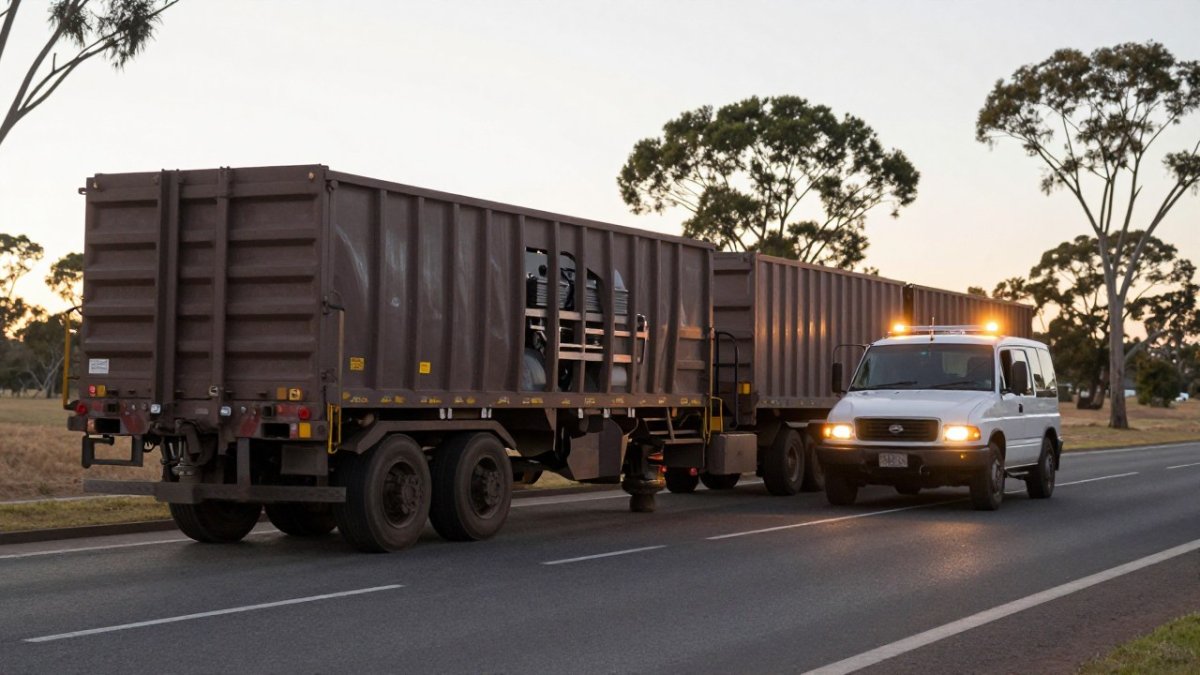
Businesses shipping large items should confirm which parts of the journey the provider manages directly and which are subcontracted. Readers planning a cross-border move can follow the step-by-step process for international oversized shipments.
Cold Chain Logistics for Perishable and Temperature-Sensitive Cargo
Cold chain logistics keeps temperature-sensitive goods within a set range from pickup to delivery. A break in that chain can spoil cargo entirely, which makes it one of the highest-risk areas of freight.
Pricing for refrigerated transport depends on quantity, dates, route and delivery requirements, so Seatram recommends requesting a quote for current costs. When assessing any provider, ask how temperatures are monitored in transit and what happens if a reefer unit fails mid-route.
Over-Dimensional Transport Permits and Compliance
Over-dimensional and over-mass transport in Australia is regulated through a combination of national heavy vehicle law and state or territory road authority requirements, and the two do not always align. Over-dimensional transport is typically administered through the National Heavy Vehicle Regulator and the relevant state or territory road authorities, each of which sets conditions for travel on its network. Confirm current requirements with the relevant authority. A load that is compliant in one jurisdiction can require a different permit, a different route or a pilot escort once it crosses a border.
Permit categories generally scale with the size of the load. Permit categories generally scale with the size of the load, so confirm with the relevant authority which category applies to your shipment. Applications typically need accurate dimensions, axle masses, proposed routes and travel times, and errors or underestimates are a common cause of rejection or delay. Providers should be able to explain which permit category applies to your load and which authority issues it.
Compliance extends well beyond permits:
- Chain of responsibility: Parties in the supply chain can carry obligations under heavy vehicle law for mass, dimension and load restraint. Buyers should confirm how the provider manages loading, restraint and scheduling, and who signs off on the load plan.
- Load restraint: Restraint method is an important compliance consideration for awkward or heavy machinery.
- Customs and biosecurity: For imported oversize or heavy equipment, customs clearance and biosecurity inspection may apply. Inspection can add time at the port, so it should be built into the project schedule.
- Insurance and liability: Freight liability may be limited by the provider’s terms and conditions, and specialised cargo may need separate transit insurance. Buyers should confirm the liability cap, what it covers, and whether the provider’s policy extends to subcontracted legs.
A useful due-diligence step is to ask for the provider’s permit register for a recent comparable job, showing which authority issued each permit and the conditions attached. Providers who can produce this quickly usually have the process embedded; those who cannot are likely to be learning it on your shipment.
Watch out: permit conditions can include time-of-day restrictions and escort requirements that change the delivery window, so confirm the permitted travel times before committing to a project schedule, an early arrival without the right permit can still stall at the roadside.
How to Choose a Specialised Logistics Provider
Most provider comparisons fail because buyers score every criterion equally. Readers weighing the premium can see a direct comparison of port fees, customs delays and landed cost. For specialised freight, a handful of capabilities matter far more than the rest, and a provider that looks strong on price or fleet size can still be the wrong choice if it subcontracts the critical leg or cannot evidence its permit process. A more useful approach is to weight the criteria, score each shortlisted provider against them, and require evidence rather than assurances. For a related provider decision, see how to choose a freight forwarder.
A practical weighting for specialised cargo looks like this:
- Handling experience with comparable cargo (25%): Ask for two or three recent examples of the same cargo class, oversize, temperature-controlled, dangerous goods or heavy machinery, including the route, the permits obtained and what went wrong. Providers who cannot name a comparable job are learning on your shipment.
- Regulatory and permit capability (20%): Confirm who prepares over-dimensional or over-mass permit applications, which state or territory road authorities they deal with routinely, and whether they use the National Heavy Vehicle Regulator’s permit systems directly or rely on a subcontractor.
- Chain of responsibility and safety systems (15%): Ask how the provider manages mass, dimension and load restraint obligations under the Heavy Vehicle National Law, and request its safety management arrangements. This is not paperwork for its own sake, it determines who carries liability if a load is non-compliant.
- Visibility and systems integration (15%): Ask whether tracking is via a transport management system with API or EDI feeds into your own systems, or manual updates. For temperature-sensitive cargo, ask for continuous data-logger records, not spot checks.
- Cost transparency (15%): Request a line-item breakdown covering linehaul, port and wharf fees, fuel surcharges, permits, escorts and storage. A single all-in rate hides the cost drivers you will be renegotiating later.
- Accountability and service terms (10%): Check the service agreement for on-time delivery targets, claims procedures, liability caps and insurance coverage, and confirm whether subcontractors are bound by the same terms.
Score each provider out of five against the weighted criteria and compare totals rather than headline rates. A provider that scores well on handling and permits but poorly on cost transparency is often still the better choice for oversize or temperature-sensitive freight, because the risks it controls are the ones that cause project delays.
Watch out: a low headline rate frequently excludes port handling, permits, escorts or fuel surcharges, so compare landed costs across the full journey rather than base quotes. Ask each provider to confirm in writing which legs it operates itself and which are subcontracted, because accountability usually follows the subcontractor, not the brand on the quote.
Seatram tailors its services to each client’s requirements. Buyers wanting market context before shortlisting can review the IBISWorld integrated logistics industry analysis.
The article weights provider selection criteria so buyers can score shortlisted providers against the capabilities that matter most for specialised freight.
| Criterion | Weight | What to ask for |
|---|---|---|
| Handling experience with comparable cargo | 25% | Two or three recent examples, with route, permits and issues |
| Regulatory and permit capability | 20% | Who prepares permit applications and which authorities they deal with |
| Chain of responsibility and safety systems | 15% | How mass, dimension and load restraint obligations are managed |
| Visibility and systems integration | 15% | Tracking via transport system with API or EDI feeds |
| Cost transparency | 15% | Line-item breakdown covering linehaul, fees, permits and escorts |
| Accountability and service terms | 10% | On-time targets, claims procedures, liability caps and insurance |
Weight
Request a Quote for Your Next Specialised Shipment
Specialised shipments reward careful planning, and the right provider can take much of the complexity off your team. Before requesting pricing, you can learn how to compare freight quotes and spot hidden surcharges. Seatram works with businesses to design end-to-end solutions for sea, air and land freight, and recommends requesting a quote so pricing reflects your actual cargo, route and timing.
Frequently Asked Questions
What does specialised logistics include?
Specialised logistics covers freight that standard carriers cannot handle without extra planning. Seatram manages sea, air and land freight, offering both wharf-to-wharf and door-to-door options. Pricing depends on quantity, dates, route and delivery requirements, so request a quote from Seatram for current pricing tailored to your cargo.
What information is needed to quote specialised freight?
A accurate quote needs the cargo dimensions and weight, the pickup and delivery locations, the required delivery window and any handling or temperature requirements. For hazardous or perishable goods, the product classification and storage conditions also matter. Providing a complete cargo description early reduces the chance of surcharges later. Seatram can review these details and prepare a quote through its Request a Quote process.
What permits may be needed for over-dimensional road transport?
Over-dimensional road transport in Australia typically requires permits from the relevant state or territory road authority, with requirements varying by load size, mass, route and vehicle configuration. Permits may specify travel times, escort requirements and approved routes. Planning permits early helps avoid delays, and a specialised provider can advise on which approvals apply to your load. Confirm the current requirements with the relevant road authority before booking.
